Head-to-Head Strategic Burial
So far we have shown many cases where head-to-head voting has allowed voters to reach their best achievable outcome without voting strategically. We have also shown that head-to-head preferences can form cycles, which can require a cycle resolution method to select a winner.
It turns out that cycle resolution methods can create strategic opportunities in head-to-head voting systems. In some situations, a coalition may have an incentive to rank lower choices against their true preferences in hopes of creating a preference cycle that produces a more favorable outcome for them. This strategy is often referred to as burial because it involves burying an opponent to deny them head-to-head undefeated status. While this can work in some situations, it also comes with risks for the coalition attempting it. This article describes how strategic burial can work within head-to-head systems, and the risks that accompany it.
The Wilderness
Returning to the Wilderness. Rotfang could no longer help the Lion win as a spoiler candidate after the Wilderness switched their voting system to Head-to-Head Record. So a new candidate stepped up to represent the Felines:
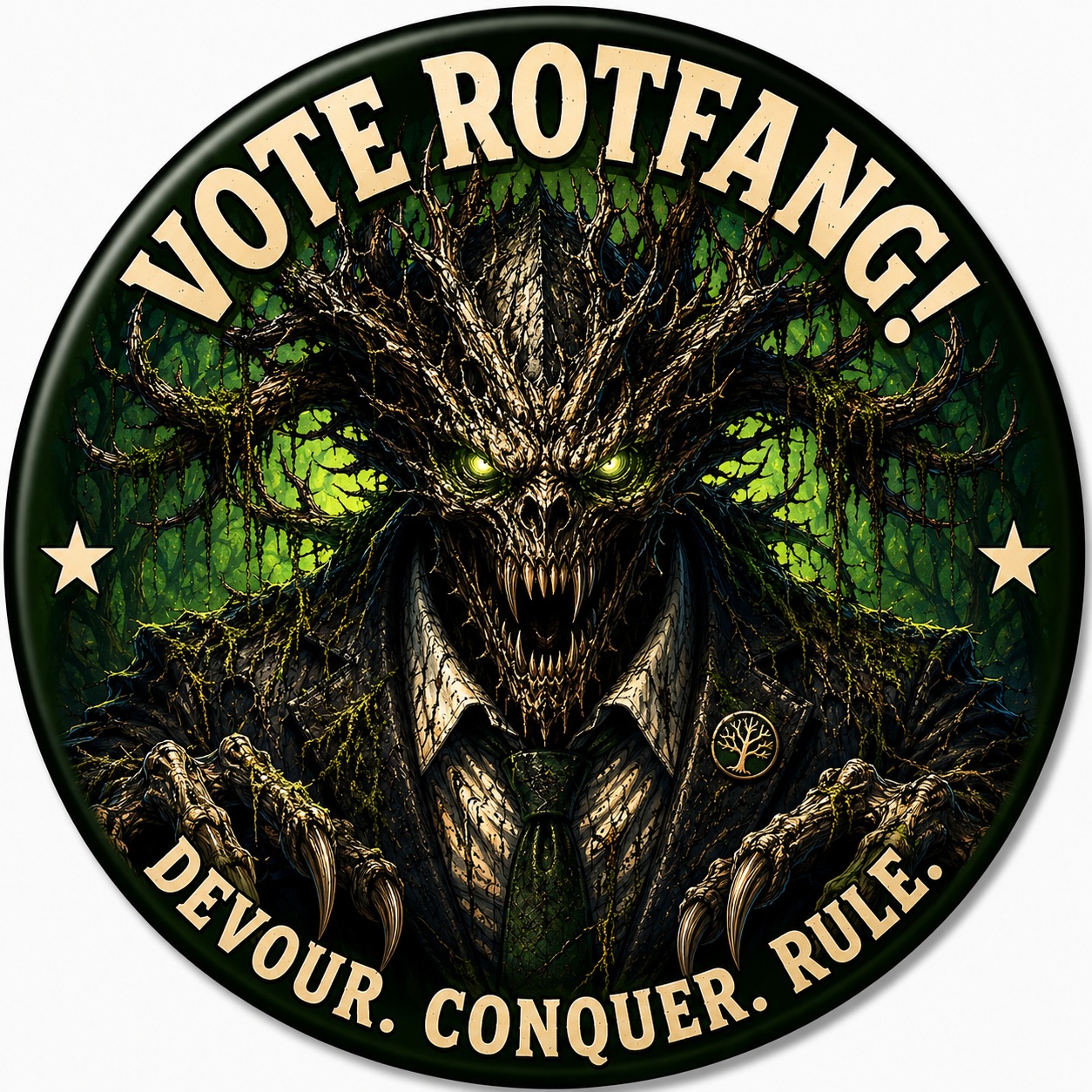
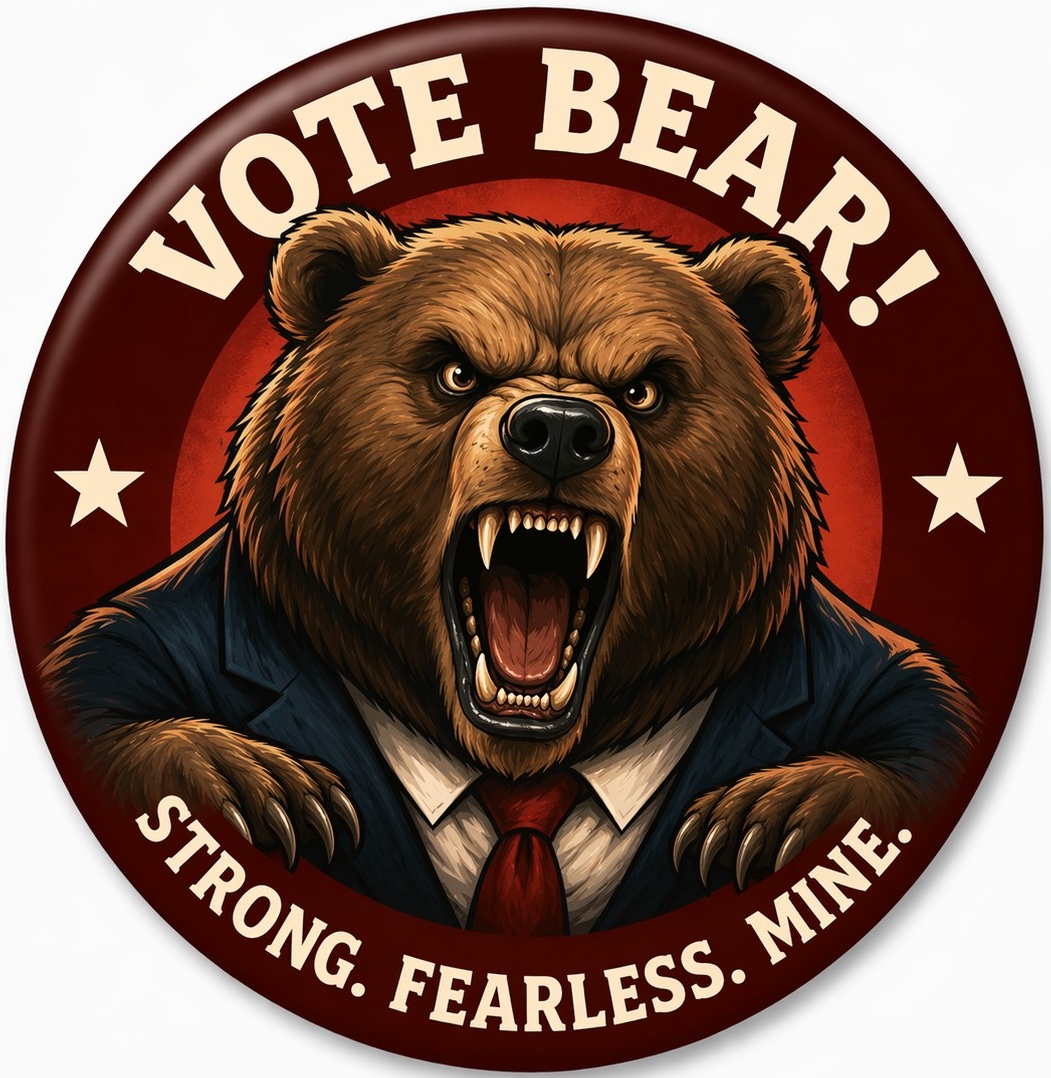
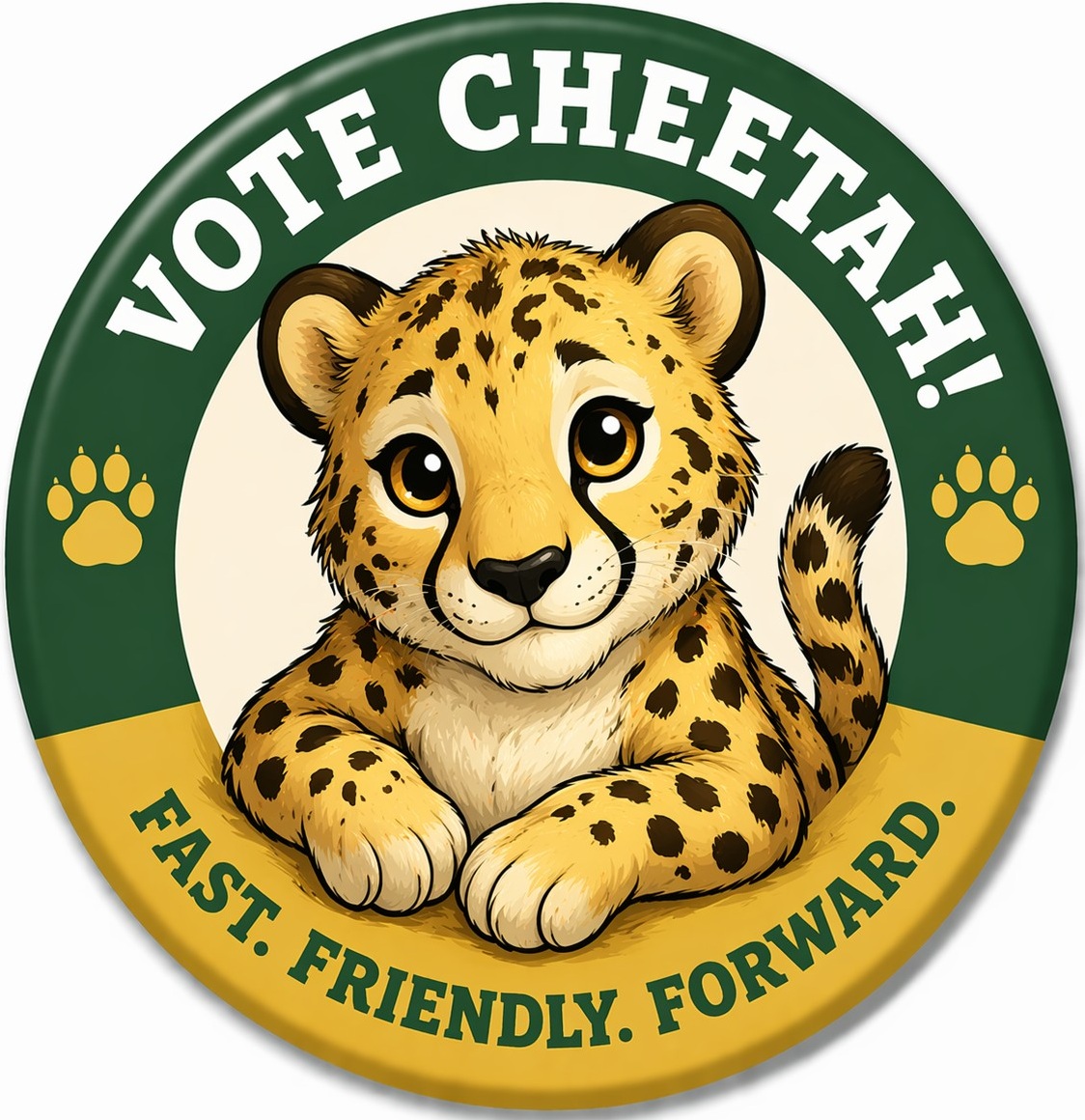
The voting groups remain the same:
- The Deepwood Foresters still strongly support Rotfang, and still prefer the Bear over any Feline candidate.
- The Foresters who have not joined the new faction remain loyal to the Bear. Half of them prefer Rotfang as a second choice out of coalition loyalty. The other half prefer any Feline as a second choice over Rotfang, because they have had enough with the new faction.
- The Felines are united behind the Cheetah. They prefer the Bear as a second choice because Rotfang has been absolutely awful to the Feline community.
The Felines are well aware of what will happen if they vote their true preferences. In an election with 32 Deepwood Foresters, 28 traditional Foresters, and 40 Felines, the ballots would look like:
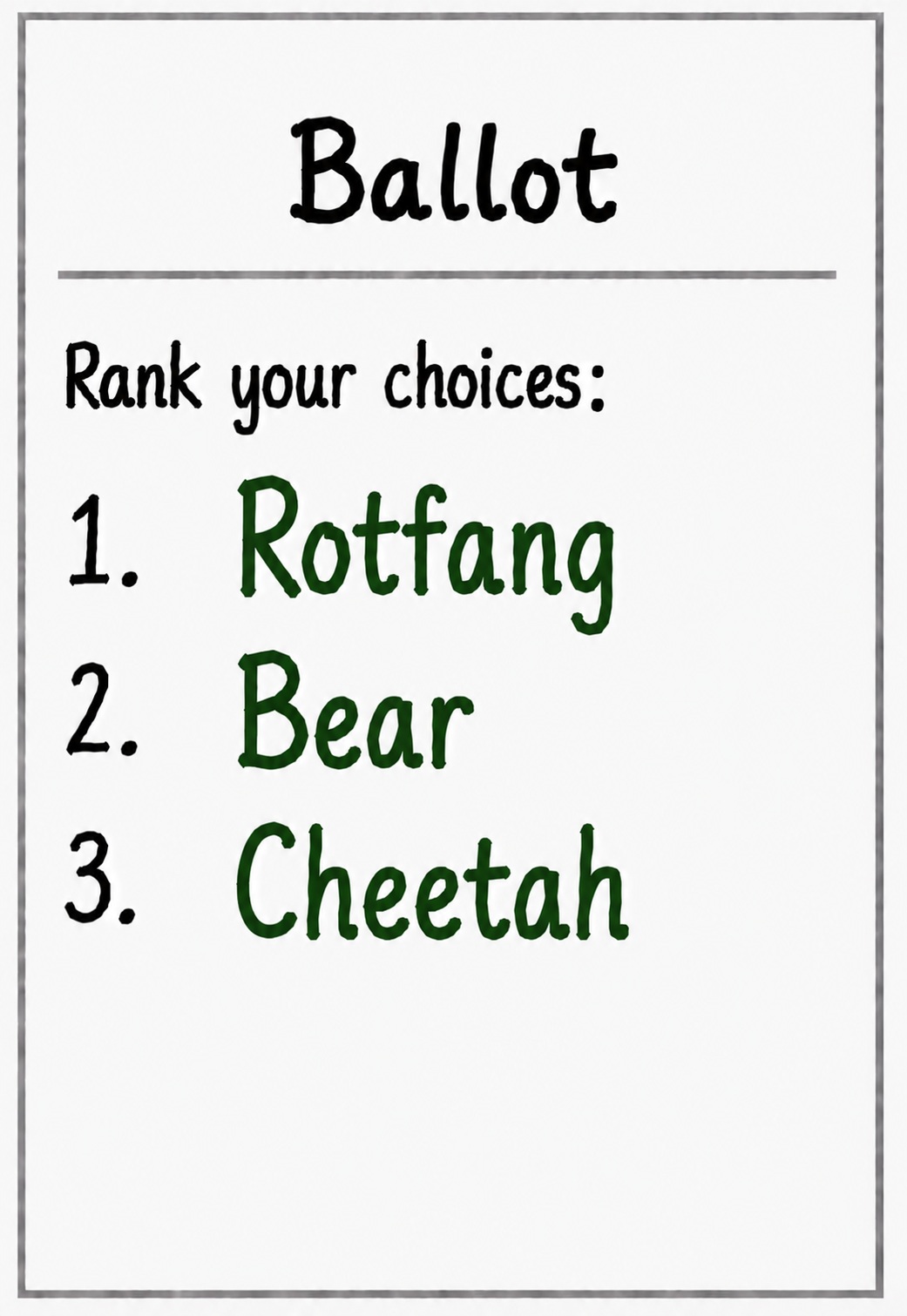
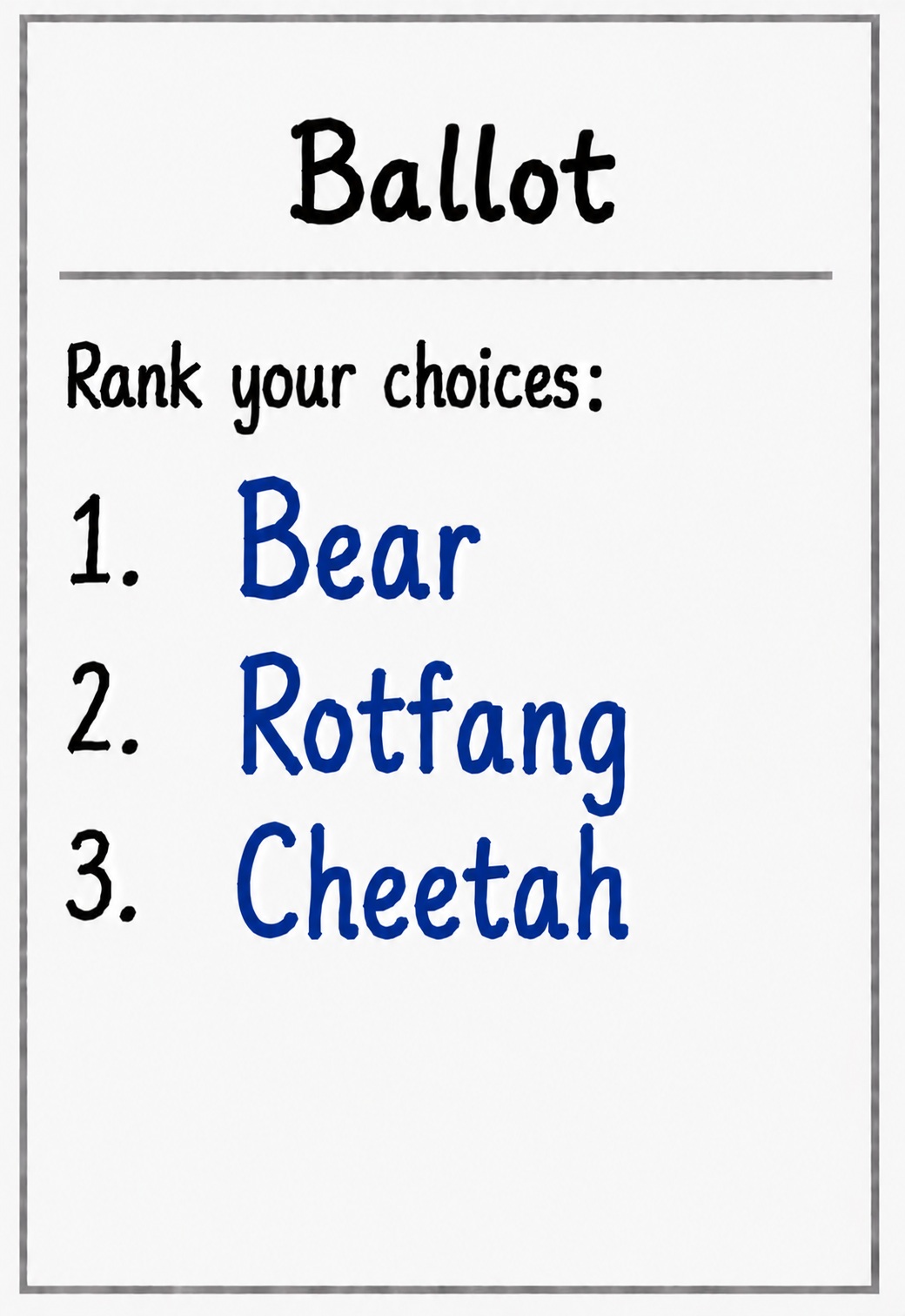
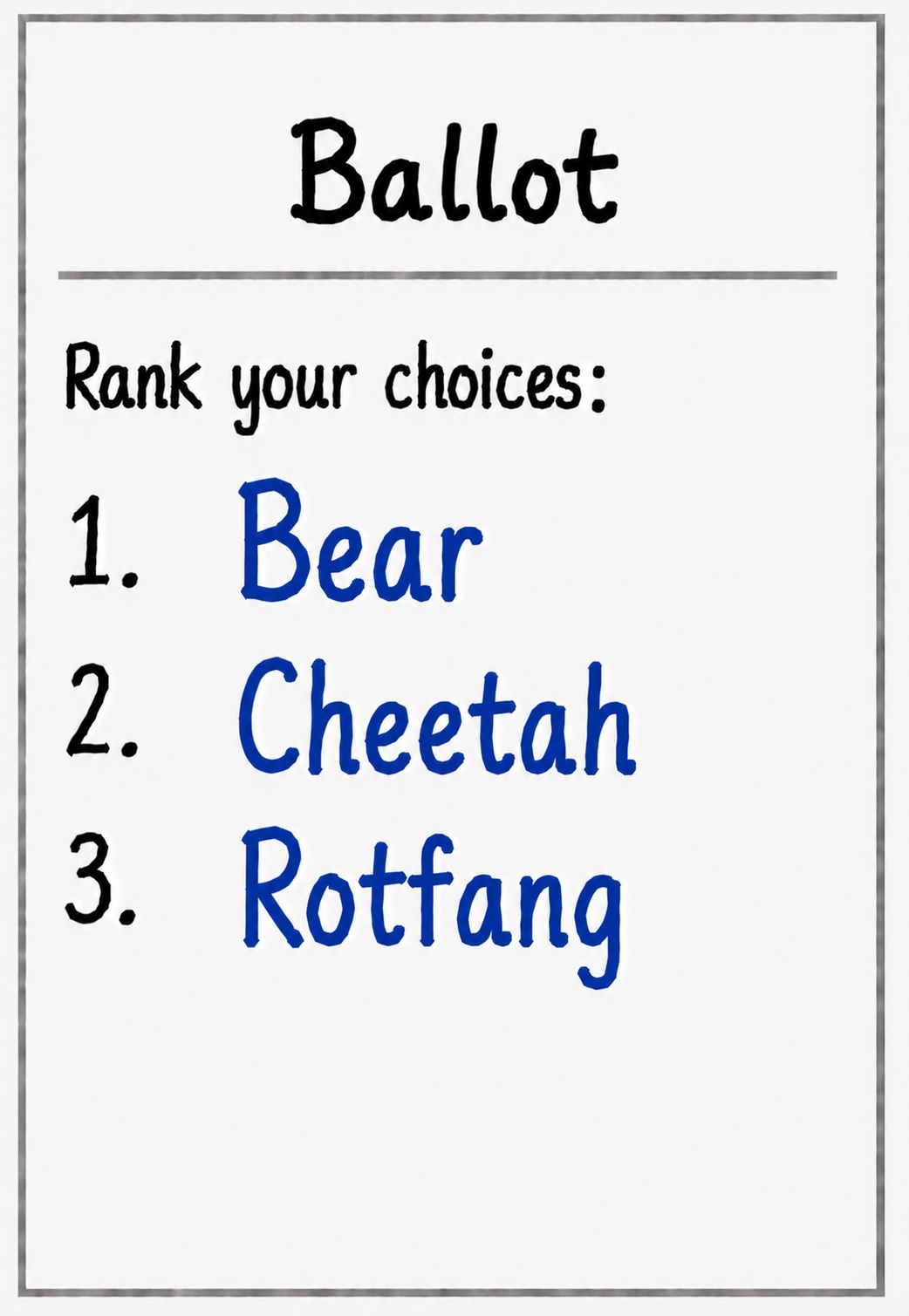
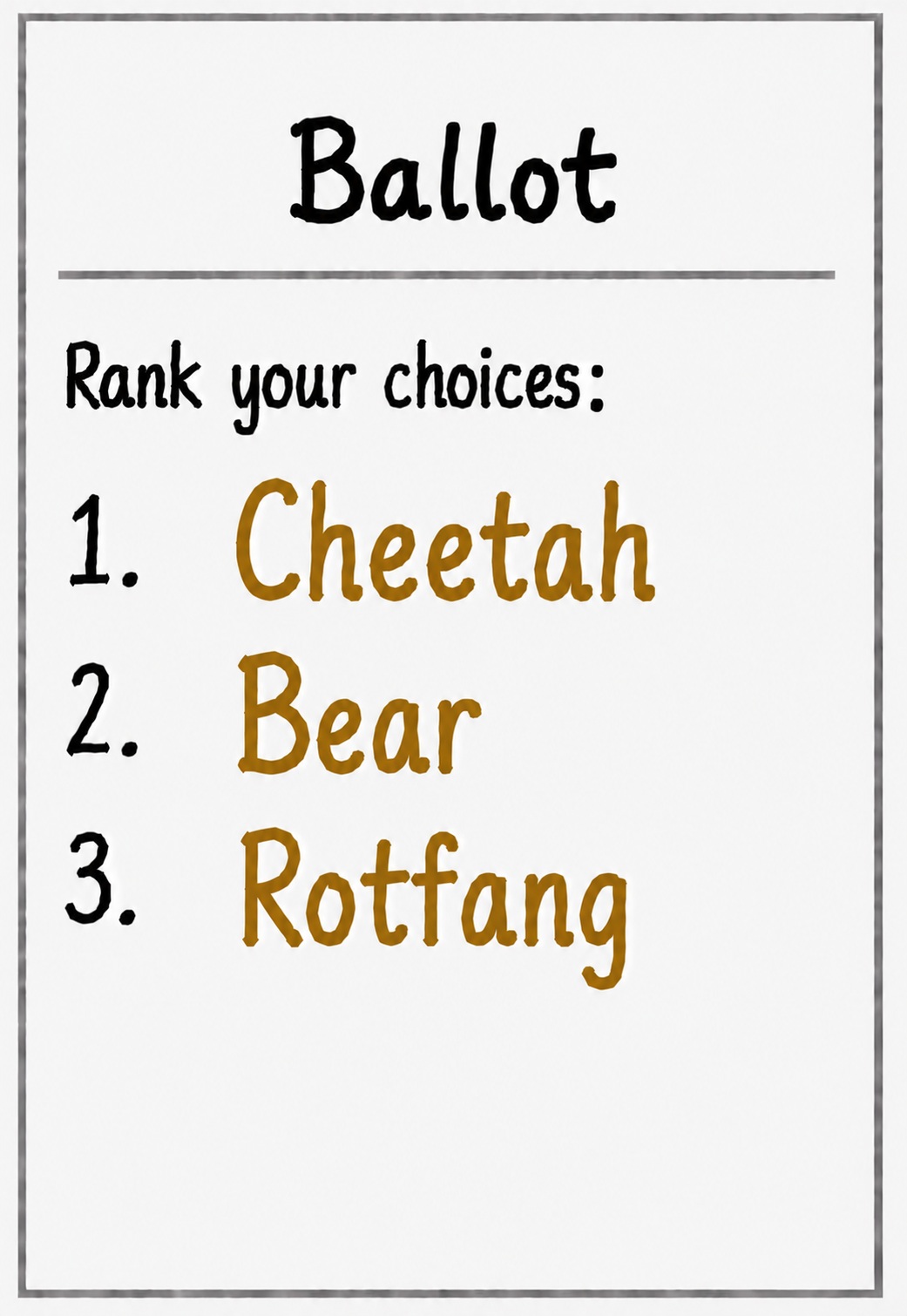
The resulting head-to-head contest would be:
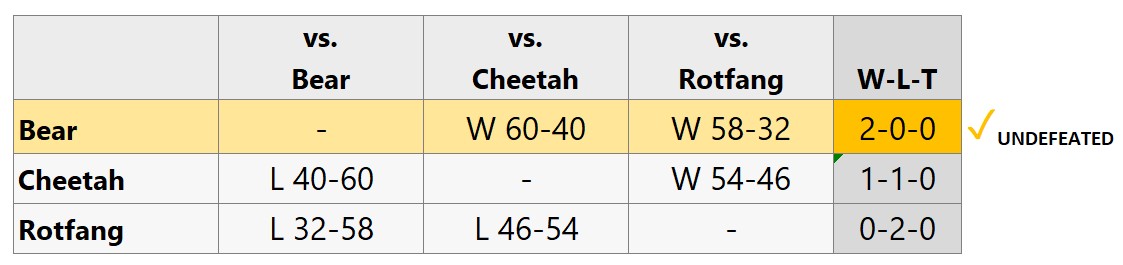
And the Bear would win as the head-to-head undefeated candidate. However, the Plains Feline Research Committee studied the population carefully and requested that all Felines go against their true preferences and rank Rotfang ahead of Bear. The Feline community was in shock, as Rotfang had been terrible to the Felines since his emergence. But they trust the Plains Group as solid tacticians, and all agreed. The ballots submitted look like:
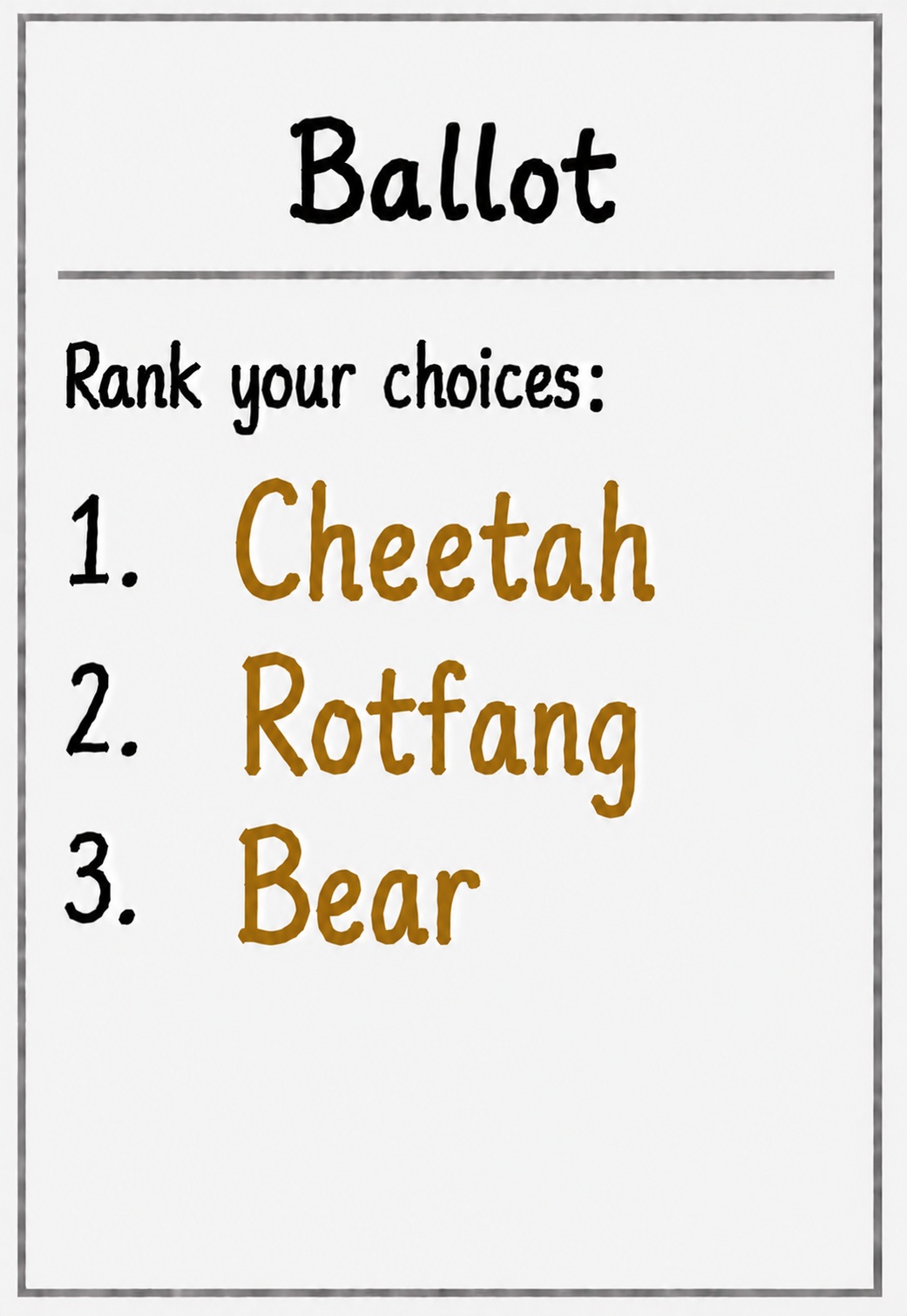
And the resulting head-to-head contest becomes:
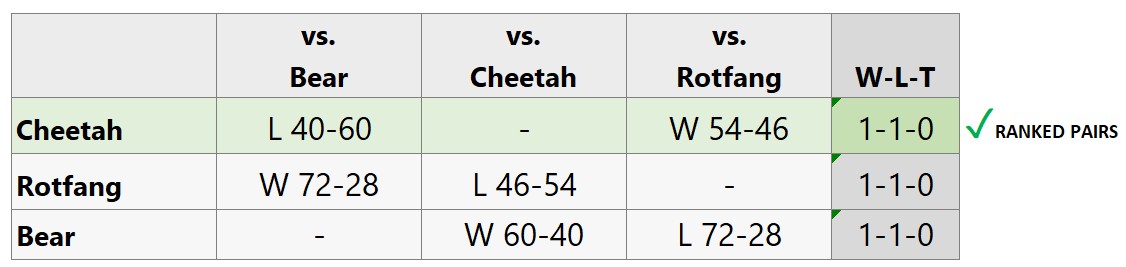
This creates a preference cycle and a three-way tie. As discussed earlier, there are multiple ways a tie can be resolved. If First Choice Preferences are used to resolve the cycle, the Cheetah would win, and strategic burial would have succeeded.
This appears to create a strategic incentive for the Felines to abandon their true voting preferences in order to help the Cheetah. While the Felines could not help the Cheetah defeat the Bear head-to-head, they destroyed Bear's undefeated status by helping Rotfang defeat Bear head-to-head. This created a preference cycle that allowed First Choice Preferences to select the Cheetah as the winner.
This strategy also comes with risks. For example, suppose that on election day the traditional Foresters all decided to rank Rotfang over the Cheetah, perhaps out of coalition loyalty, or maybe because they believed the strategy would help elect Bear. If the traditional Foresters took this approach when the Felines employed their new strategy, the ballots would be:
And the resulting head-to-head contest would be:
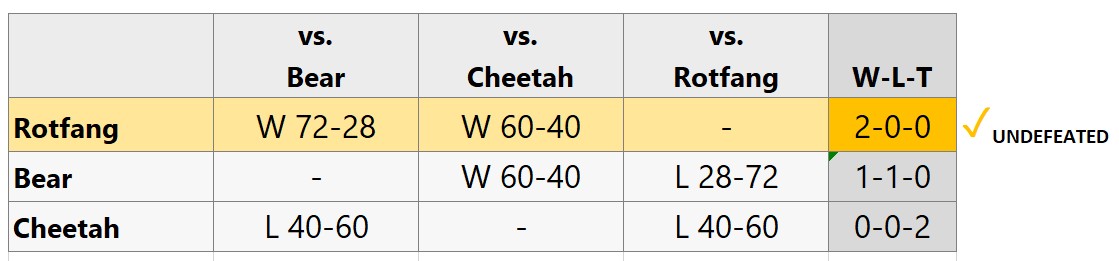
No cycle occurs, no tie remains, and Rotfang wins as the head-to-head undefeated candidate.
This result leaves both the Felines, who would have been content with the Bear, and the traditional Foresters, who would have been content with the Cheetah, much worse off. This potential outcome acts as a strong check on the incentive to manipulate ballots to influence outcomes.
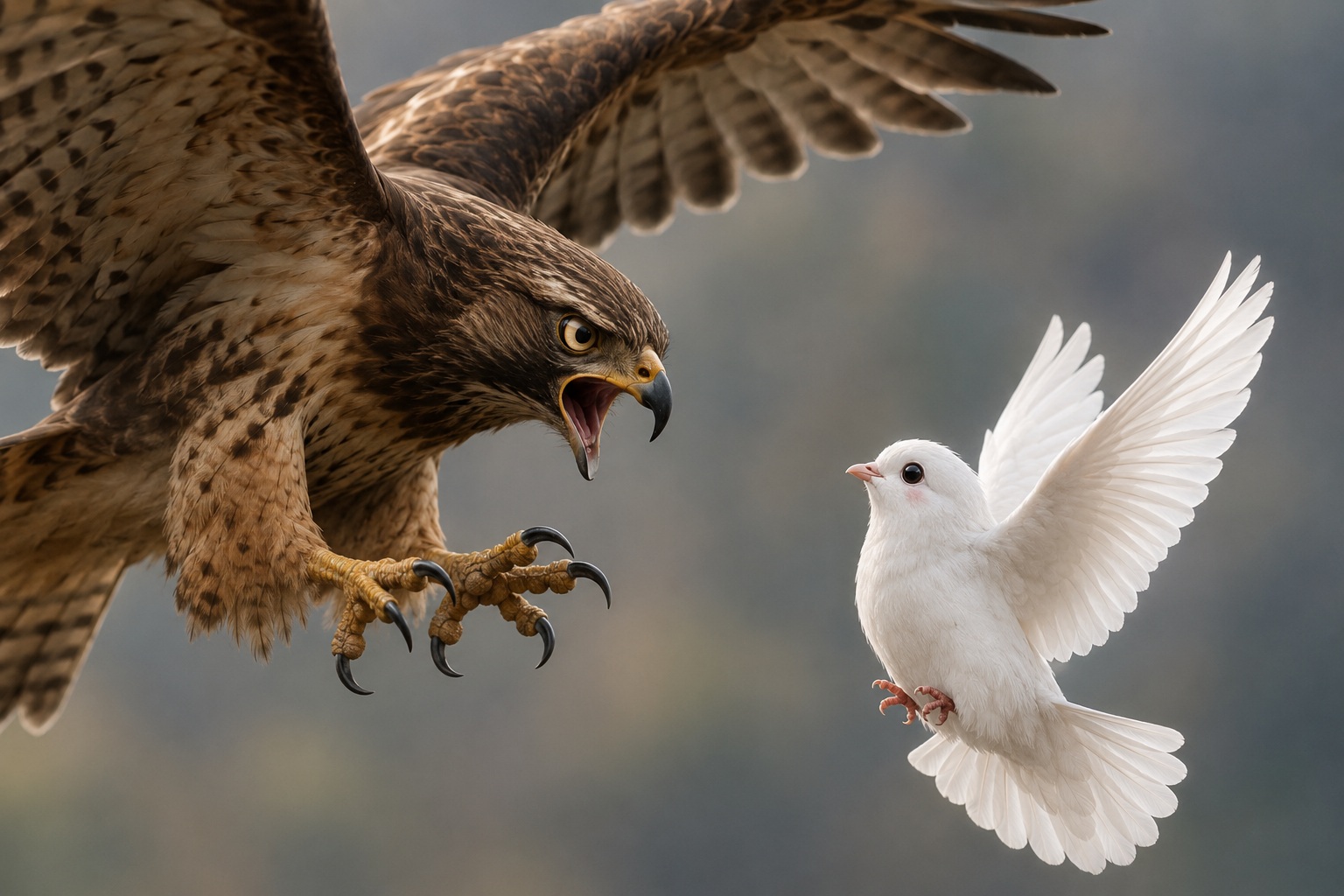
The situation between these two groups is very similar to the Hawk-Dove game in game theory. In this game:
- If both sides choose Dove, a peaceful outcome occurs.
- If one side chooses Hawk, that side gets a better outcome.
- If both sides choose Hawk, a disastrous outcome occurs for both sides.
While this doesn't entirely remove the incentive for a side to rank dishonestly to manipulate results, it does act as a strong check on that behavior. This strategy is similar to traditional elections with primaries, where voters who prefer one coalition may strategically participate in another coalition's primary in support of a candidate they believe will be easier to defeat in a general election. This strategy can also backfire if that candidate ultimately wins the general election. In either case, if one side publicly broadcast to their supporters to manipulate ballots against a potential consensus candidate, the other side would likely respond in kind, and the result would be a less desirable outcome for both groups.
This does not mean that head-to-head voting methods are flawed.
Every voting system creates strategic incentives of some kind. Plurality elections create incentives for coalition voting. Instant Runoff Voting can shift incentives related to elimination order. Approval voting creates incentives to help a candidate by not selecting a potential consensus candidate. And head-to-head methods can create incentives to strategically reorder lower rankings to help a candidate by creating a preference cycle.
Whether these incentives are significant in real elections is a separate question. The important observation is simply that the incentive exists, and that different voting systems encourage different forms of strategic behavior.
Comments
This site does not manage comment accounts. Comment data is handled by a third-party discussion service.