Approval Voting
Another alternative to single-choice plural elections that has been gaining traction is Approval Voting. Instead of asking voters to rank their candidates, it asks voters to select all candidates they find acceptable. We are going to take a quick look at the advantages of this system, as well as some strategic tradeoffs.
In a single-choice plural election, a ballot marked with multiple candidates is generally called an overvote and is discarded. However, in Approval Voting, marking multiple candidates is encouraged. There is no ordering of preference between the candidates chosen. Instead, the voter is indicating which candidates they approve of by marking or listing them, and if a candidate is not marked or listed, that indicates they do not approve of that candidate.
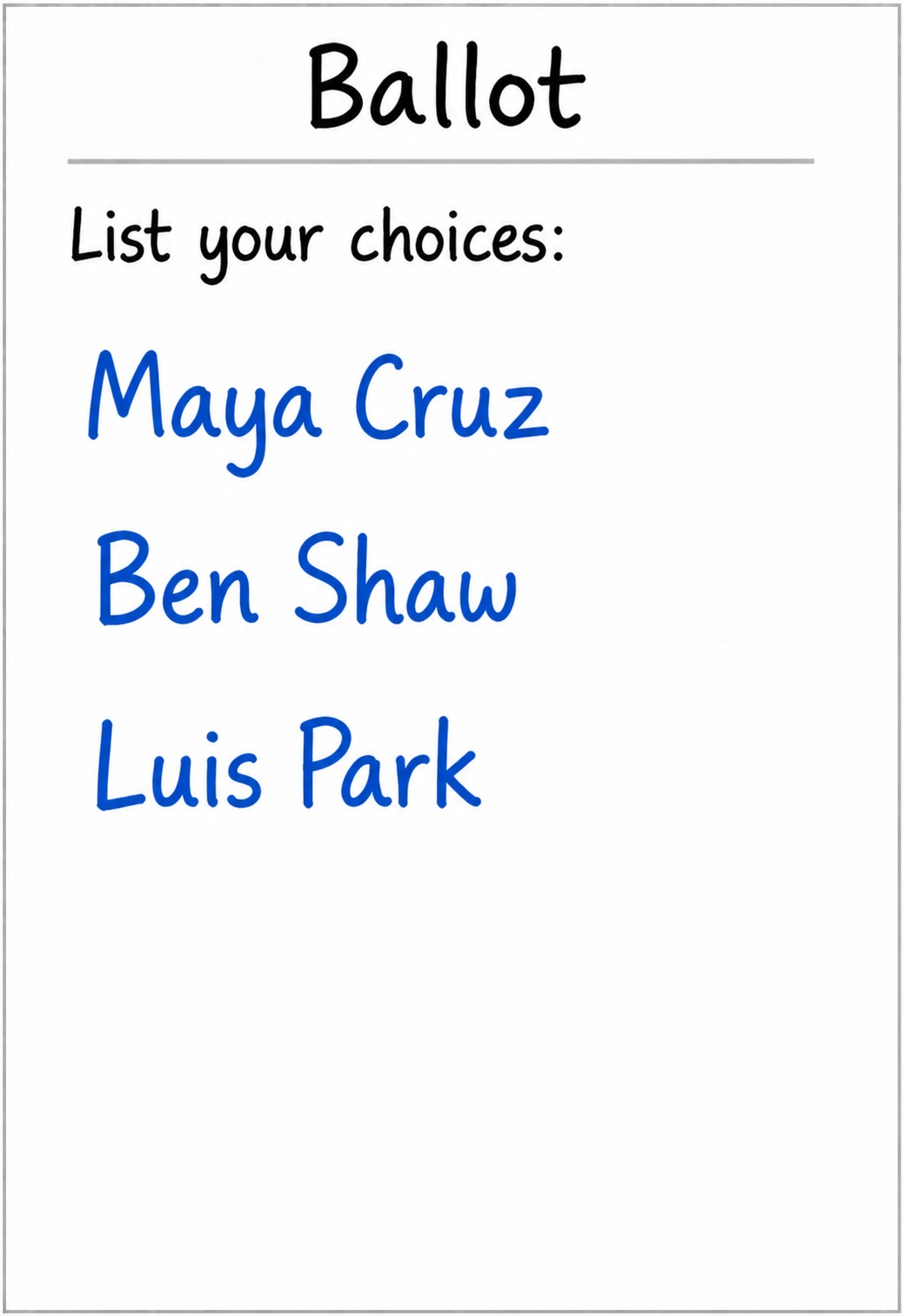
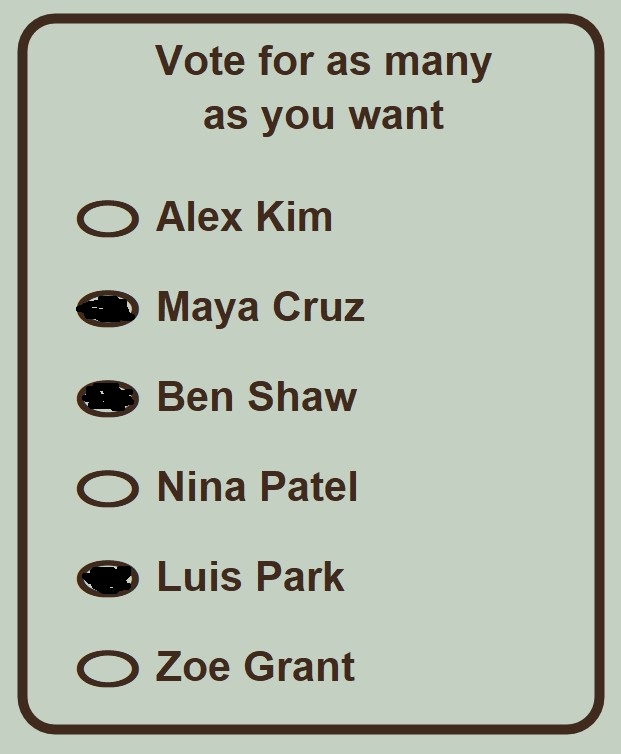
The method for calculating a winner is very simple. Every ballot that lists or marks a candidate counts as a vote for that candidate. The candidate with the most total votes wins. There are no elimination rounds, runoffs, or transfers of votes.
Groups advocate for this system not just because of its simplicity, but because of its ability to produce a compromise candidate in very polar electorates. We will illustrate this with the following example.
The Wilderness
Returning to the Wilderness, with the three familiar candidates:



The coaltions remain:
- The Foresters who dislike the Lion approve the Bear and the Eagle.
- The Felines who dislike the Bear approve the Lion and the Eagle.
- The Avians who dislike the Bear approve the Eagle and the Lion.
They fill out their ballots as follows:
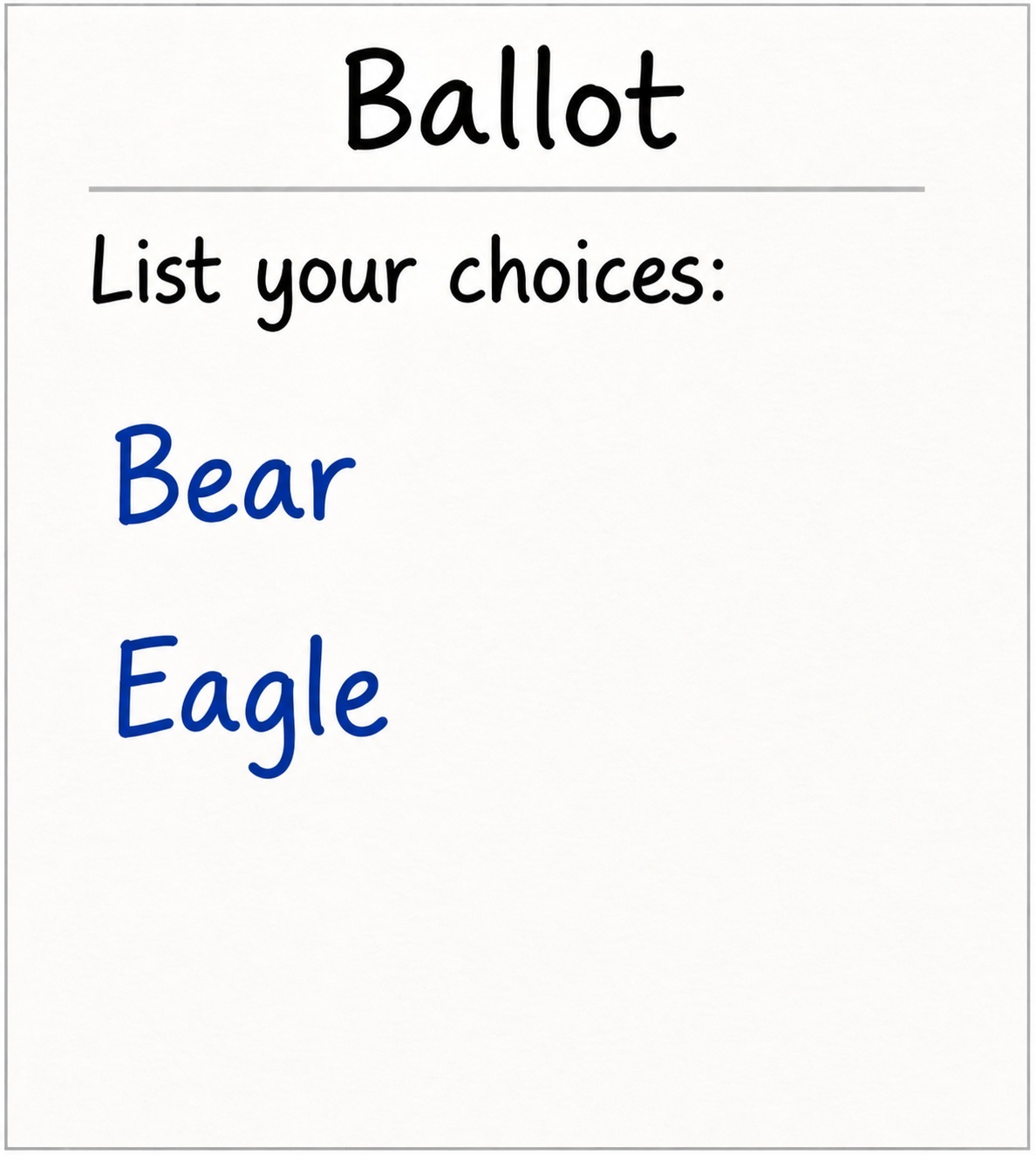
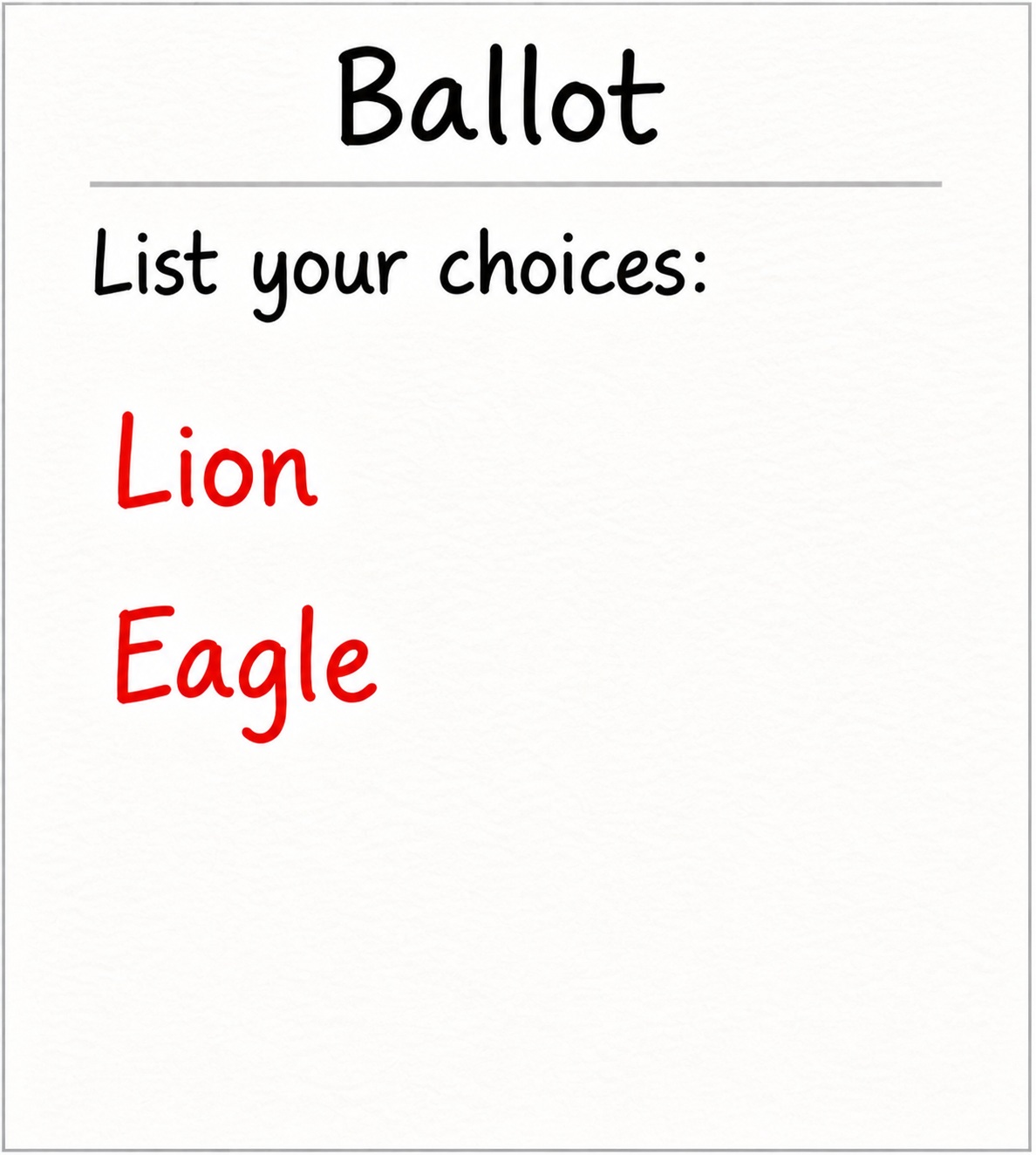
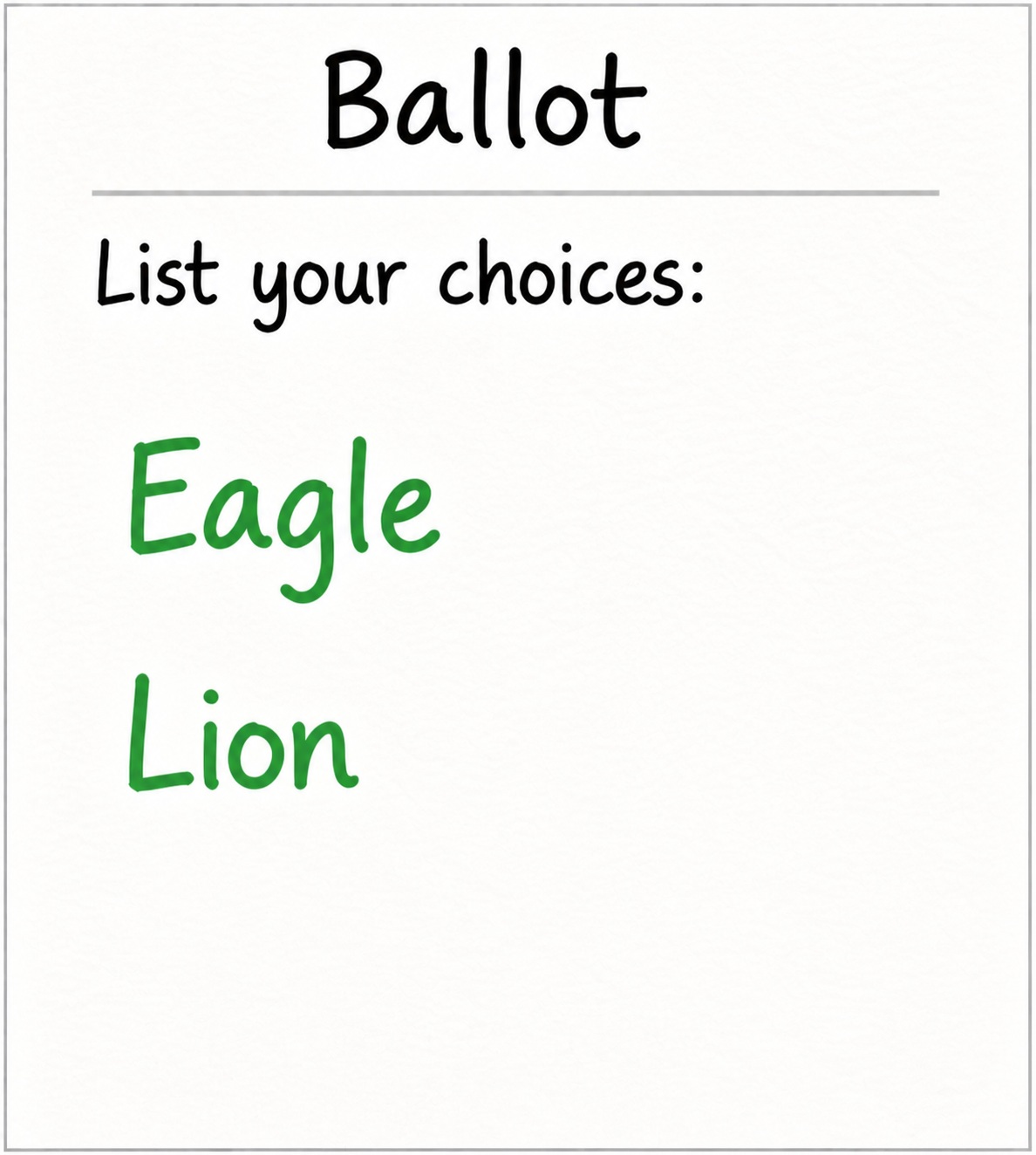
The totals are:
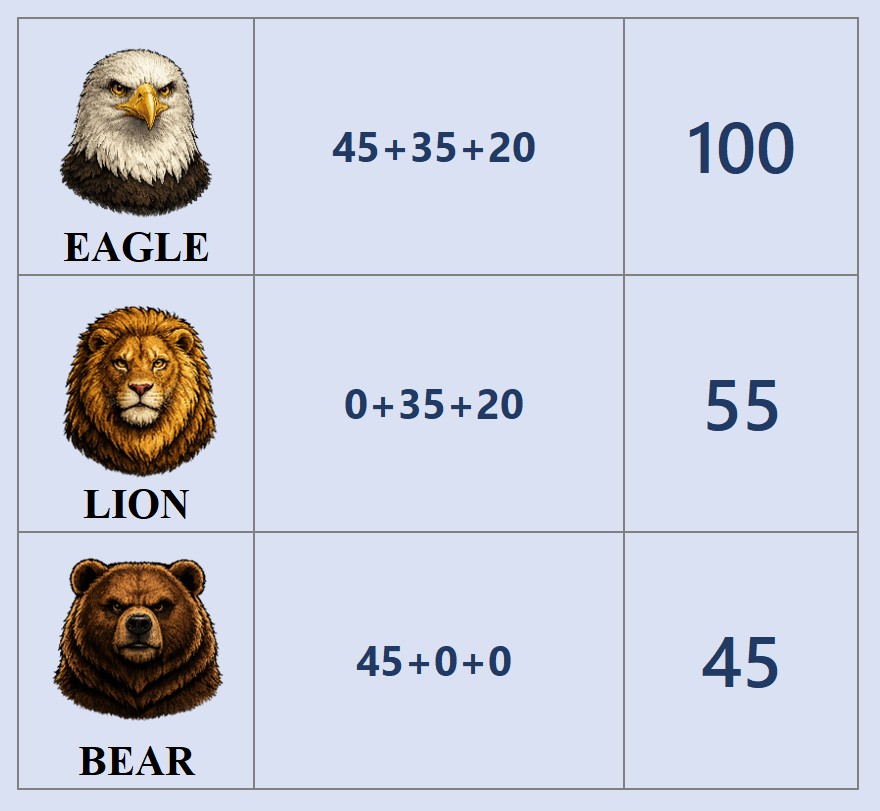
And the Eagle wins with the most votes. This illustrates a key strength of Approval Voting. A broadly acceptable candidate can win, with a much simpler system than other strategies. The system has a tradeoffs, one of which will be illustrated in the following example:
The Feline Community
Returning to the more friendly feline community from previous articles:



The coaltions remain:
- The Jungle Group which prefers the Tiger but dislikes the Skunk, approves the Tiger and the Cheetah.
- The Plains Group which prefers the Cheetah but also dislikes the Skunk, approves the Tiger and the Cheetah.
So when the two groups fill out their ballots:
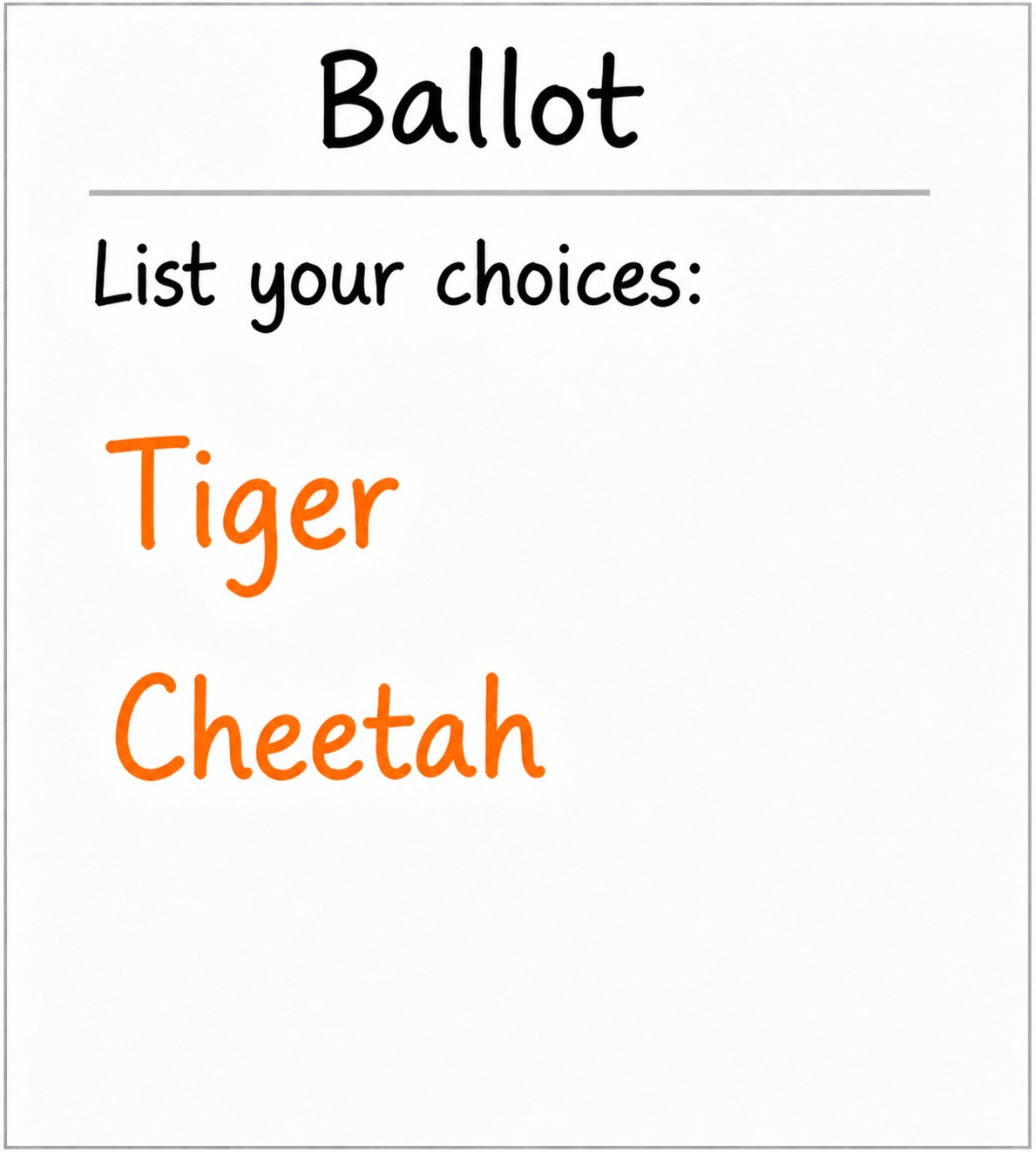
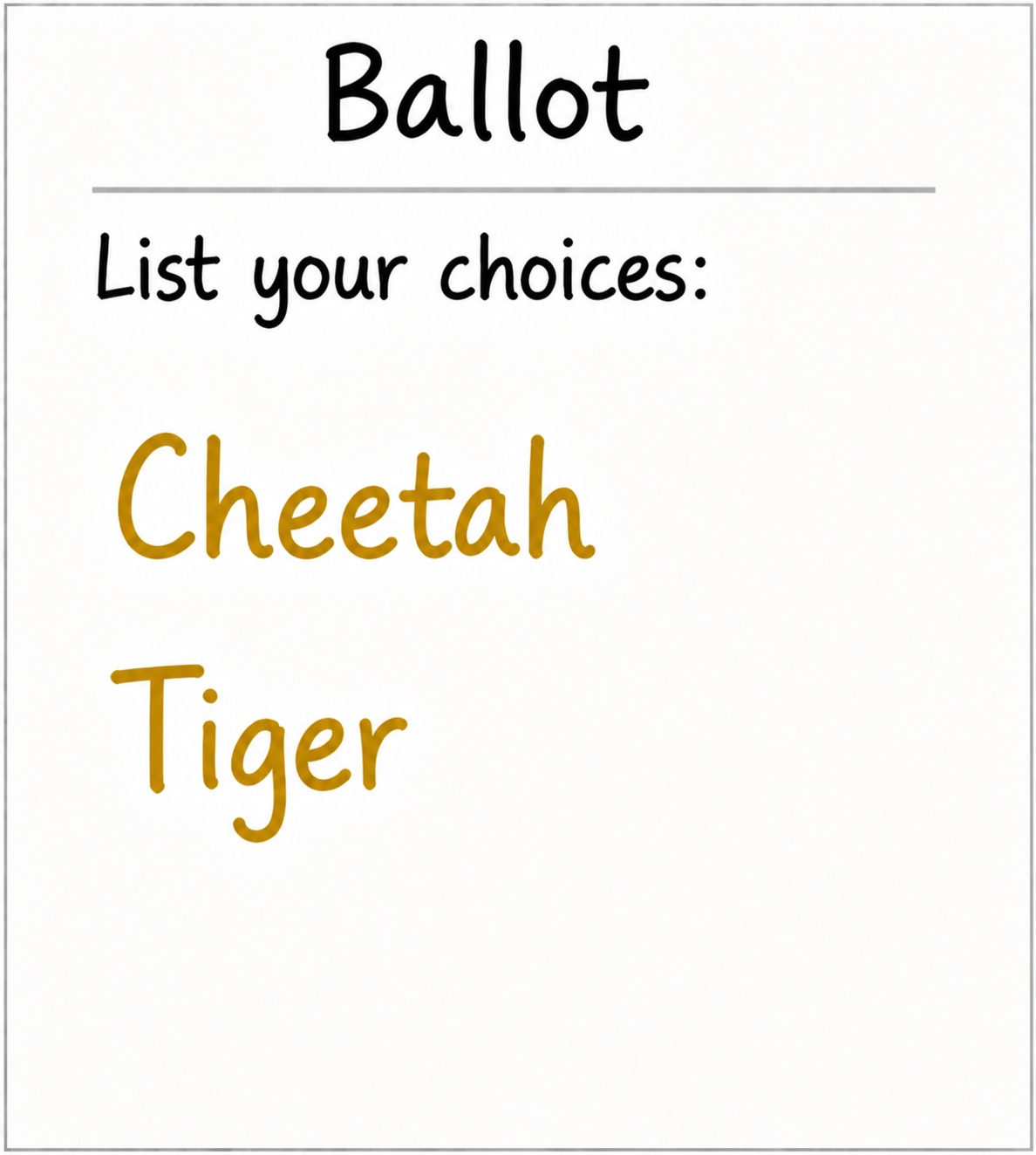
The totals become:
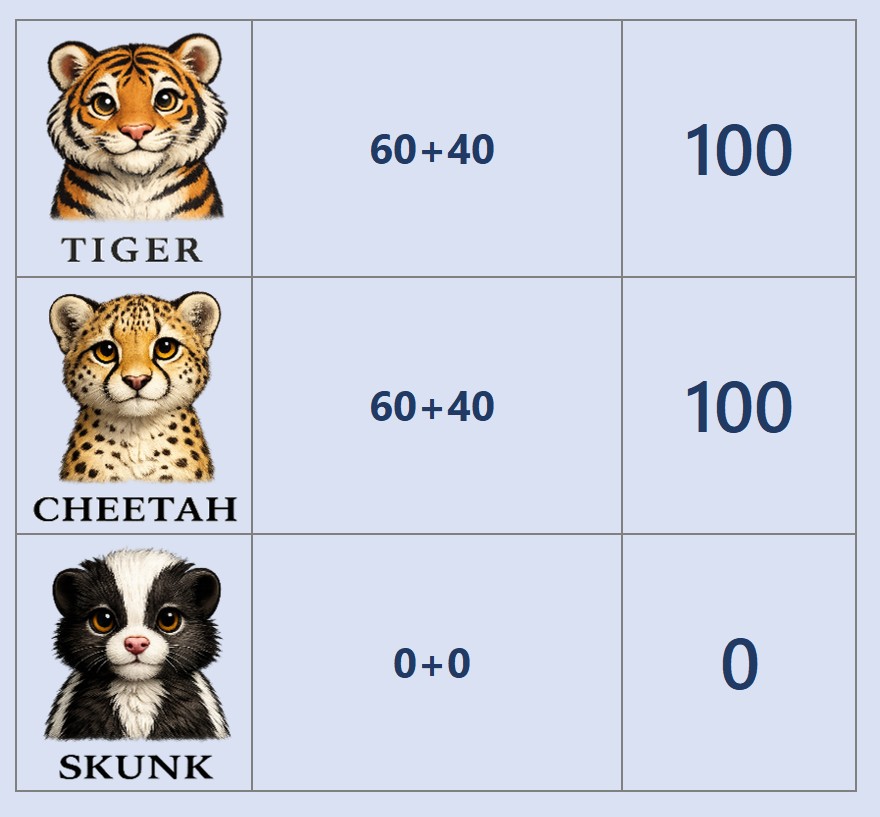
Even though there are more voters in the Jungle group who prefer the Tiger, both sides approved the other as acceptable, so it ends up in a tie, perhaps decided by a coin flip or drawing lots.
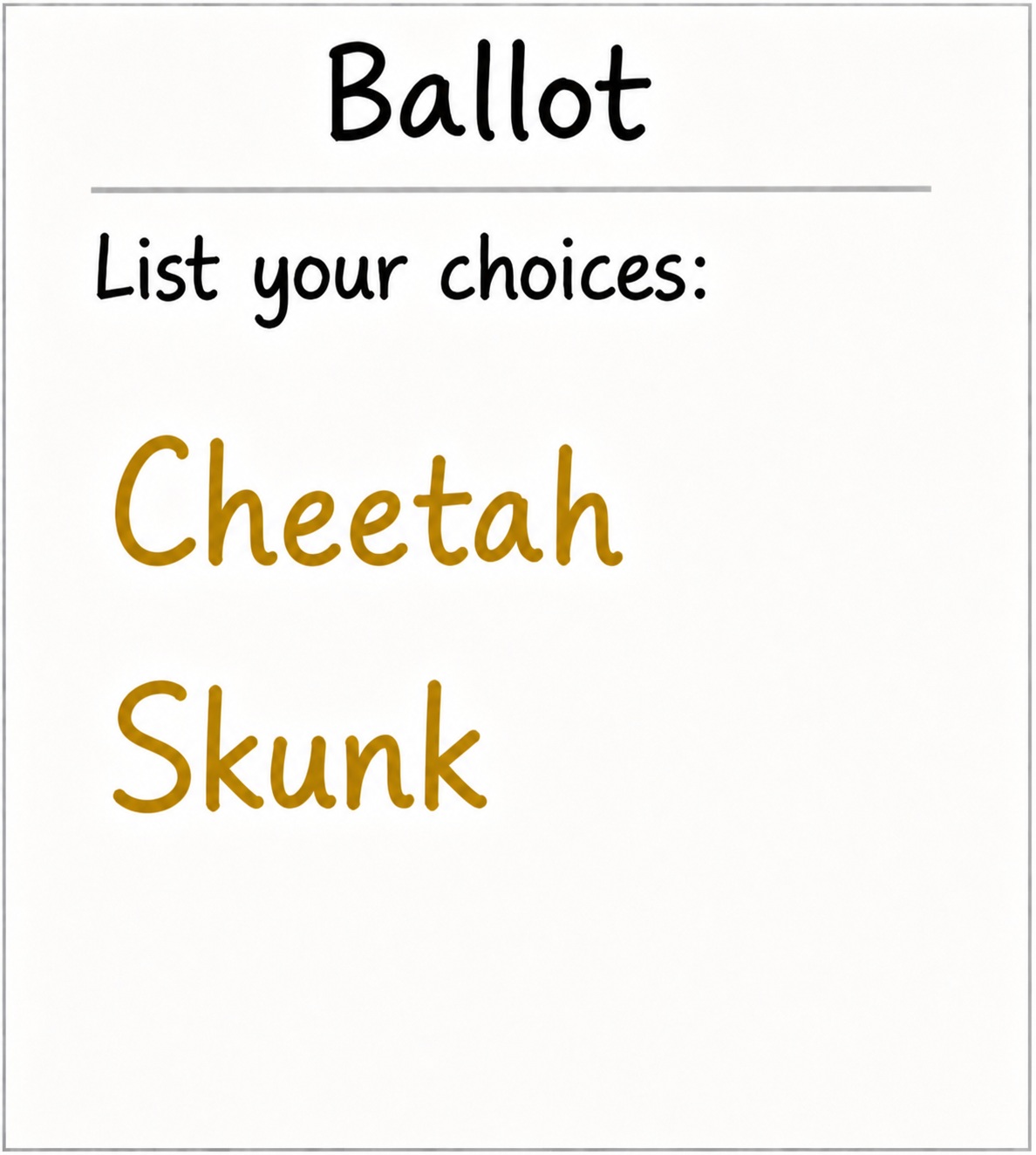
Now suppose in the same example, a single Plains voter lists the Skunk instead of the Tiger:
And now the totals become:
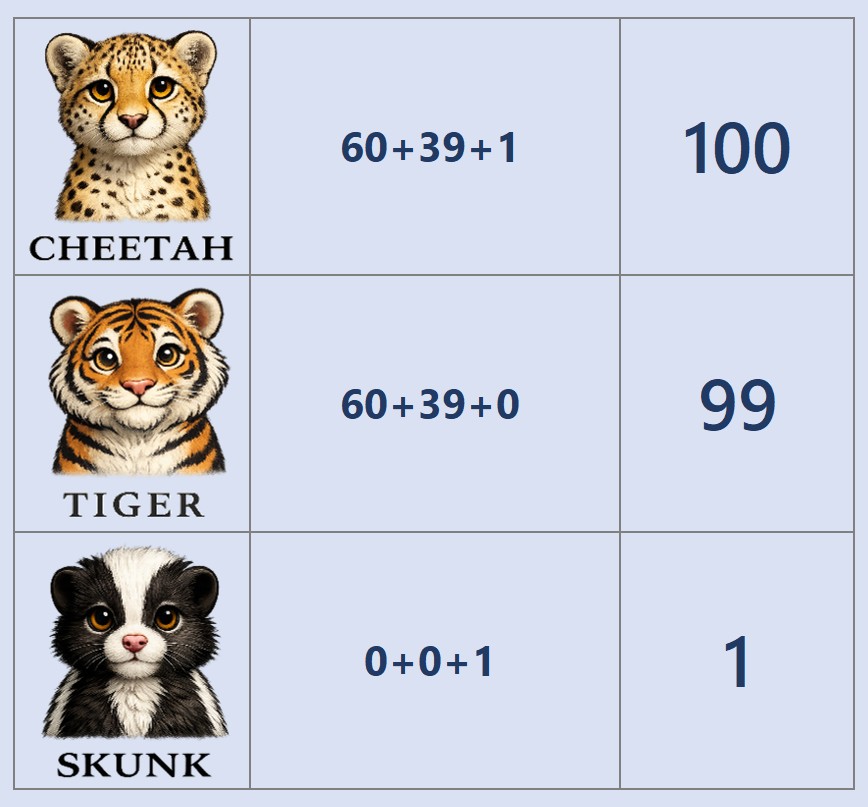
And now the Cheetah wins. It is worth noting that the 99 voters who approved both the Tiger and the Cheetah were not disenfranchised; their ballots were not thrown in the trash, discarded, or set on fire. Their ballots were counted exactly as submitted, as there is no preference distinction between approved candidates. This creates a form of strategic pressure. Voters may choose not to approve a candidate they find acceptable in order to avoid helping that candidate compete against their preferred choice.
Approval Voting is simple to understand, easy to count, and has simple reporting requirements, making it very transparent Each selected candidate receives one vote, and the candidate with the most votes wins. It can perform well when voters are willing to support all candidates they find acceptable, allowing broadly supported candidates to emerge. In both real-world discussion and many simulation studies, Approval Voting is often viewed as performing strongly at identifying broadly acceptable candidates. For readers interested in a deeper mathematical treatment of Approval Voting, one mathematician and Approval Voting advocate maintains a very detailed blog here. And like every voting system, Approval Voting involves tradeoffs. In some elections, voters may face incentives to limit their approvals to strategically help their preferred candidate.
Comments
This site does not manage comment accounts. Comment data is handled by a third-party discussion service.