Instant Runoff Voting
The most widely used form of Ranked Choice Voting (RCV) today is Instant Runoff Voting (IRV), which is the Hare form of RCV. When RCV is discussed by advocacy groups, policymakers, or in ballot measures, it usually refers to this method. This article explains how Instant Runoff Voting works in practice.
IRV is based on the same idea as traditional runoff elections used in many elections across the country, so advocates often describe it as a natural transition. In simple terms, IRV works step by step by counting first-choice votes, eliminating the lowest candidate, and transferring those votes to the next choice until a candidate reaches a majority. If no candidate receives a majority of the vote in the initial round, the top candidates advance to another round while the lowest-ranked candidates are eliminated. Consider the following example election:
Red Barn Elementary School
The Principal of Red Barn Elementary School is allowing the students to decide on a single community pet for the school grounds. The students may choose between 8 different pets:






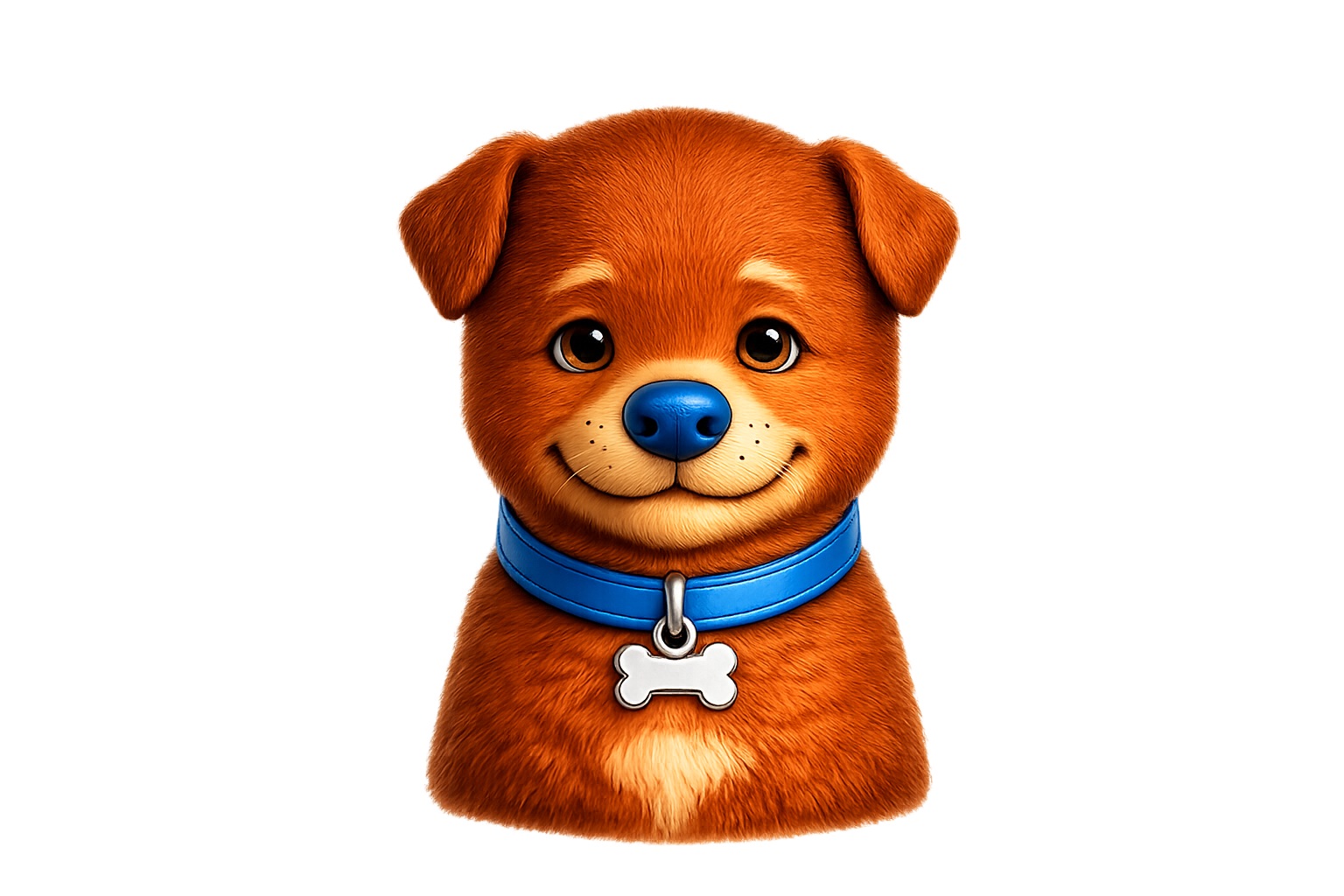

The students fell into 5 voting groups.
- 15 Dog voters only want the pet to be a dog, and prefer Nugget.
- 20 LongEar Voters only want the pet to have long ears, and prefer Snowball.
- 12 BigEye Voters only want the pet to have large eyes, and prefer Comet.
- 10 WhiteFur Voters only want the pet to have white fur, and prefer Ivory.
- 23 BlueNose Voters only want the pet to have a blue nose, and prefer Rust.
Traditional Election
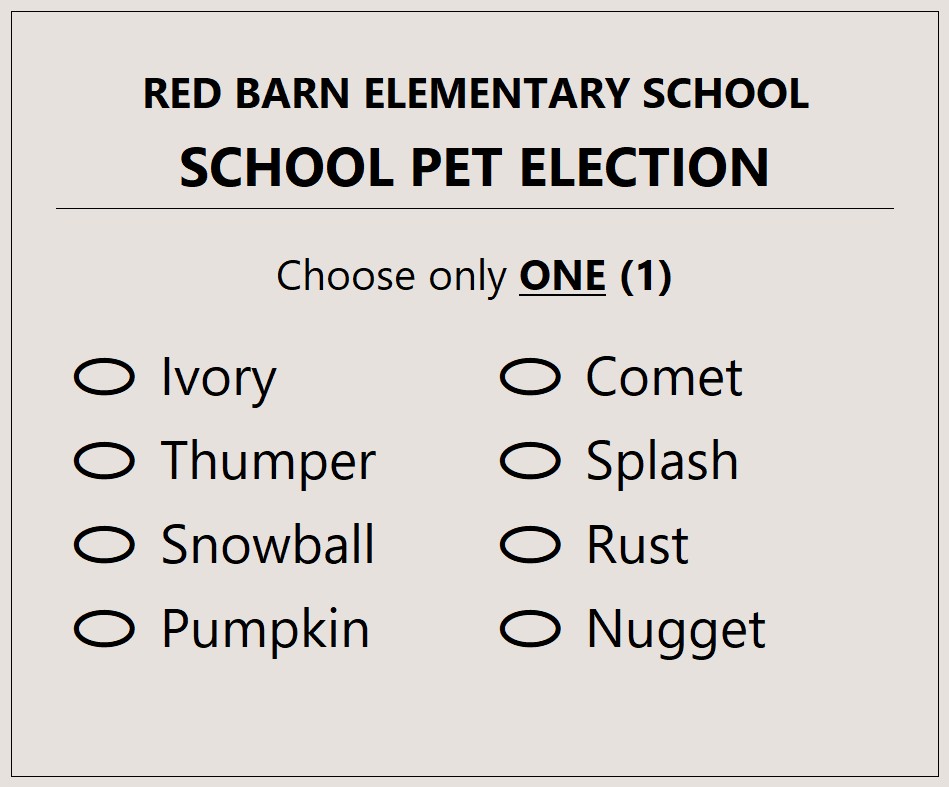
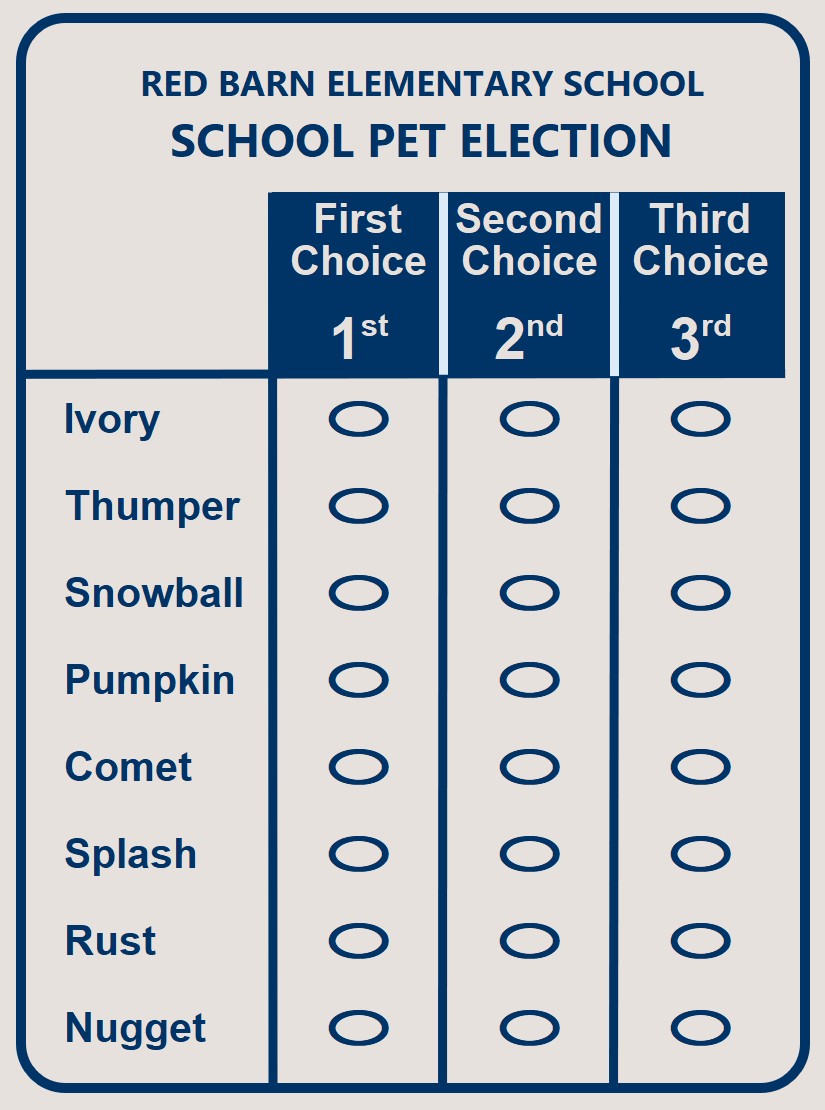
In a traditional election, each student selects exactly one pet that the student would like to see become the school's community pet. The ballot each student fills out may look like the ballot to the right. After every student fills out their ballot, the ballots are counted, and the pet with the largest number of votes is selected as the school's community pet, even if that pet does not receive a majority of all the votes. For example, with 80 students voting, a pet would need 41 votes to have a majority. But after all 80 ballots are counted, none of the pets would have a majority. The results would look like:
In a traditional election, each student selects exactly one pet that the student would like to see become the school's community pet. The ballot each student fills out may look like this:
After every student fills out their ballot, the ballots are counted, and the pet with the largest number of votes is selected as the school's community pet, even if that pet does not receive a majority of all the votes. For example, with 80 students voting, a pet would need 41 votes to have a majority. But after all 80 ballots are counted, none of the pets would have a majority. The results would look like:
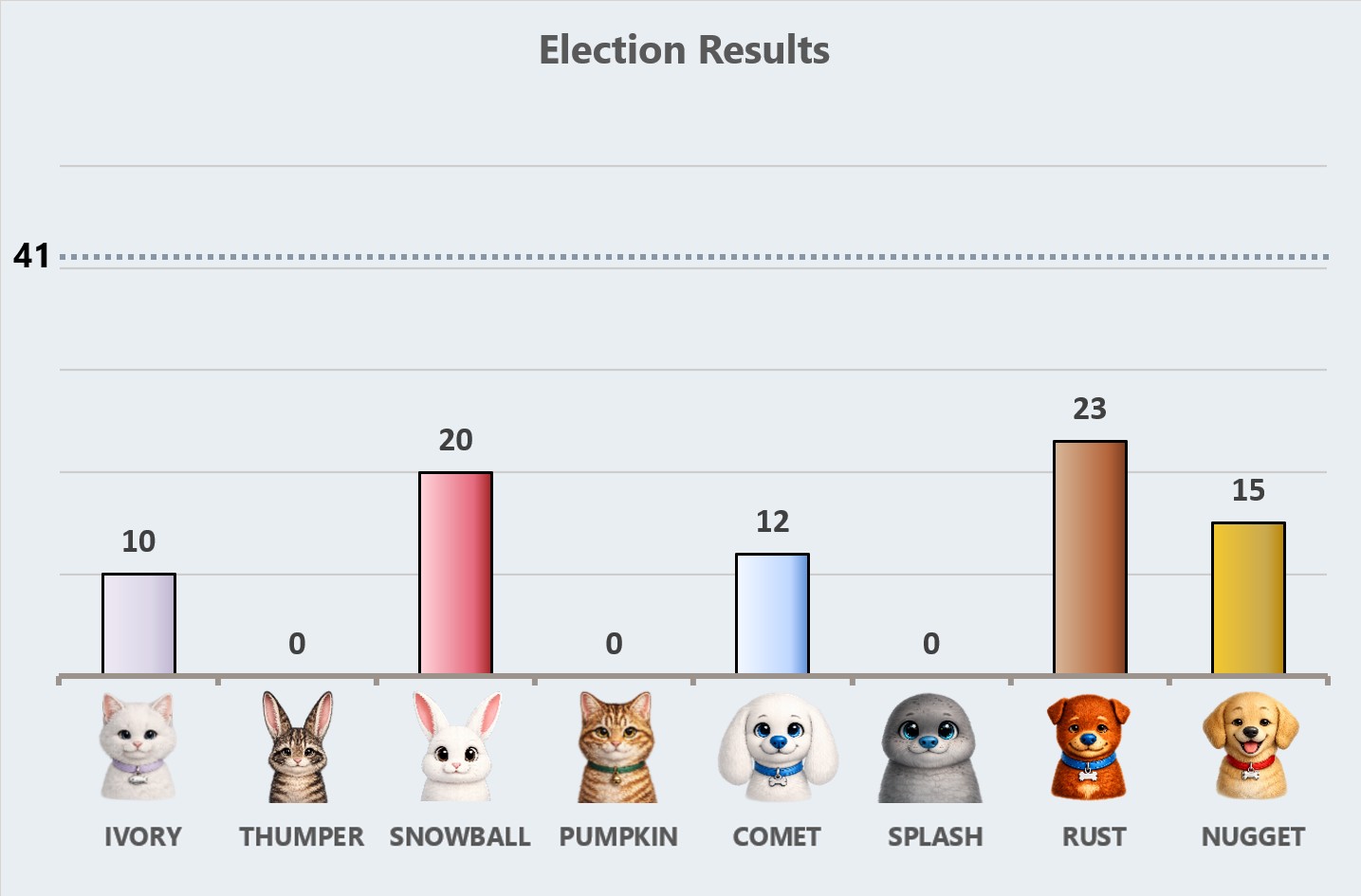
And Rust would win with only 23 of the 80 votes. The remaining 57 voters were not disenfranchised. Their ballots were not thrown in the garbage or set on fire. They simply could not produce a candidate to get more votes than Rust. This is how plurality elections work.
This creates an important strategic incentive in plurality elections. Smaller groups may need to abandon their preferred candidate, combine behind a larger coalition, and then vote for a candidate who is not their preferred candidate in order to make the most of their vote.
Top-Two Runoff Election
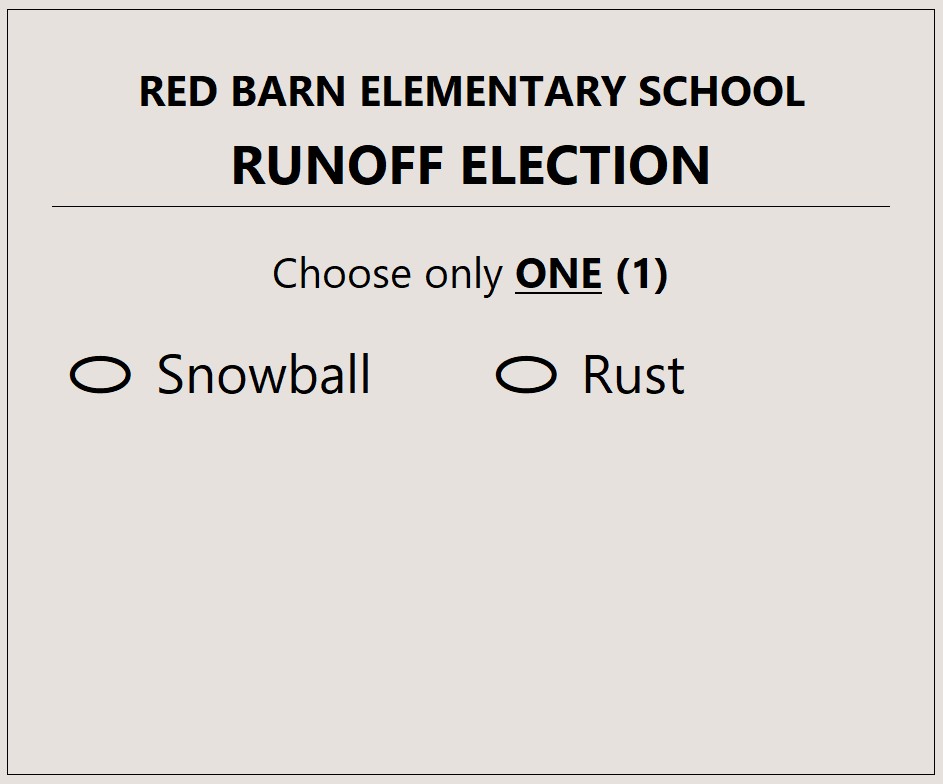
One solution intended to let voters support their true preferred candidate is a top-two runoff election. If no candidate receives a majority of votes in the initial election, the top two candidates advance to a runoff election, and the voters can return to vote between those two. The ballot to the right shows what a runoff election ballot may look like. In the previous election, Rust and Snowball had the most votes, so those two would continue. This allows the voters to choose directly between the two strongest candidates from the initial election, producing a majority winner in the runoff election.
One solution intended to let voters support their true preferred candidate is a top-two runoff election. If no candidate receives a majority of votes in the initial election, the top two candidates advance to a runoff election, and the voters can return to vote between those two. The ballot to the below shows what a runoff election ballot may look like.
In the previous election, Rust and Snowball had the most votes, so those two would continue. This allows the voters to choose directly between the two strongest candidates from the initial election, producing a majority winner in the runoff election.
In the runoff election:
- The 23 BlueNose Voters would vote again for Rust.
- The 20 LongEar Voters would vote again for Snowball.
- The 10 WhiteFur Voters would now vote for Snowball.
- The 12 BigEye Voters would also now vote for Snowball.
- The 15 Dog Voters would now vote for Rust.
After the runoff votes are counted, the results become:
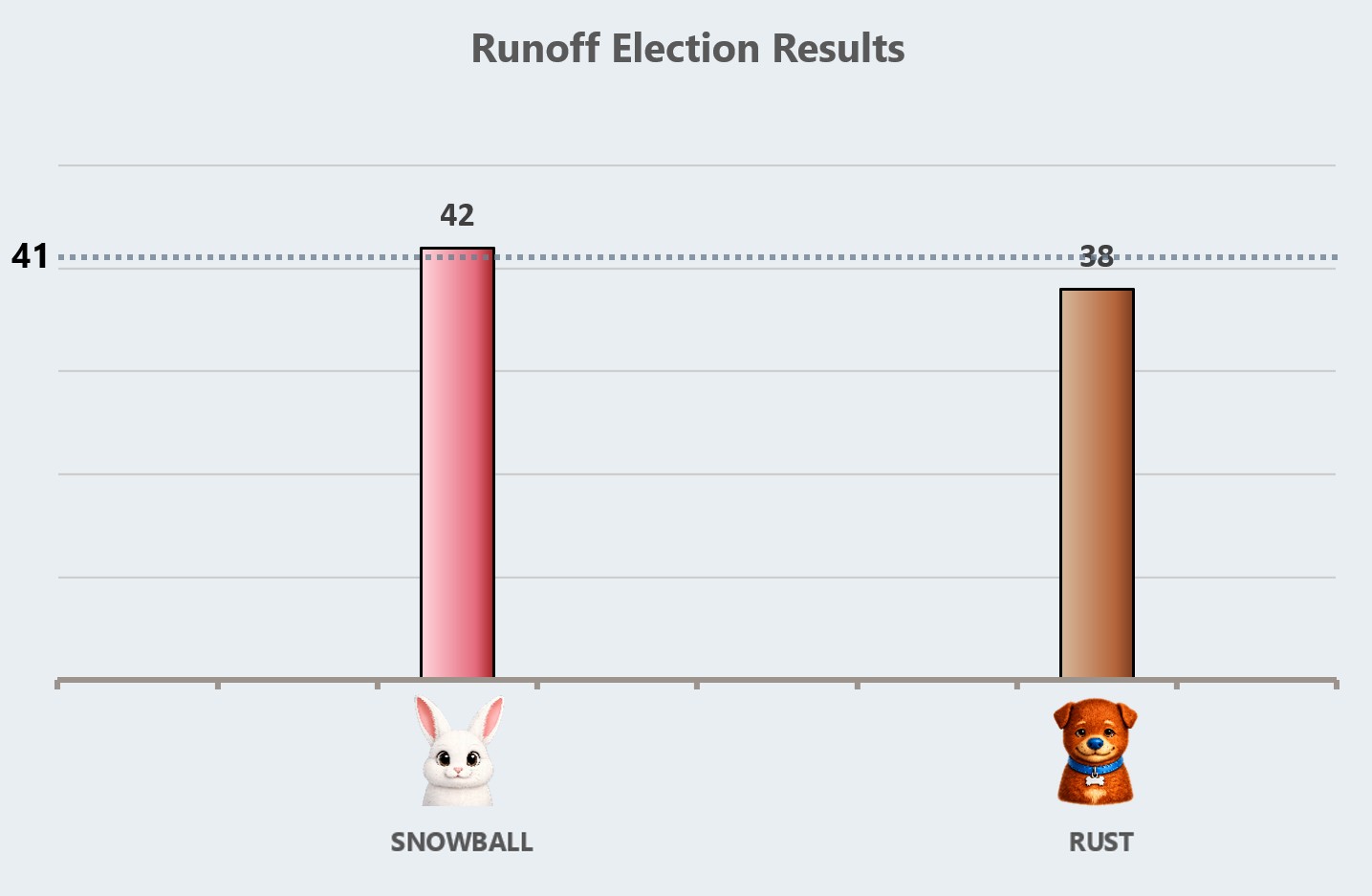
And now Snowball wins with a majority of the votes in the runoff election. The takeaway here is that the candidate with the most votes in the initial election but without a majority may still lose the runoff election.
Instant Runoff Voting (IRV) Election
Sometimes voters do not want to return for a second election. With Instant Runoff Voting, there is only one election, but voters are given a ranked ballot to select candidates. If a voter has an opinion about who they would prefer after their first choice is eliminated, that voter can rank their preferences in order. The ranked ballot may look like the ballot to the right. The first round of counting considers only each voter's first choice. If no candidate receives a majority, the candidate with the fewest first-place votes is eliminated, and those ballots transfer to the next preferred candidate for another round of counting. This process continues, with each round adhering to "one person, one vote," until a candidate has a majority of the continuing votes. We will use the Red Barn Elementary example to show step by step how Instant Runoff Voting can be implemented.
Sometimes voters do not want to return for a second election. With Instant Runoff Voting, there is only one election, but voters are given a ranked ballot to select candidates. If a voter has an opinion about who they would prefer after their first choice is eliminated, that voter can rank their preferences in order. The ranked ballot may look like this:
The first round of counting considers only each voter's first choice. If no candidate receives a majority, the candidate with the fewest first-place votes is eliminated, and those ballots transfer to the next preferred candidate for another round of counting. This process continues, with each round adhering to "one person, one vote," until a candidate has a majority of the continuing votes. We will use the Red Barn Elementary example to show step by step how Instant Runoff Voting can be implemented.
The 5 groups then fill out their ballots as follows:
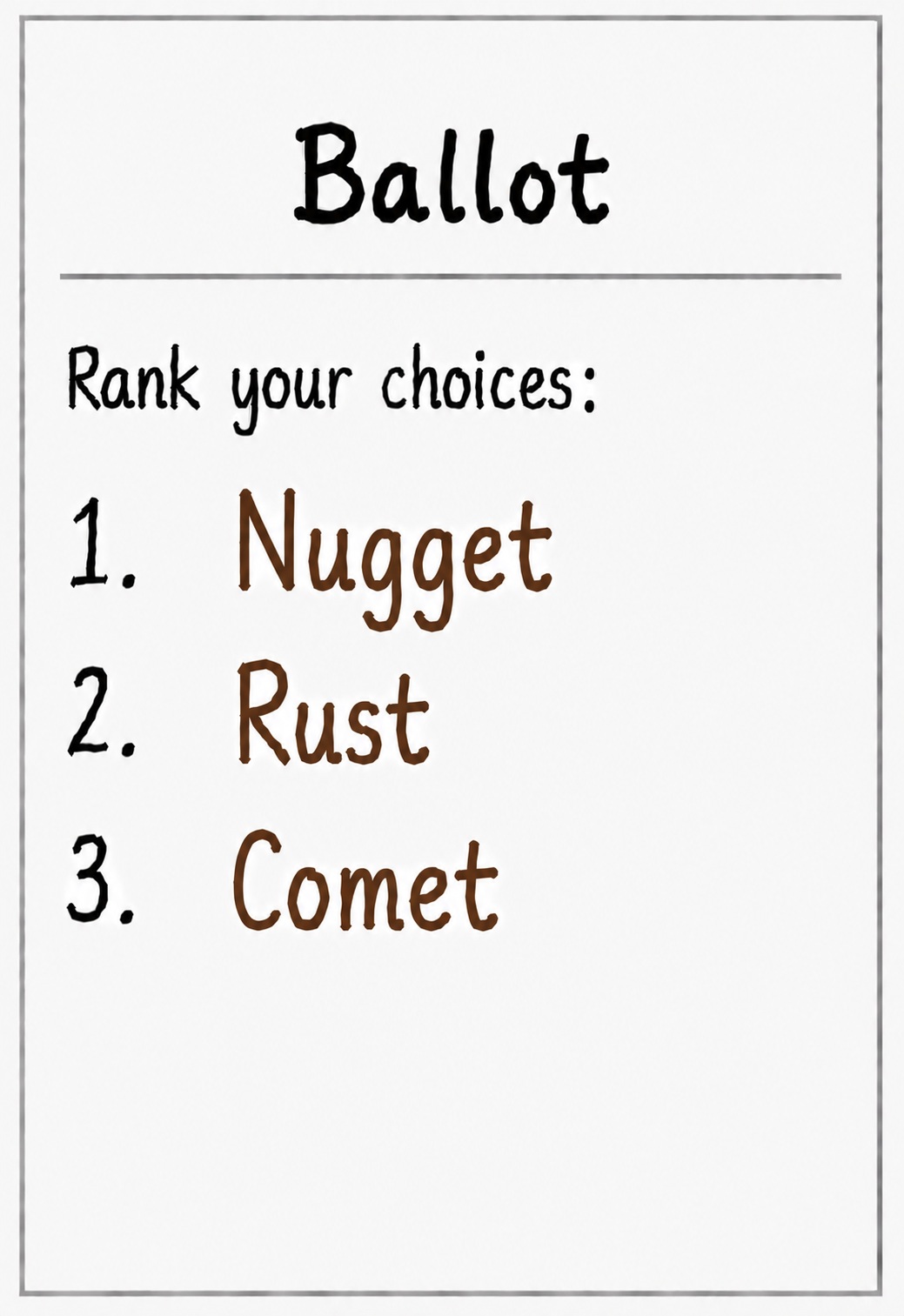
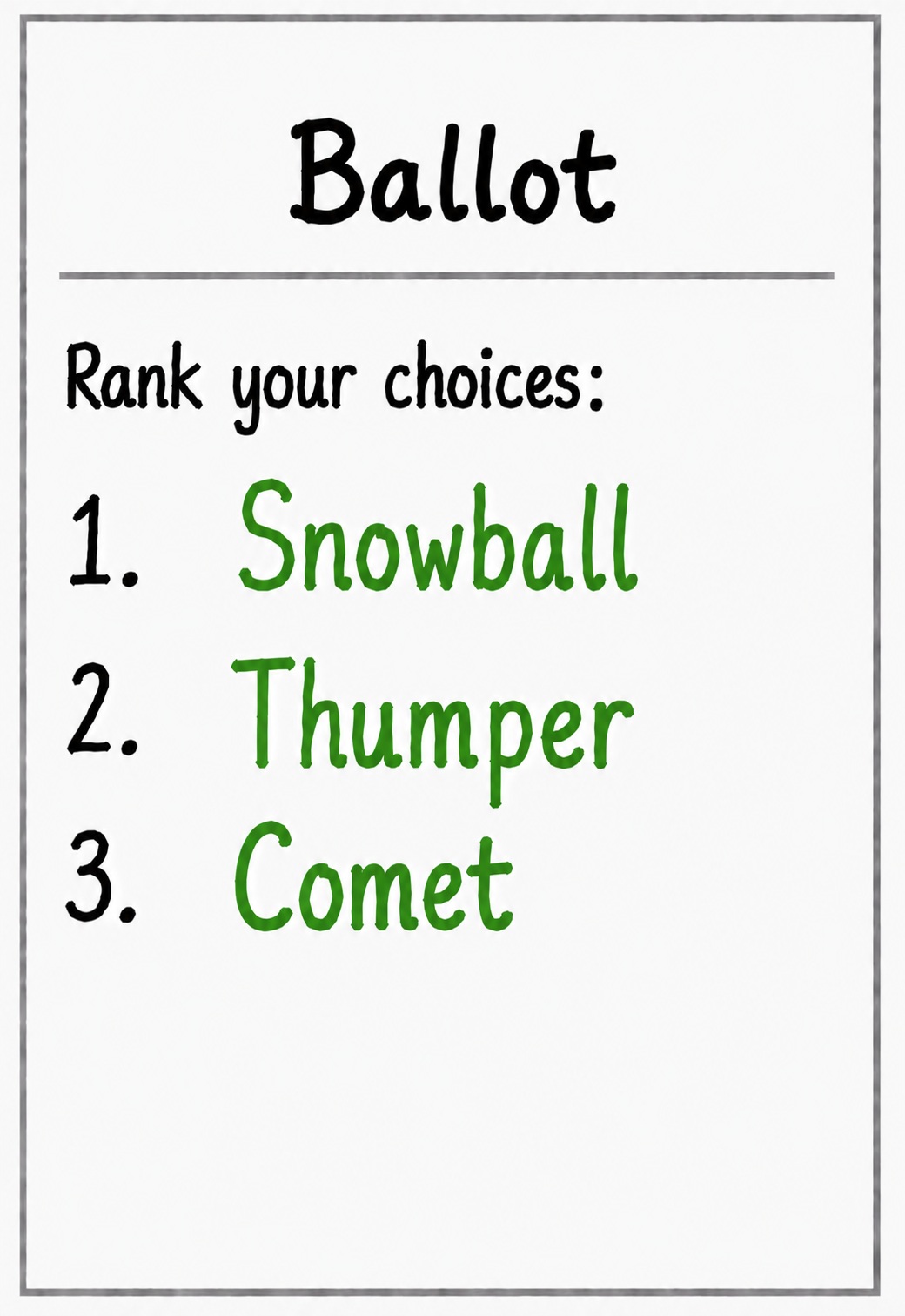
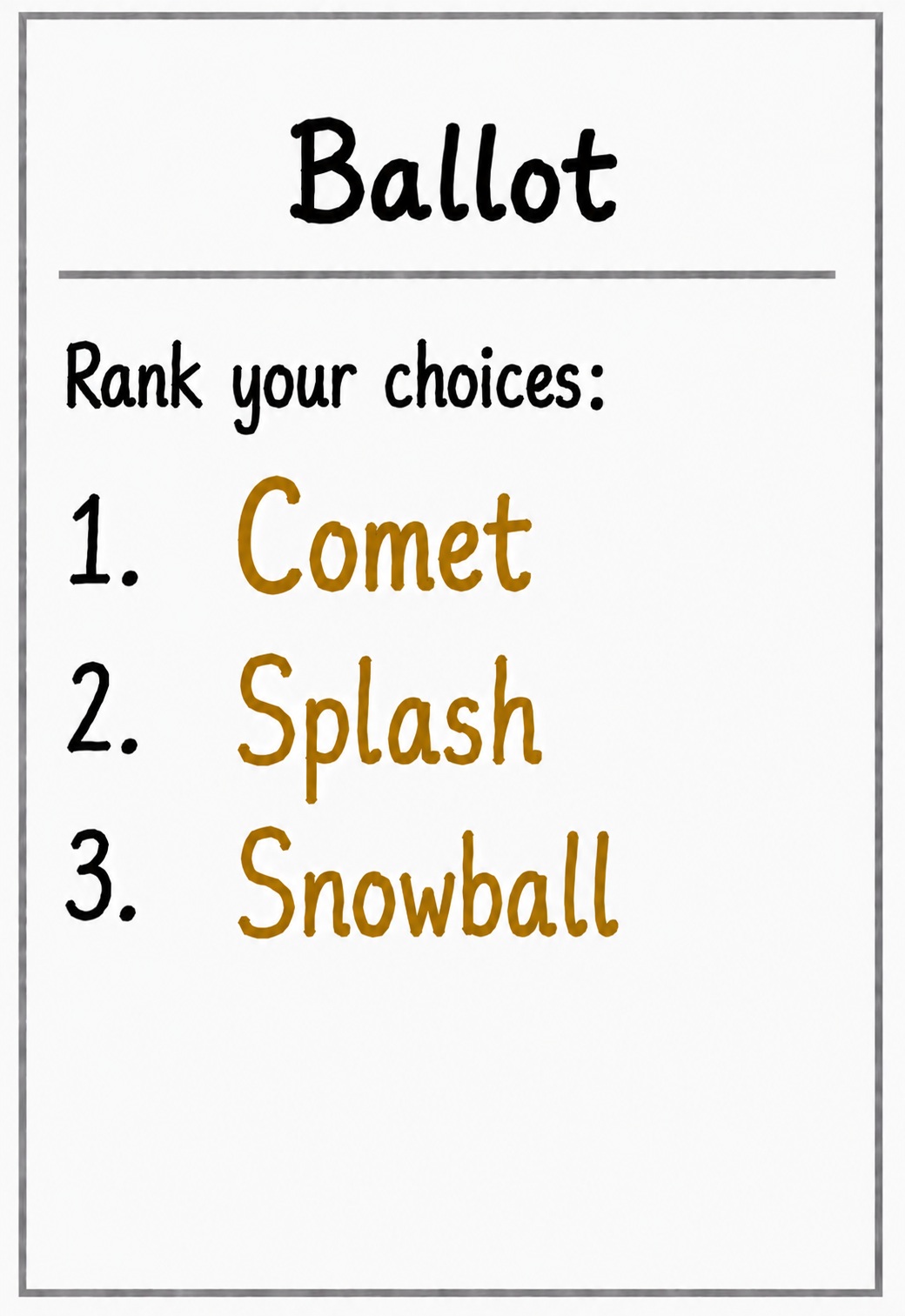
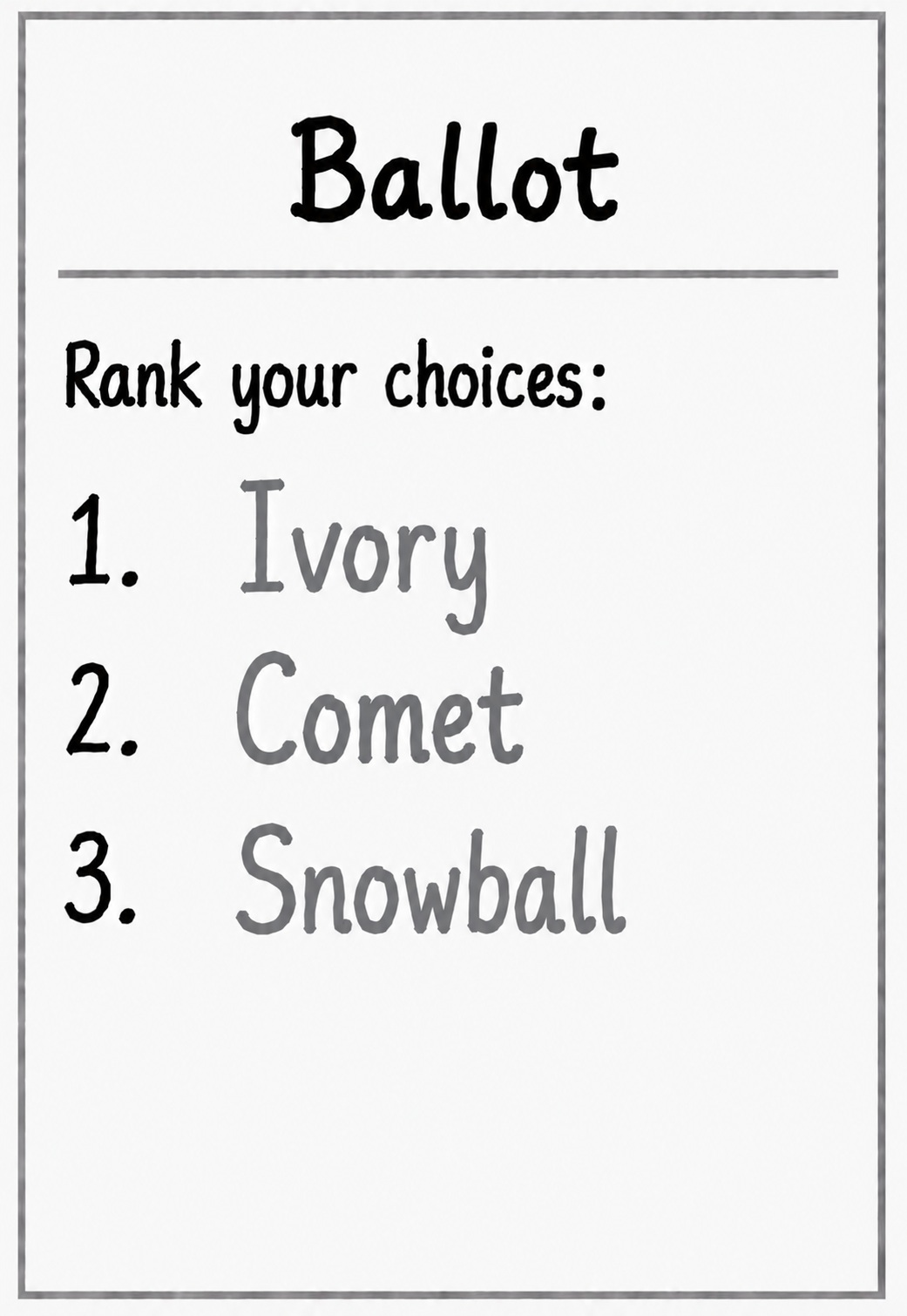
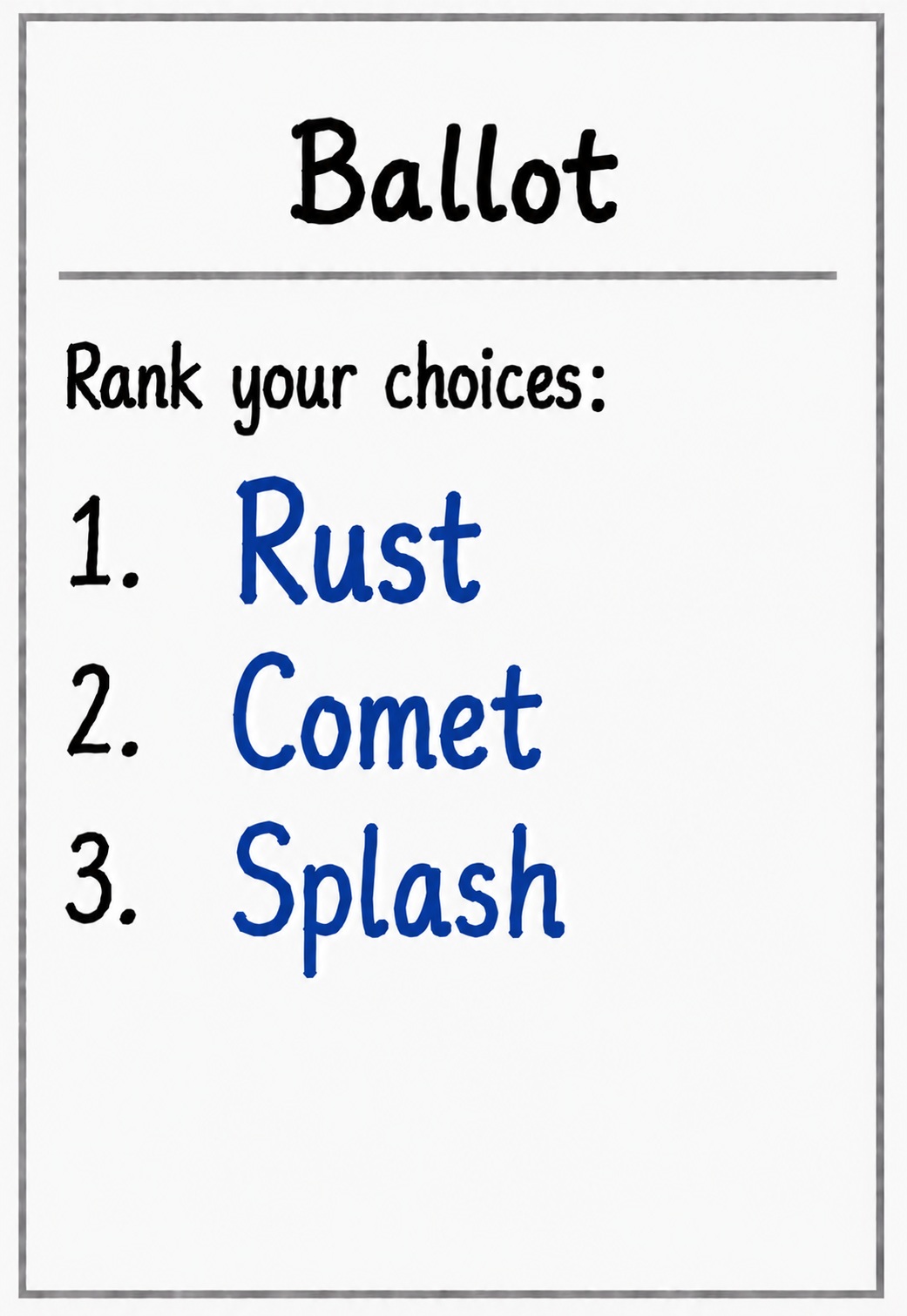
The initial distribution of first-place votes would be the same as the traditional election results:
No pet initially reached the 41 votes needed for a majority. Thumper, Pumpkin, and Splash received no first-place votes and were eliminated immediately. Ivory had the fewest first-place votes, so Ivory was eliminated next, and all 10 WhiteFur ballots transferred from Ivory to the next choice on the WhiteFur ballots, Comet:
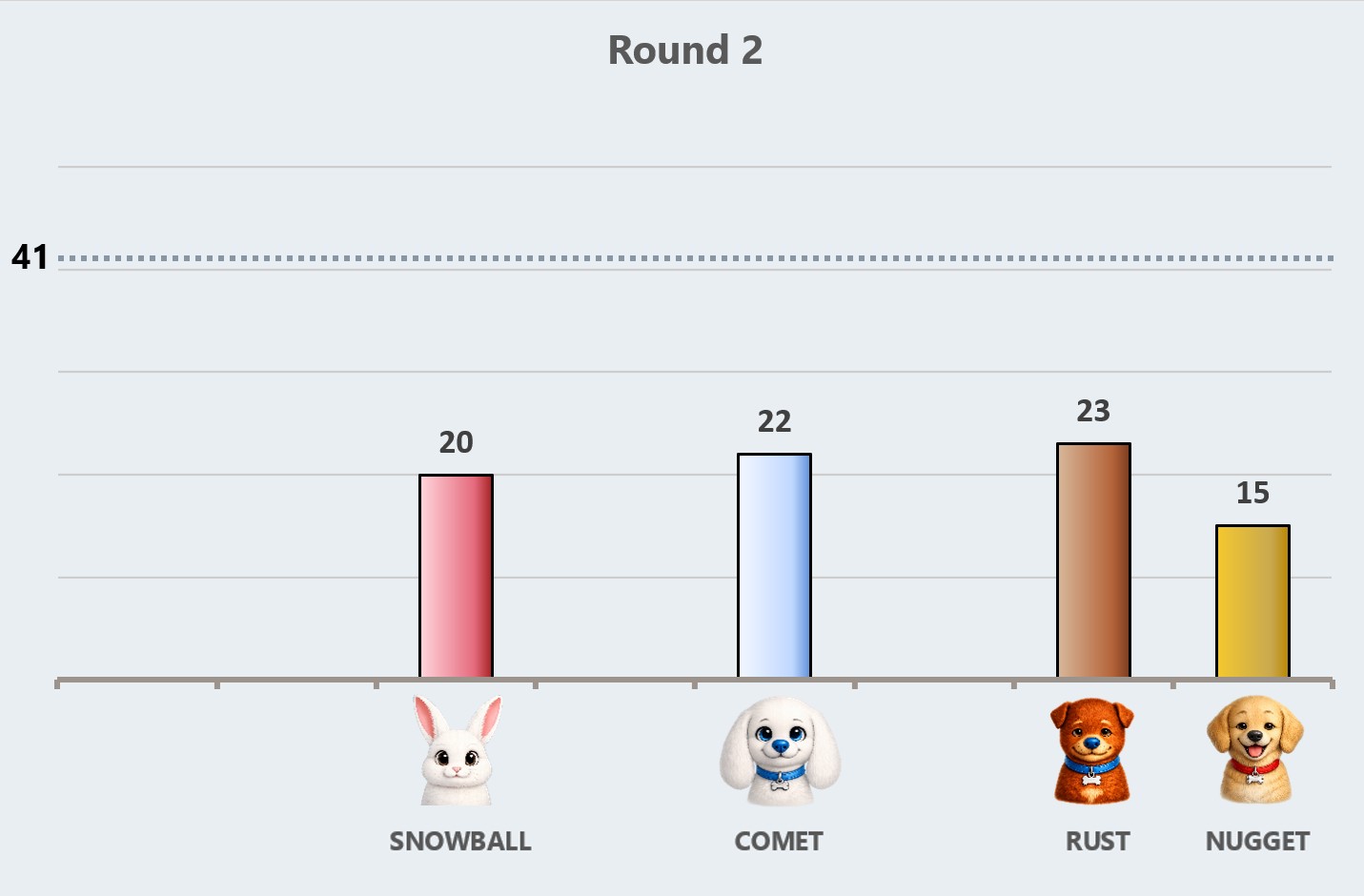
Again, no candidate has reached 41 votes. Nugget has the fewest votes and is eliminated next. The 15 Dog ballots transfer from Nugget to Rust:
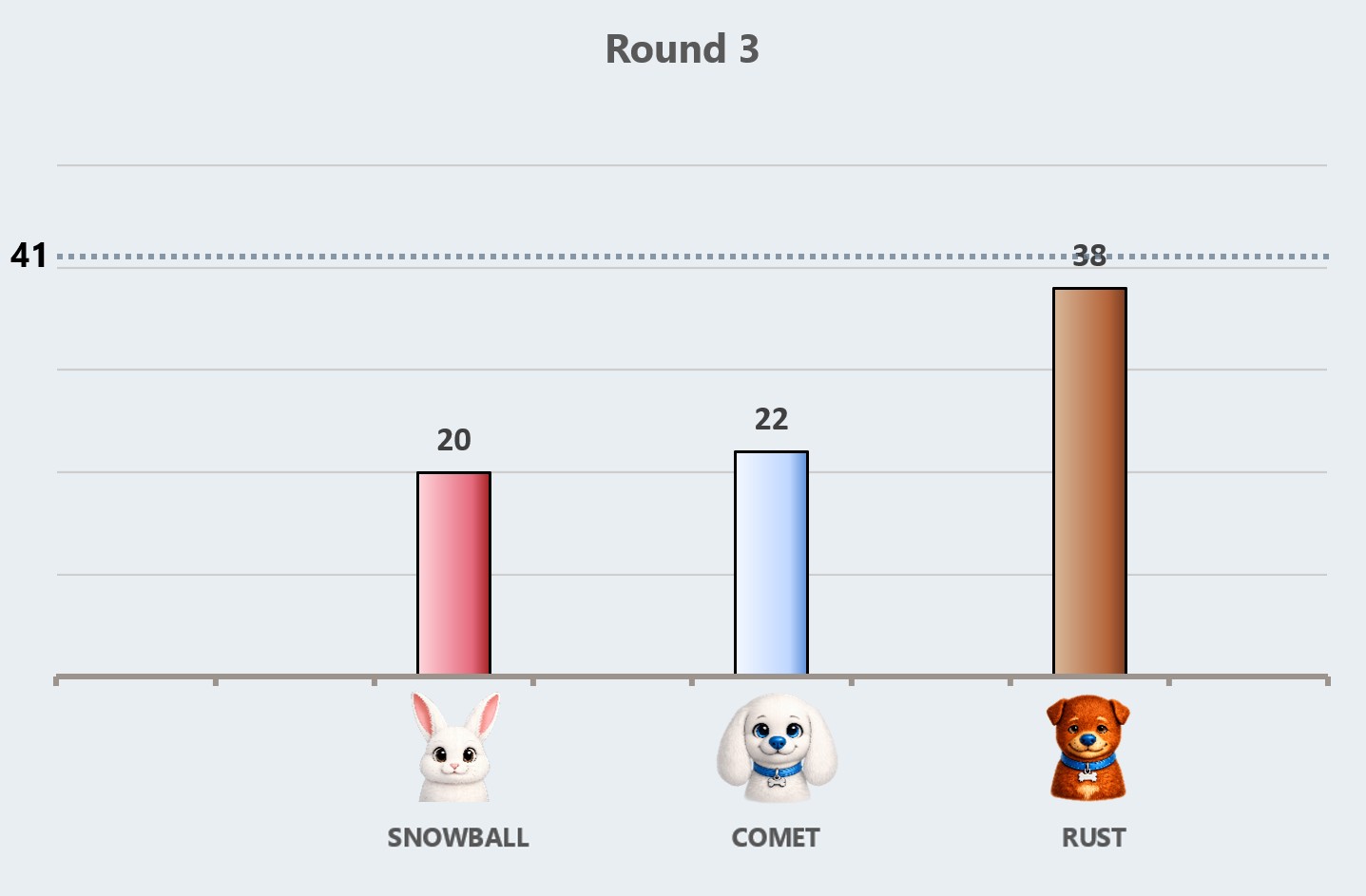
Still no candidate has reached 41 votes. Snowball now has the fewest votes and is eliminated next. The 20 LongEar ballots all transfer from Snowball to Comet:
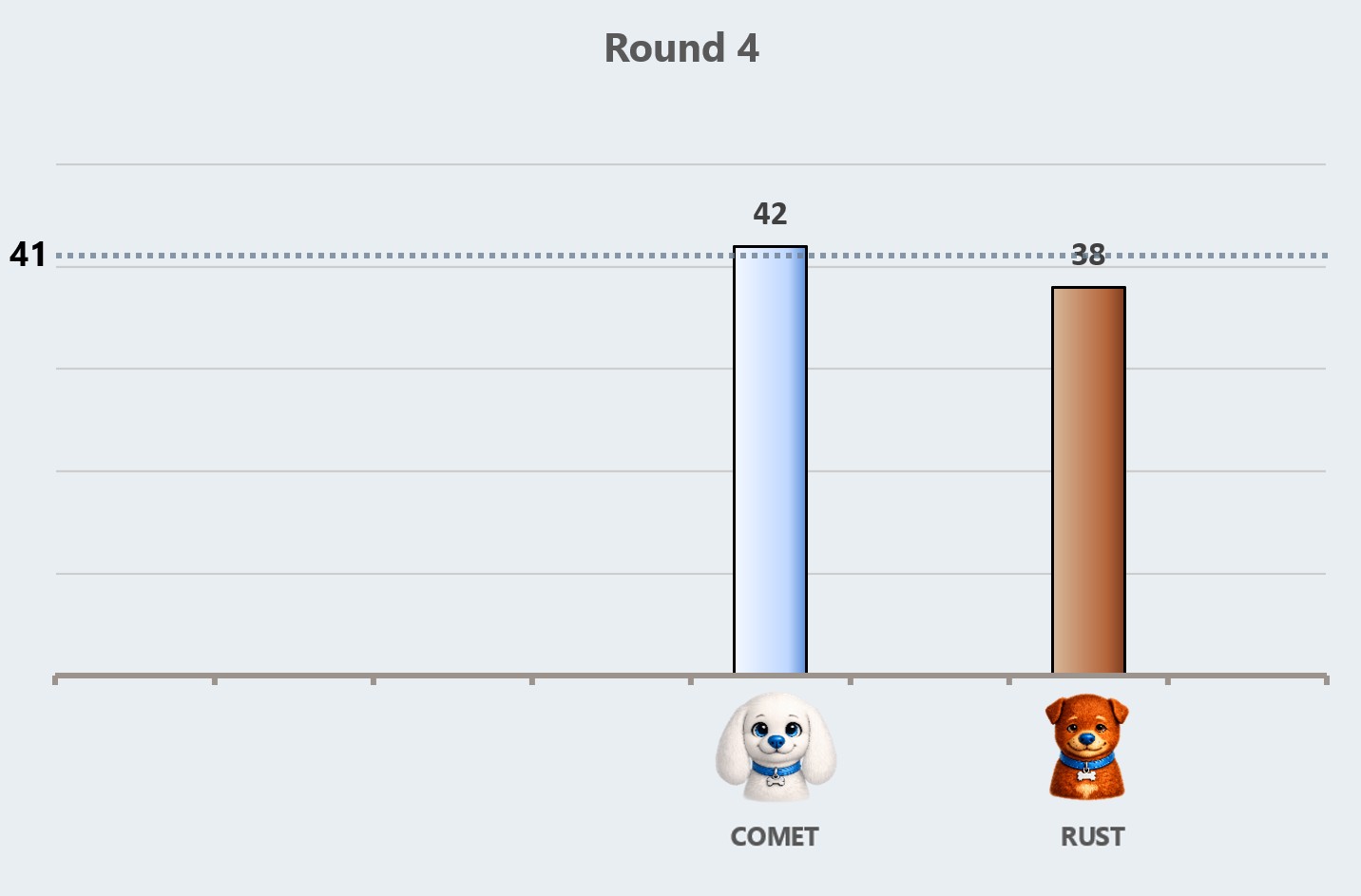
And now Comet wins with a majority of the votes. Another takeaway from IRV is that a candidate who would have been eliminated in a traditional top-two runoff election can become the winner in an IRV election.
The next example highlights one of the key tradeoffs of Instant Runoff Voting.
The Wilderness Example
The wilderness is on edge. Its inhabitants have divided into three major factions: the Forest Animals, or Foresters, the Felines, and the Avians. Three candidates have emerged to lead the wilderness:



The factions view the candidates as follows:
- The Bear is strongly supported by the Foresters but opposed by both the Felines and the Avians.
- The Lion is strongly supported by the Felines and tolerated by the Avians but opposed by the Foresters.
- The Eagle is strongly supported by the Avians and is broadly acceptable to both the Foresters and the Felines.
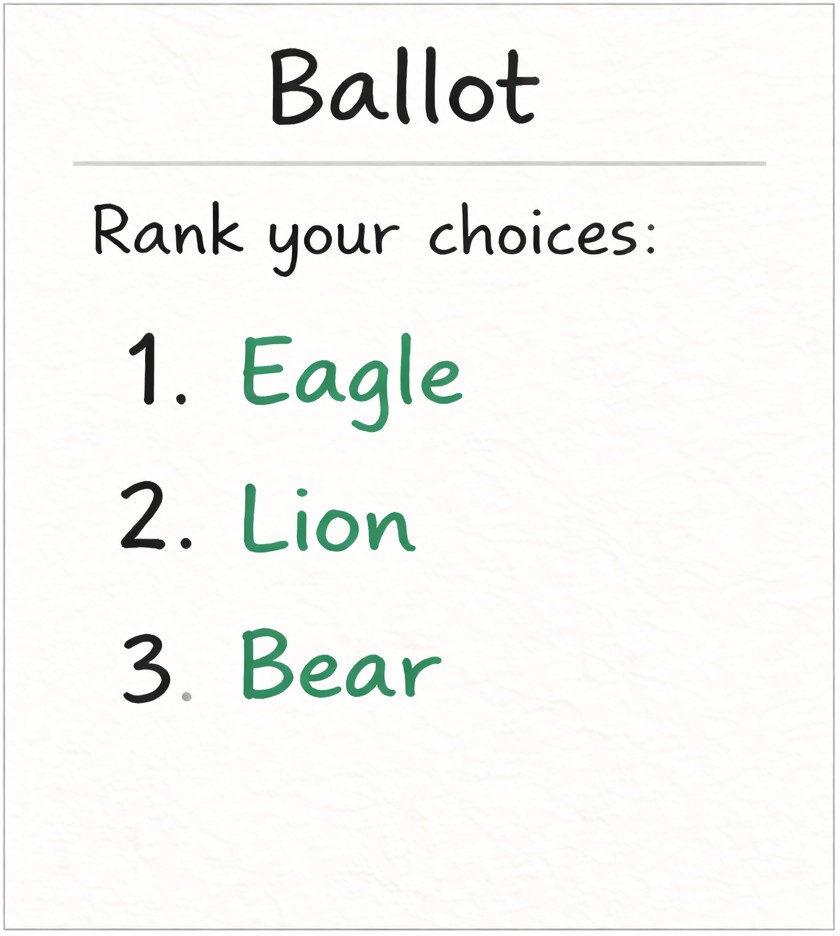
In a wilderness of 45 Foresters, 35 Felines, and 20 Avians, the ballots look like this:
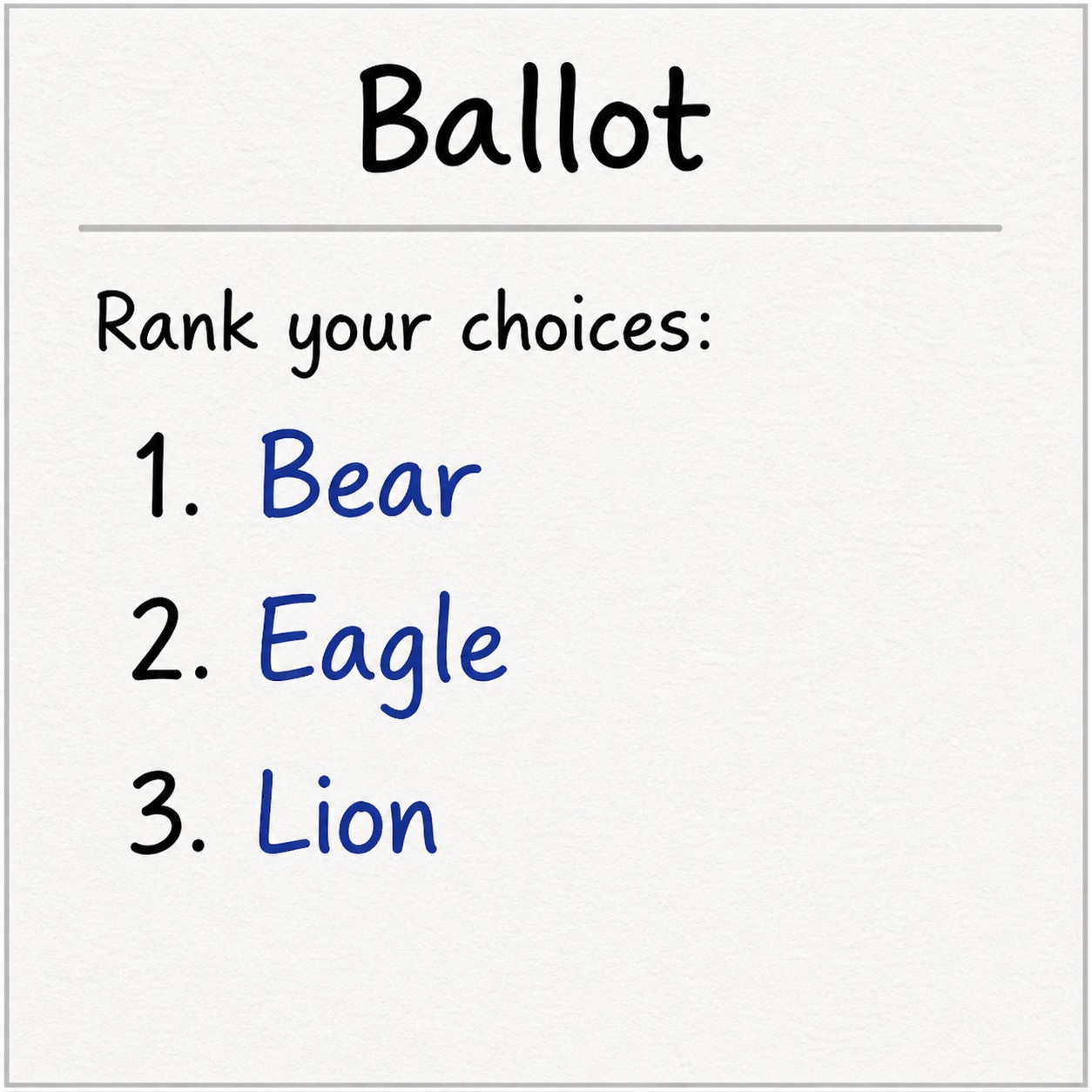
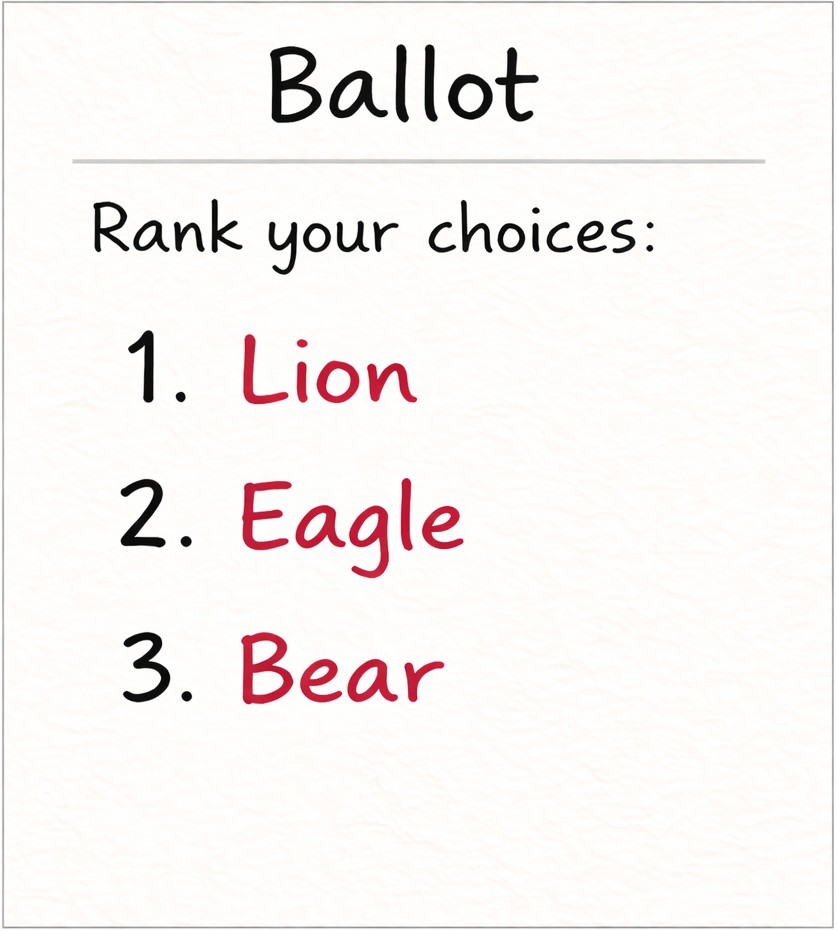
When the first-place votes are counted, the results of the initial round are:
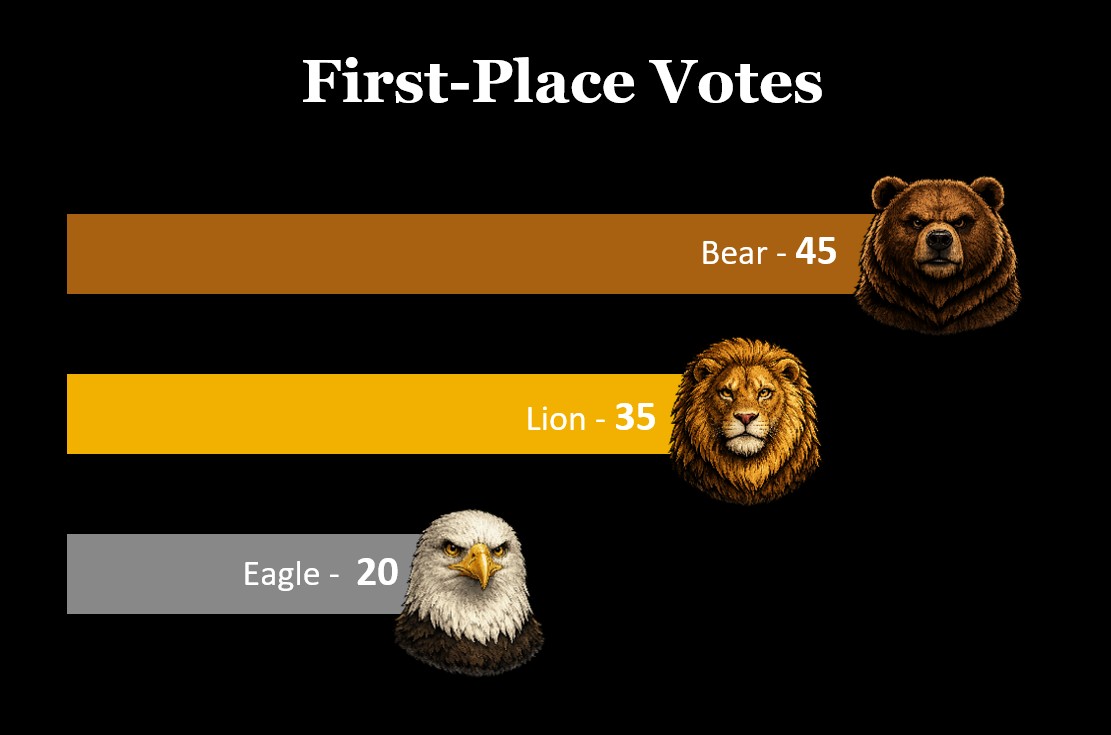
No candidate has a majority of the votes, so the Eagle, having the fewest first-place votes, is eliminated. This creates a head-to-head matchup between the Bear and the Lion. The results of that matchup are:
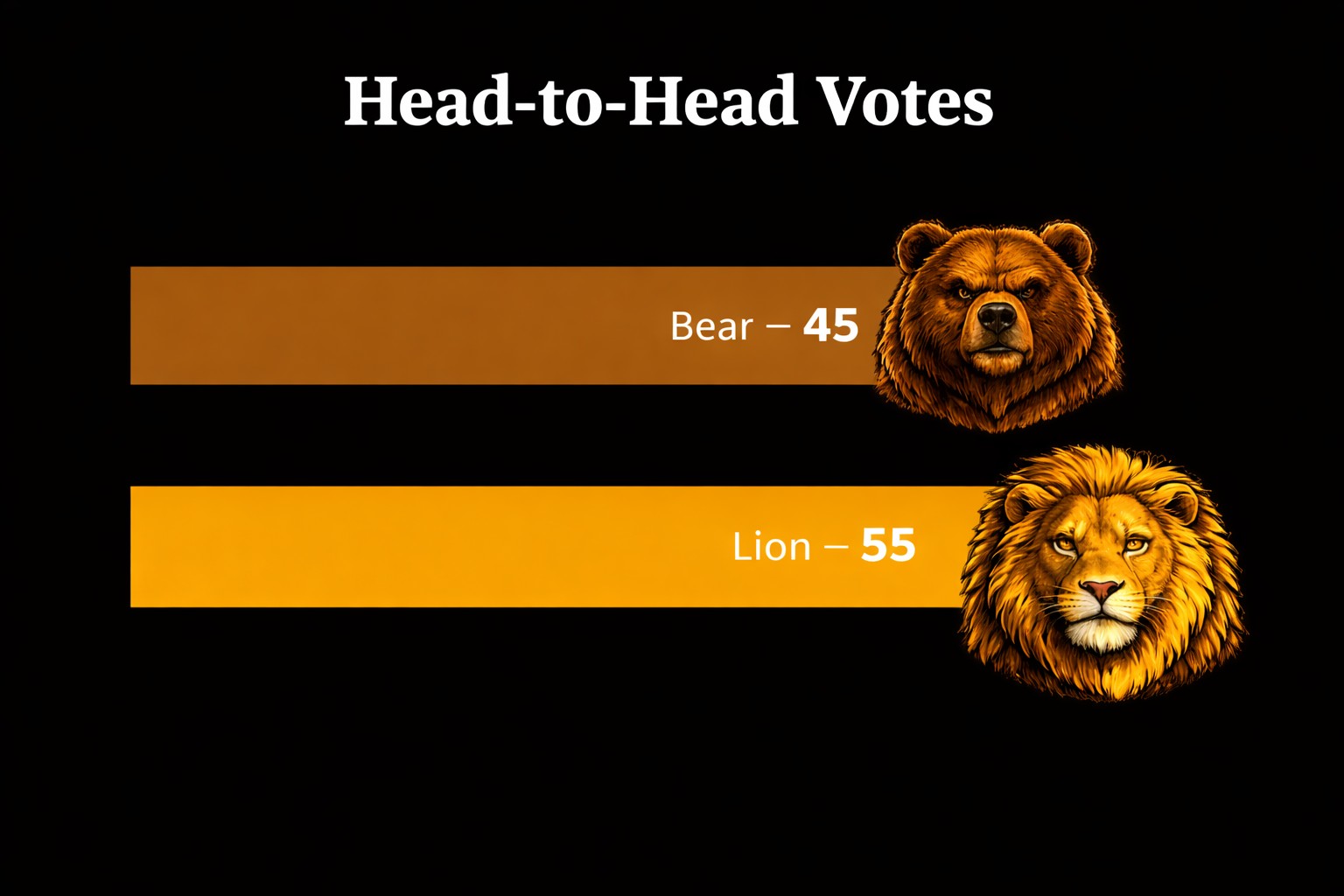
The Lion wins the head-to-head matchup. This leaves the Foresters who supported the Bear with three grievances. First, their candidate received the most first-place votes but still lost the election. Second, the candidate they opposed the most, the Lion, won. Third, if they had voted strategically for the Eagle instead of voting their true preference, they could have stopped the Lion from winning.
This outcome highlights a shift from a simple election without runoffs. In a simple election, the Avians would not be able to reach their best achievable outcome if they vote their preferences, given how the Foresters and Felines vote. To do so, they would need to abandon their preferred candidate, the Eagle, and vote for the Lion instead.
With IRV, that problem is resolved for the Avians, but is introduced for the Foresters. The Foresters are not able to reach their best achievable outcome if they vote their preferences. They would need to abandon their preferred candidate, the Bear, and vote for the Eagle instead. To clarify this concept, suppose the Foresters change their ballots away from their preferred candidate as follows:
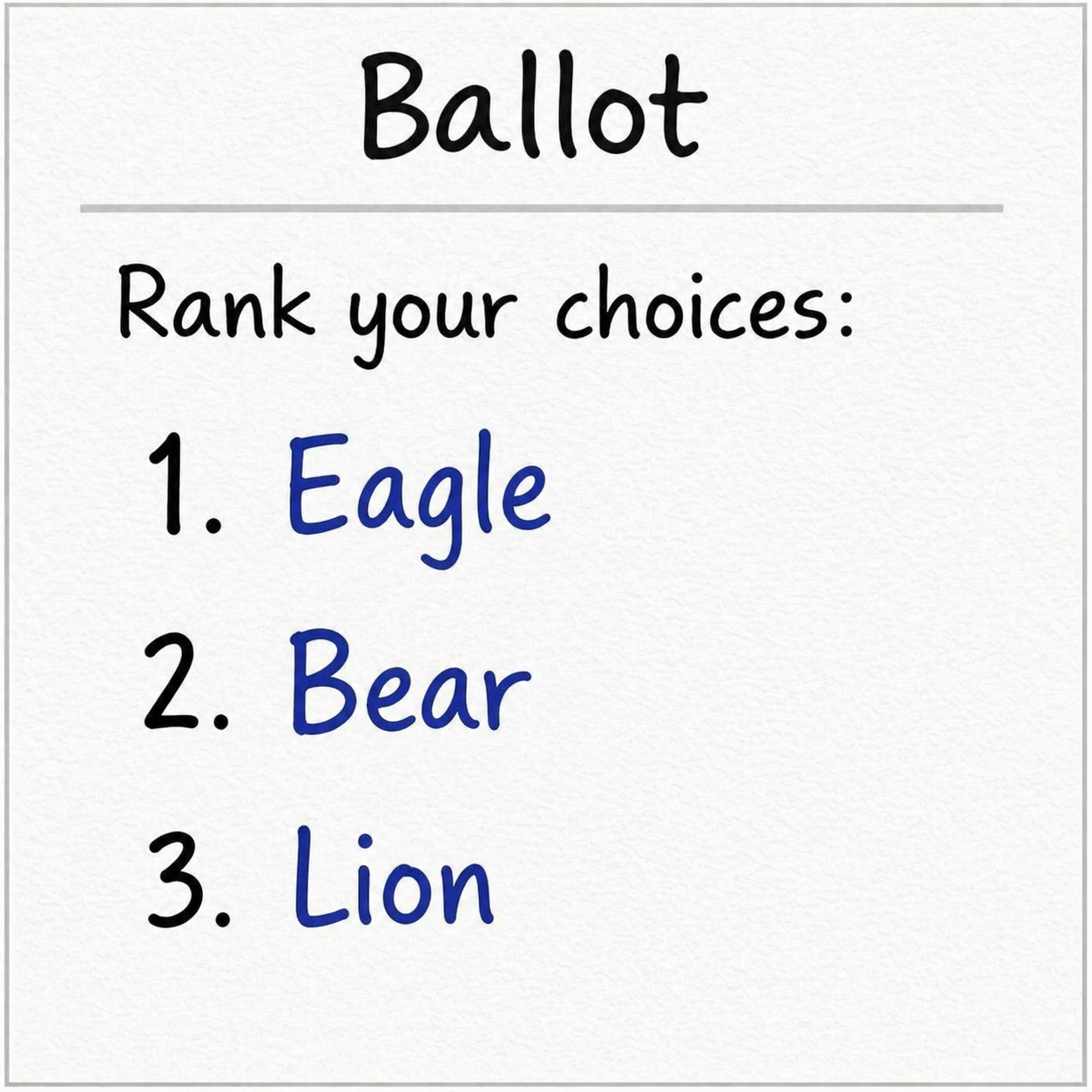
The total ballots in the election would be:
When the first-place votes are counted, the results of the initial round are:
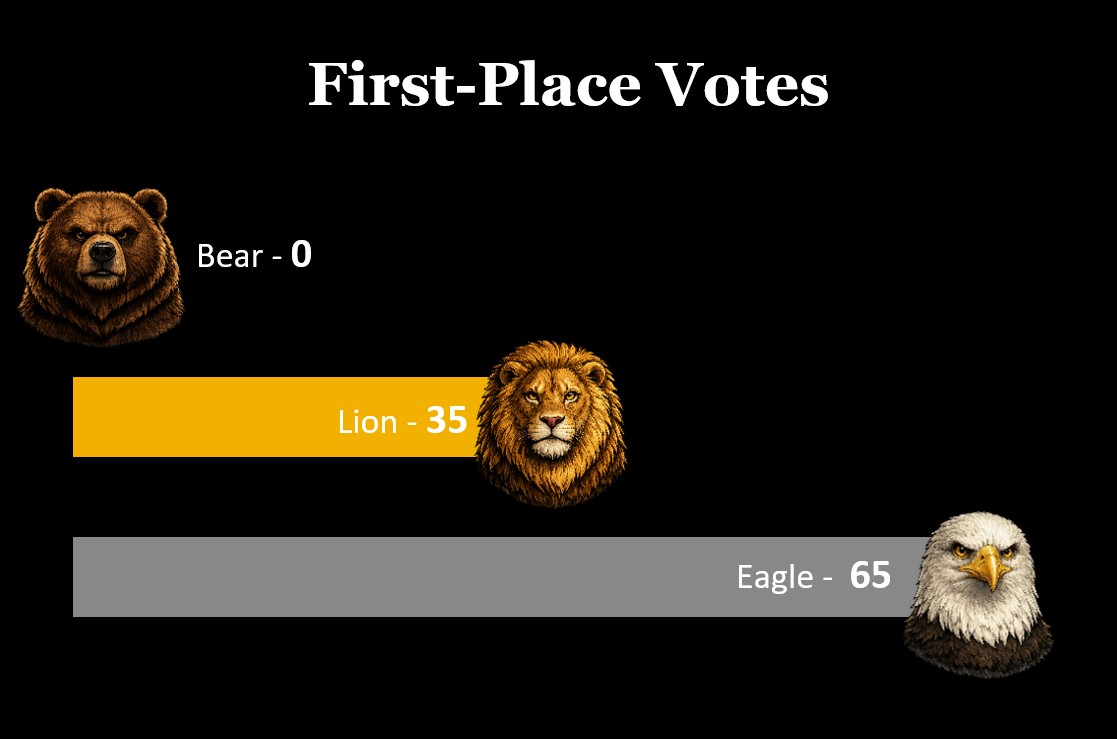
The Eagle has a majority of the votes and wins without the need for a runoff. This is the best achievable outcome for the Foresters, but they had to change their ballots from their true preferences to achieve it.
This illustrates one of the key tradeoffs with IRV: it does not eliminate the need for strategic voting, but instead shifts which groups are affected. The incentive remains, but changes form and moves to a different group of voters.
Comments
This site does not manage comment accounts. Comment data is handled by a third-party discussion service.