The Spoiler Effect in Ranked Choice Voting
Many election systems can create situations where a candidate changes the outcome of an election without actually winning. These situations are commonly referred to as spoiler effects, and the candidates involved are often called spoiler candidates because their presence can prevent a larger group of voters from reaching their best achievable outcome.

In traditional single-choice plurality elections, this is often caused by two candidates with similar interests splitting support, allowing a candidate with opposing interests to win without majority support. Similar spoiler effects can also occur in Ranked Choice Voting, even without exhausted ballots. This article will describe how spoiler effects and spoiler candidates can emerge in Ranked Choice Voting elections.
The Wilderness
Returning again to the Wilderness, a new candidate has emerged from within the Foresters who calls himself Rotfang:
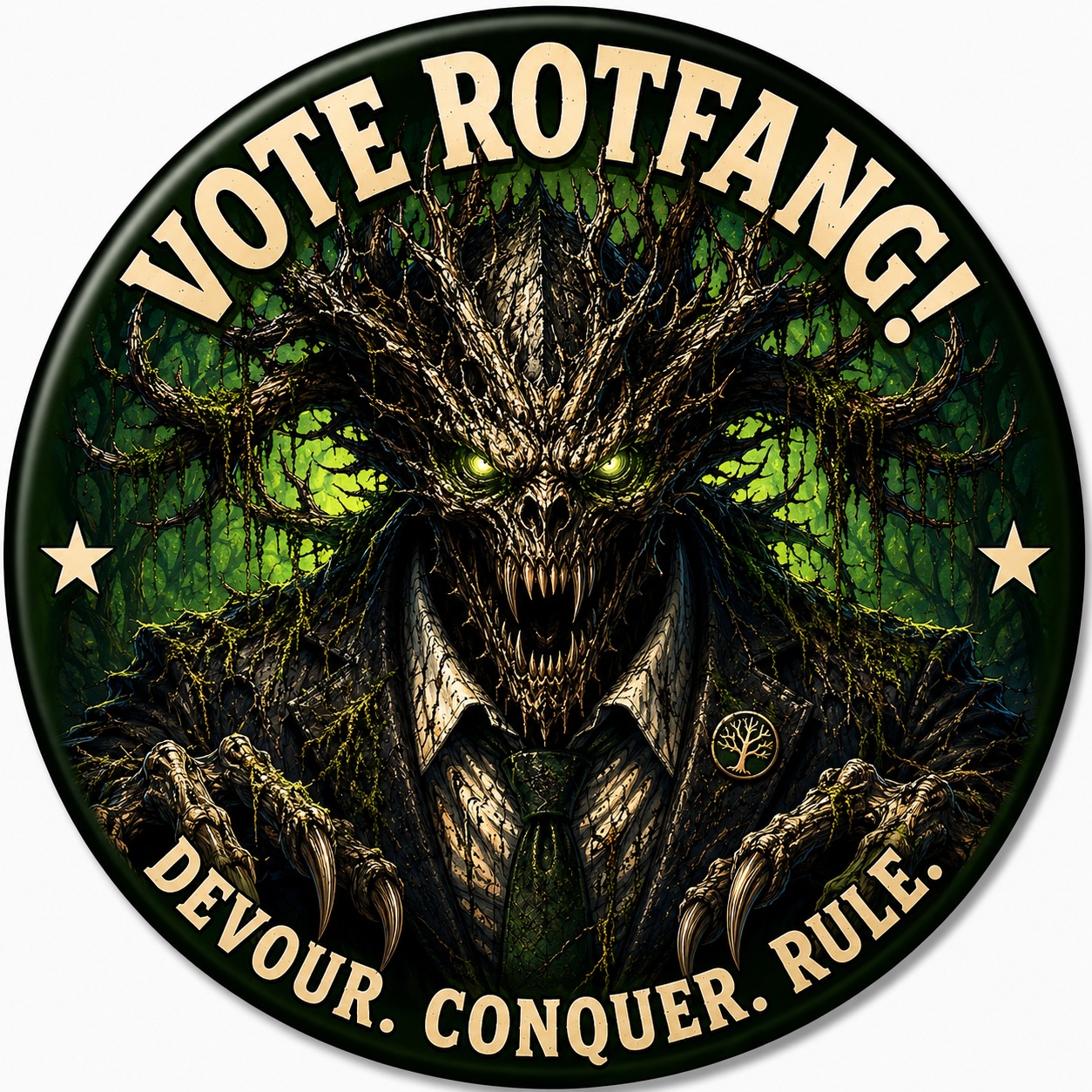


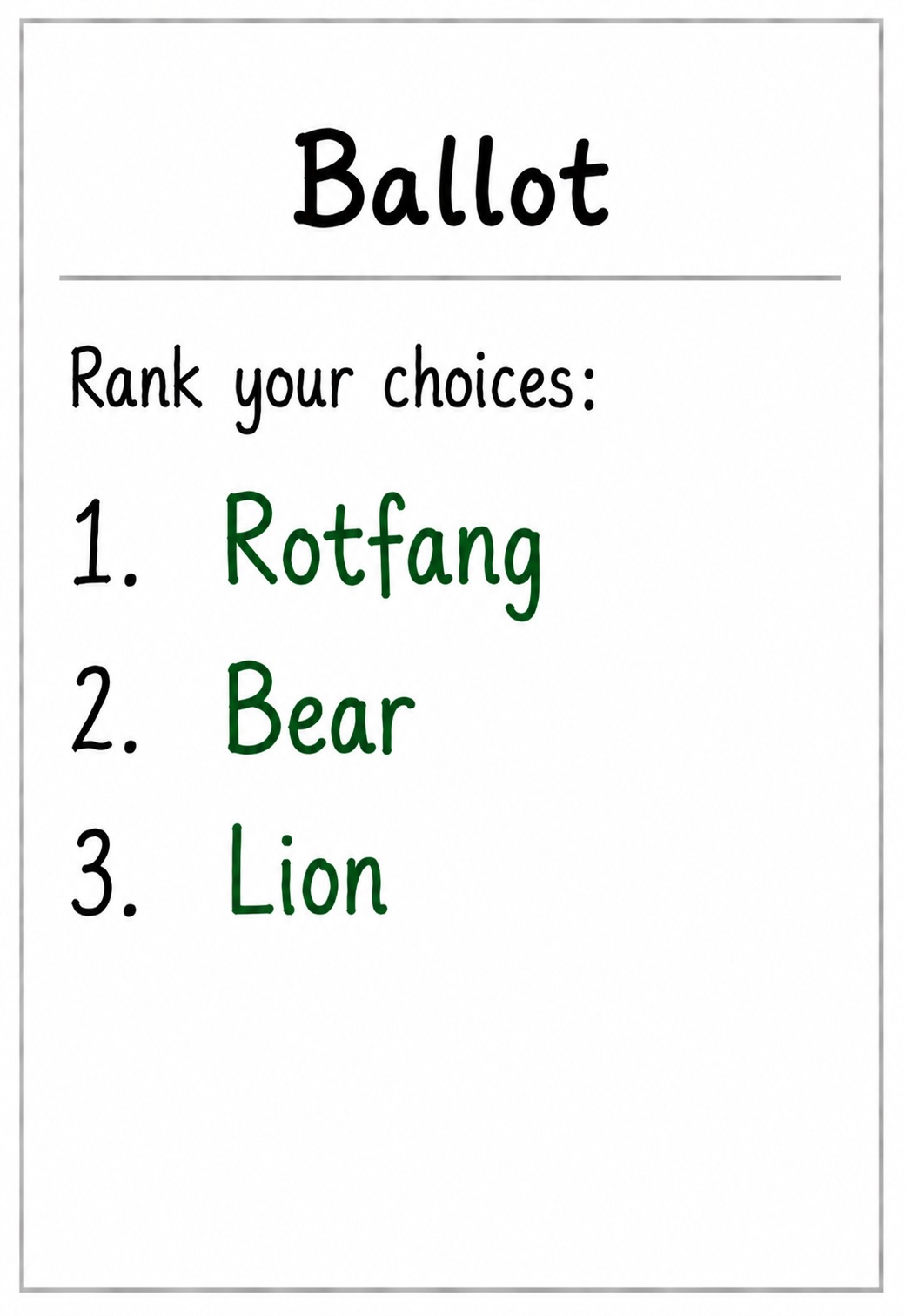
Rotfang represents a newer and more extreme faction within the Foresters who call themselves the Deepwood Foresters. The Deepwood Foresters strongly support Rotfang, but like the rest of the Foresters, still prefer the Bear over the Lion.
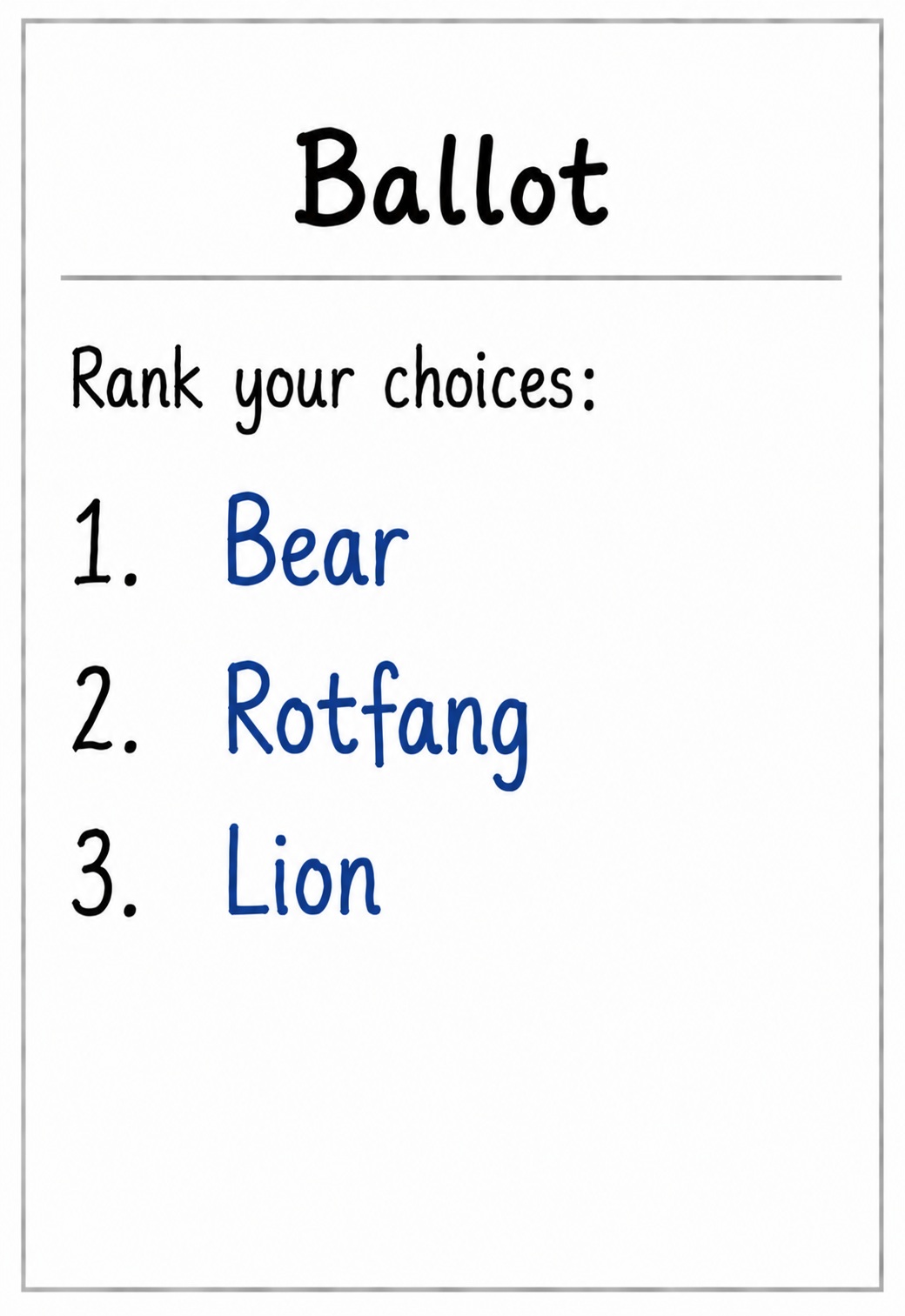
The remaining Foresters who have not joined the Deepwood faction still strongly support the Bear. However, only about half of them support Rotfang over the Lion out of coalition loyalty, while the other half prefer the Lion over Rotfang because they are uncomfortable with the more extreme faction.
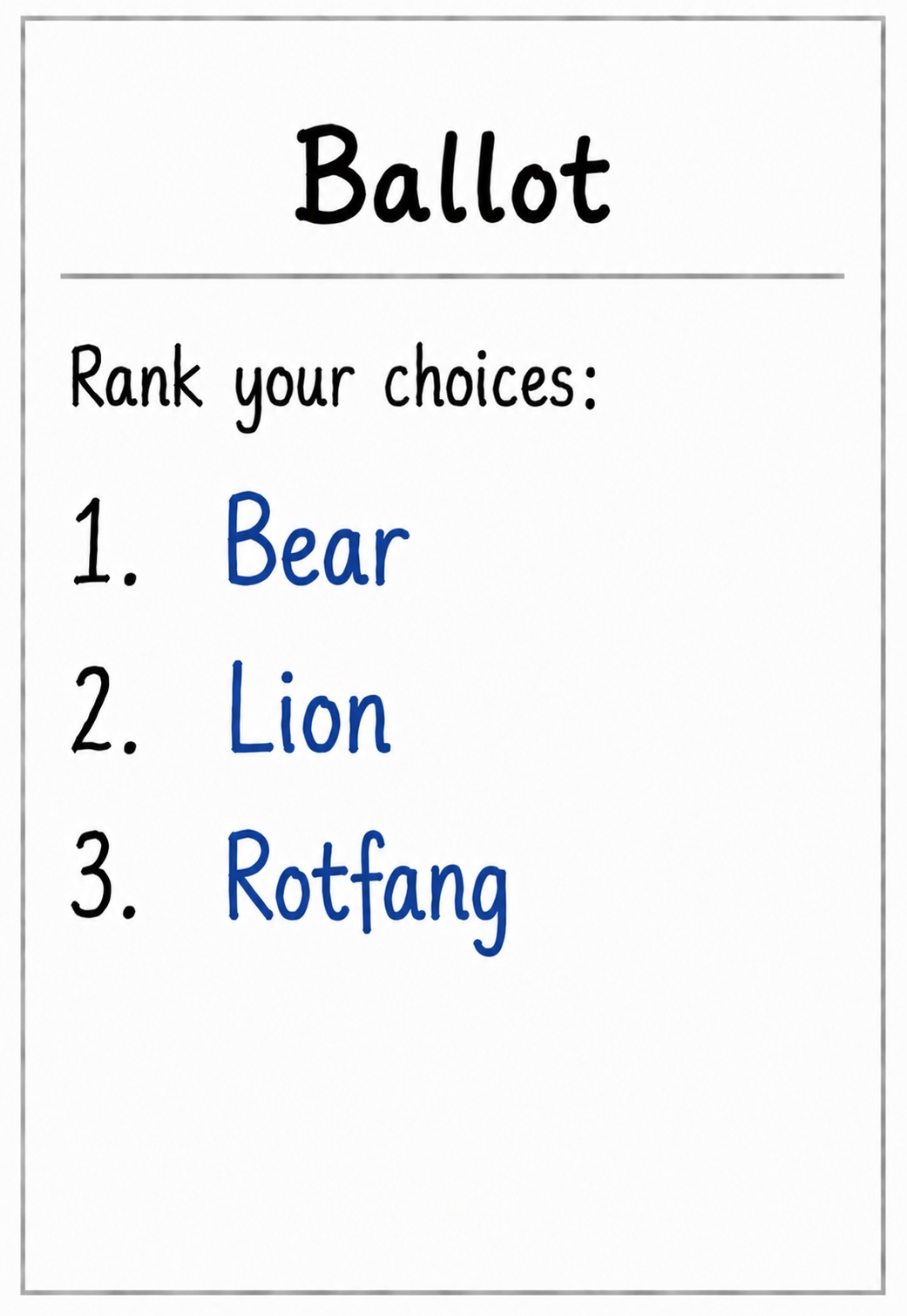
The Felines still strongly support the Lion. While the Bear had always been the least favorite candidate of the Felines, the entire Feline coalition now prefers the Bear over Rotfang.
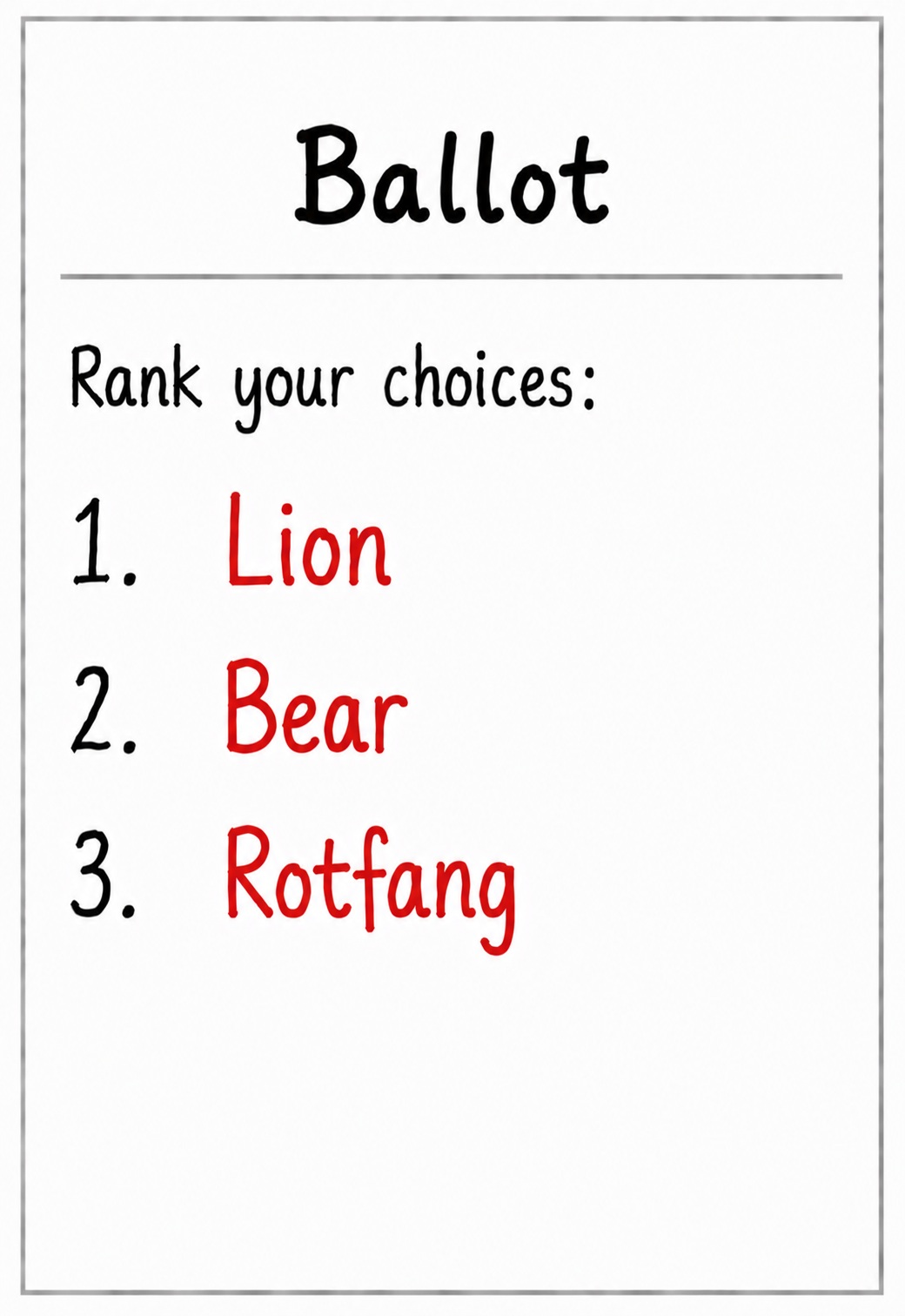
In an election with 32 Deepwood Foresters, 28 traditional Foresters, and 40 Felines, the ballots look like:
Instant Runoff Voting
If this election is processed using Instant Runoff Voting (IRV), the first-place totals would be:
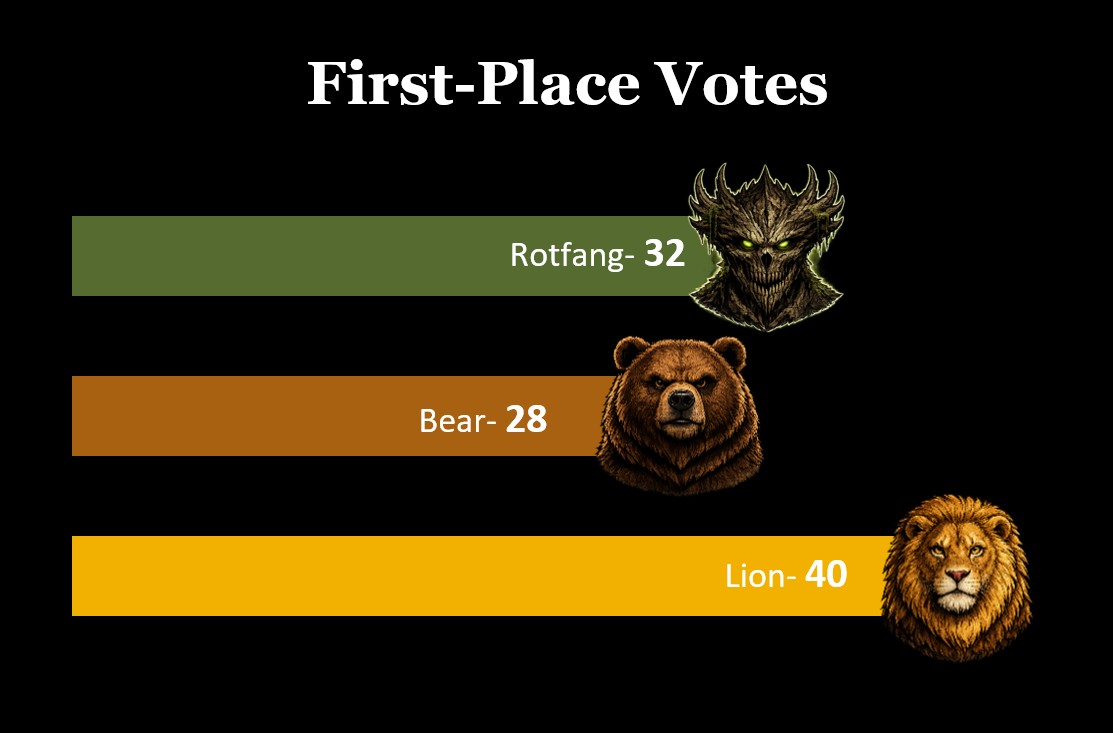
The Bear has the fewest first-place votes and is eliminated. The 14 Forester ballots that ranked Rotfang second continue to Rotfang. The 14 Forester ballots that ranked the Lion second continue to the Lion. The process continues between Rotfang and the Lion:
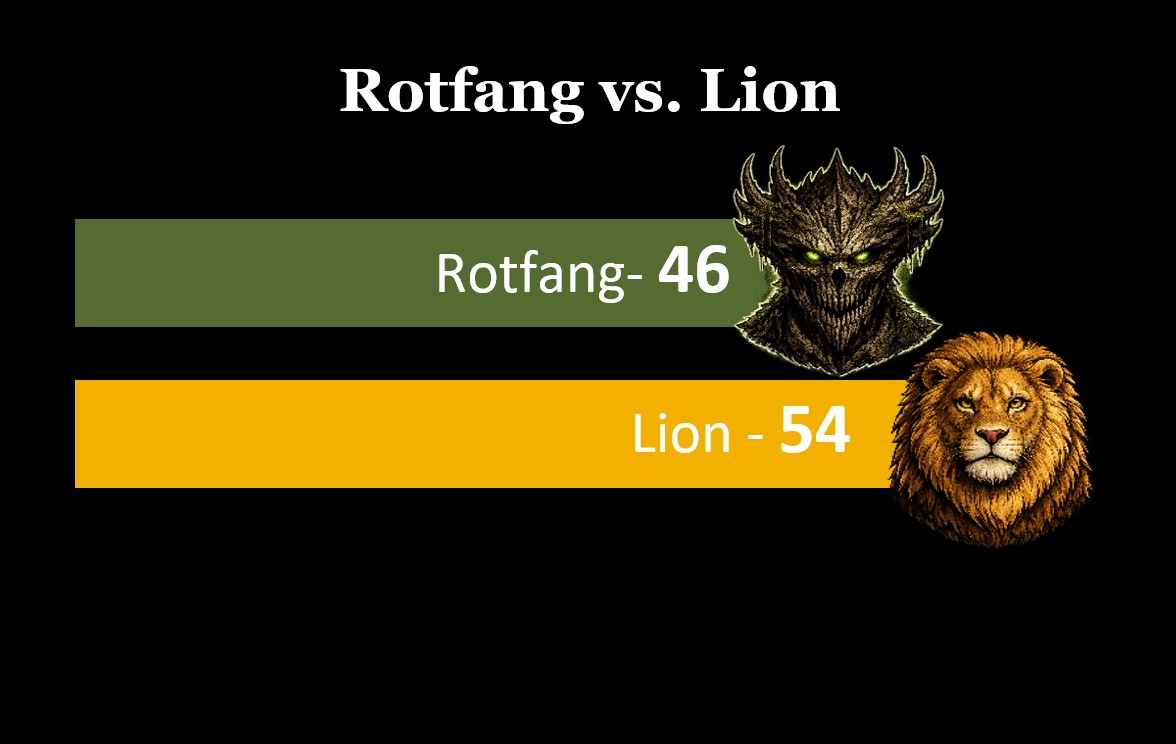
And the Lion wins the election. Members of the Foresters may be outraged because Forester candidates combined for a majority of the first-place votes, but the Feline candidate won. The Foresters might become the ones calling Ranked Choice Voting a partisan plot by Felines to rig elections. While Rotfang did not win the election, and would not have won the election if the Bear had not run, his presence changed the elimination order and caused the broader Forester coalition to lose. If Rotfang had not run, the results would have been:
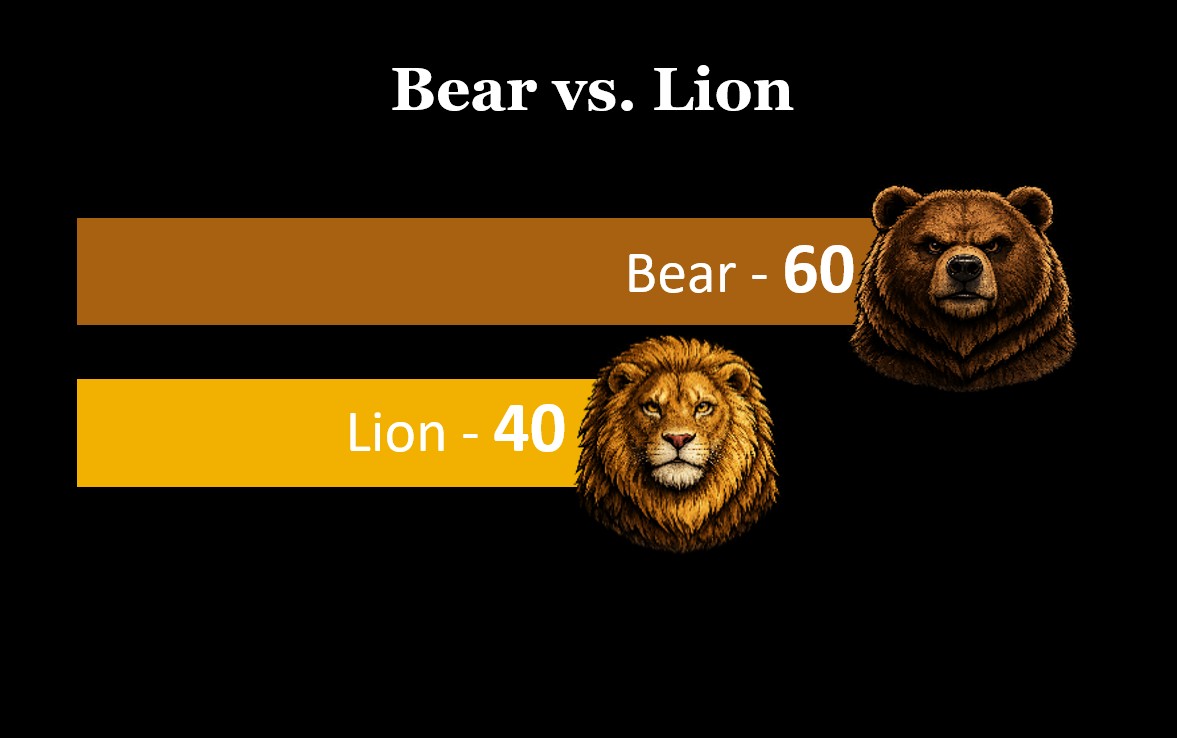
and the Bear would have won. This is why Rotfang would be referred to as a spoiler candidate for the Forester coalition, and why this type of situation is commonly described as a spoiler effect. This creates pressure for the Foresters not to run Rotfang at all, because doing so would require the Deepwood Foresters to abandon their true preferences in order to help the broader coalition reach their best achievable outcome.
Head-to-Head Record
Now suppose the same election is processed using Head-to-Head Record. The results would be:
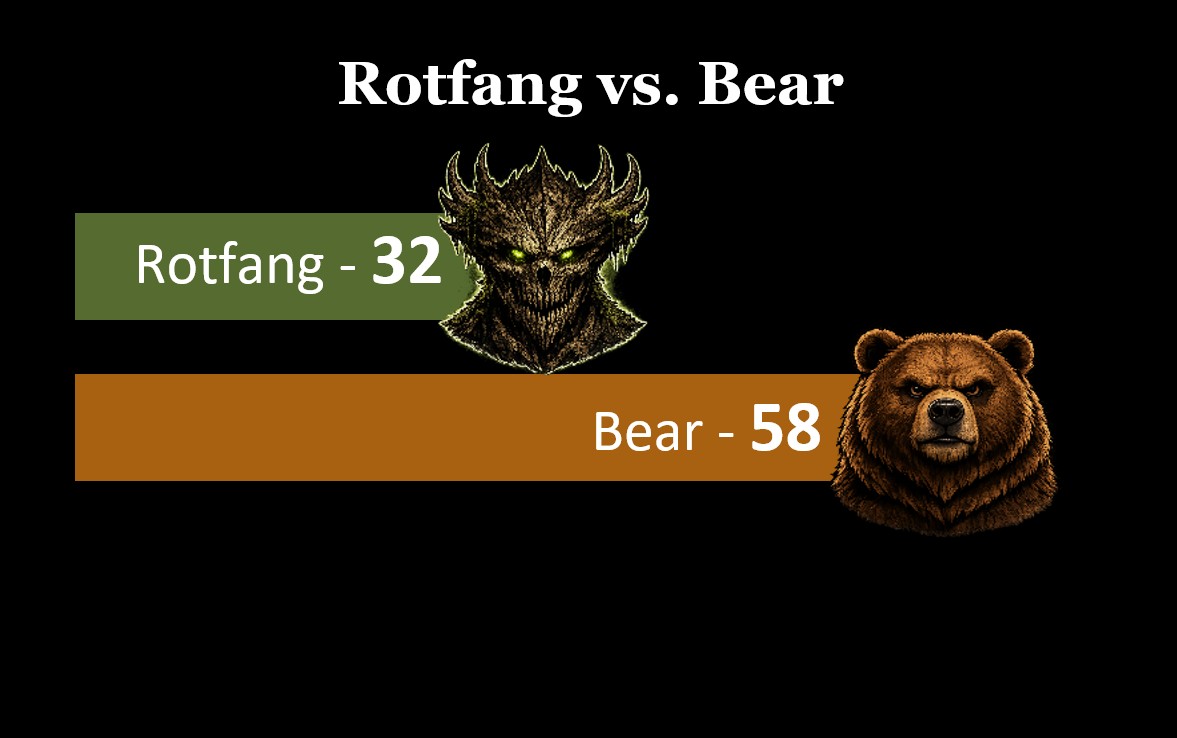
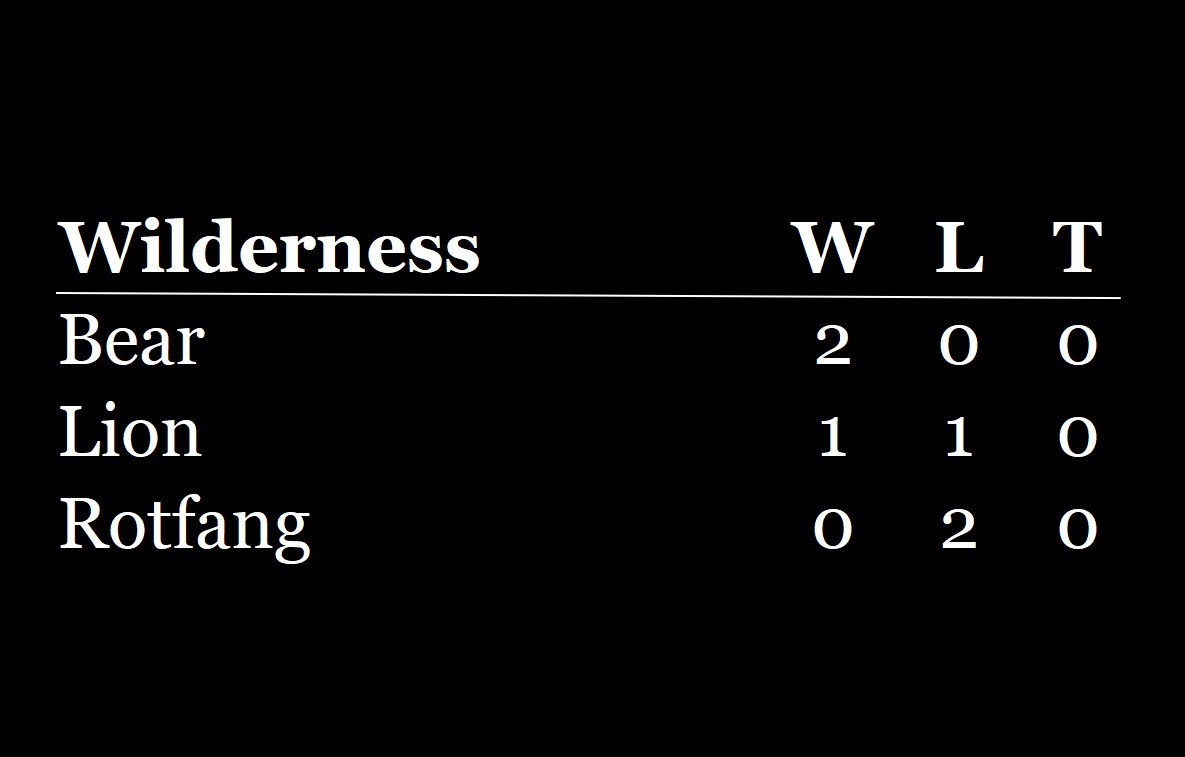
And the Bear wins with the best head-to-head record. In this case, Rotfang still loses, but no longer causes the broader Forester coalition to lose the election. The broader coalition is able to reach their best achievable outcome while still voting their true preferences, and without needing strategic voting.
Different voting systems create different incentives for how coalitions manage internal factions. In some systems, coalition groups may feel pressure to consolidate behind fewer candidates before the election begins to avoid changing the outcome through elimination order or strategic vote transfers. In other systems, coalition factions may feel more comfortable allowing internal movements and candidates to compete openly without risking the broader coalition outcome.
Comments
This site does not manage comment accounts. Comment data is handled by a third-party discussion service.