Welcome
Thank you for visiting Theory of Ranked Choice Voting. The goal of this site is to make Ranked Choice Voting (RCV) and other proposed election reform methods easier to understand by exploring different ways of processing and interpreting voter information, and why critics and different election reform advocacy groups often reach very different conclusions about whether these systems improve elections.
Critics argue that all forms of RCV are too confusing for ordinary voters to understand. Another side favors RCV as long as the ballots are processed using Instant Runoff Voting (IRV), but argues that head-to-head methods require cycle resolution procedures that are too confusing. This site examines both claims, explains the strategic incentives created by several RCV election methods including IRV and head-to-head, and demonstrates a head-to-head cycle resolution procedure that many voters can understand in less than 30 seconds.


Advocates of RCV have long argued that traditional plurality elections create strategic pressure to support major party candidates, while ranked ballots allow voters to submit sincere choices. Critics argue that concentrating support behind major candidates is a normal consequence of democratic competition, and frequently point to RCV elections where the candidate receiving the most first-choice support did not win. It is true in most RCV systems that when no candidate receives a majority, the plurality candidate does not always win. This site reviews U.S. RCV elections frequently cited by critics and explains how the results were generated.
Critics argue that RCV undermines the longstanding principle of "one person, one vote." Advocates contend that RCV is simply allowing voters to express an order of preference among candidates. In practice, there are numerous methods to process ranked ballots, and different methods treat the exact same ballots differently and can produce very different outcomes. This site explores these methods mechanically and visually, so readers can understand how they work and decide for themselves if they follow those principles or not.
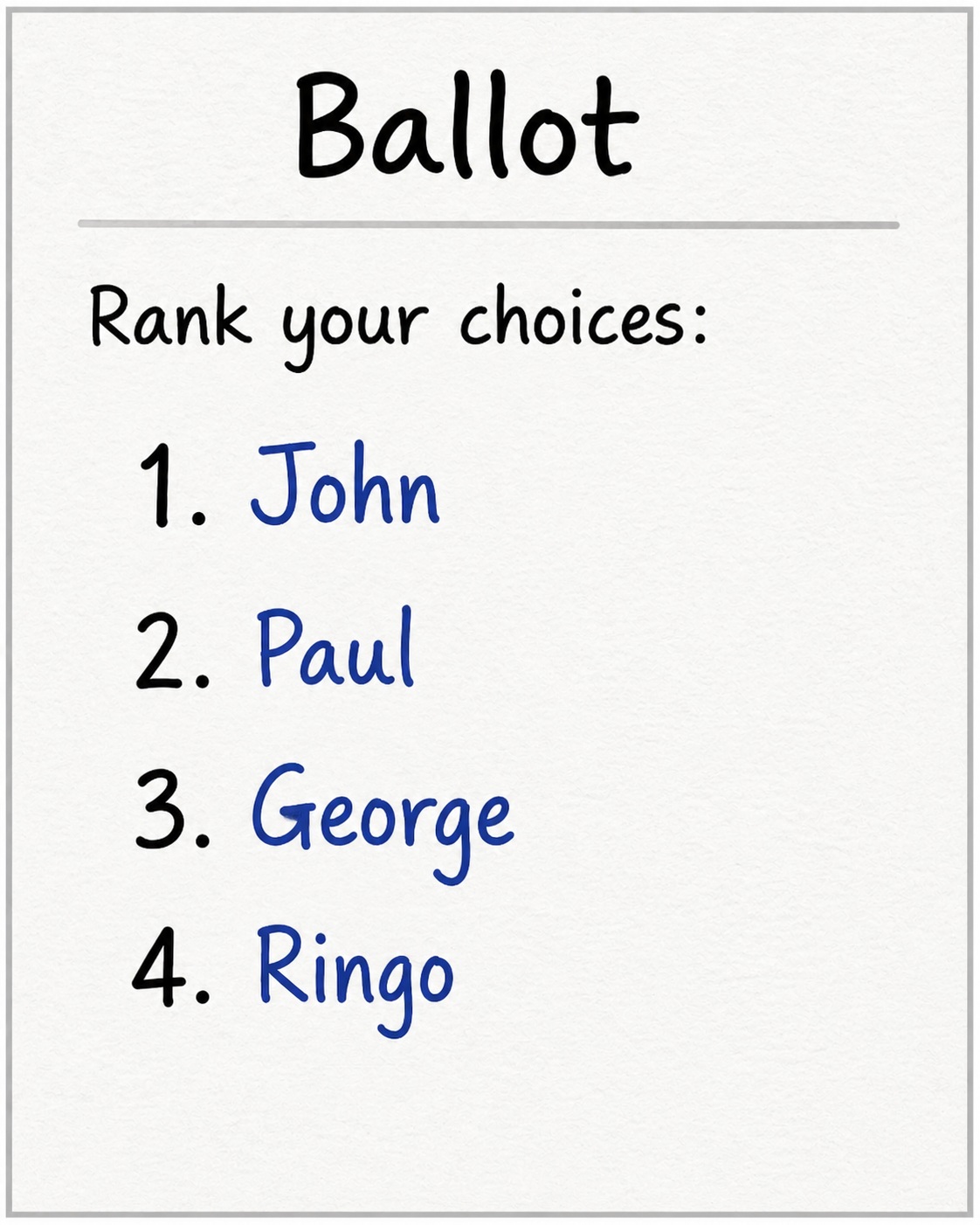
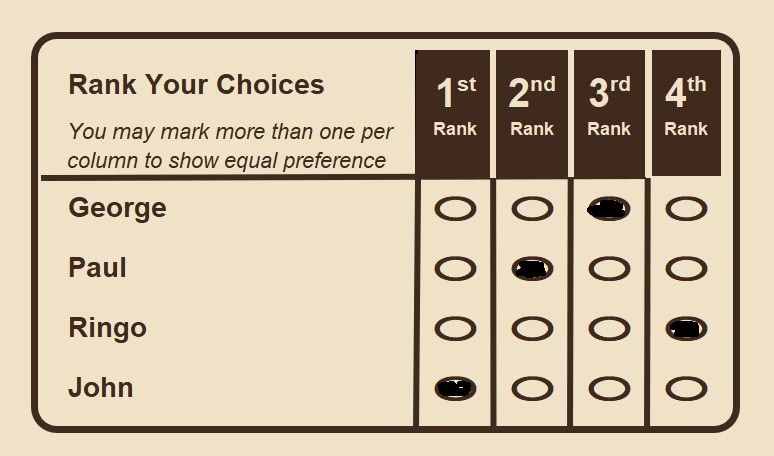
Critics also argue that the RCV ballots are too confusing for ordinary voters to understand, leading to groups of voters being disenfranchised. Advocates counter that plurality elections also silence large numbers of voters by creating pressure to support major party candidates. This site begins by examining different ballot designs and the ways voters are asked to interact with them.
Many past RCV elections have also raised broader public questions about transparency and trust. Concerns about delayed tabulation, centralized counting, exhausted ballots, and complicated transfer procedures have become increasingly tied to wider debates about confidence in election systems. This site also examines regional transparency in RCV elections, including how different systems report, aggregate, and publicly display election results.
Some advocates of IRV argue that because head-to-head methods fail properties such as Later-No-Harm, they will cause head-to-head elections to regress toward plurality-like behavior. This site examines those claims and explains the conditions under which those properties can actually affect election outcomes. Voting incentives never completely disappear, but often shift depending on the election method. This site explains those shifts so readers can better understand the tradeoffs involved.
Some ranked-ballot systems are designed to select a single winner, while others are intended to produce broader proportional representation across an elected body. These systems often pursue different goals and can create very different political incentives and tradeoffs. This site also explores several approaches to proportional and multi-winner representation, including systems intended to reduce geographic distortions and improve coalition representation.


This site is not part of any political movement, campaign, party, or advocacy group. There is no intent to promote designs, systems, candidates, or outcomes.
To reinforce that independence, this site does not seek donations, advertise, or monetize in any way. However, contributions through discussion are certainly welcome. Whether it’s a detailed opinion, a disagreement, or just a quick thought, please feel free to share in the discussion or contact us.
Thanks again for visiting.