2022 Alaska House Special Election
The 2022 Alaska U.S. House special election drew national attention to the debate over Ranked Choice Voting. This article explains what happened, why the result remains controversial, and how the country responded in the years that followed.
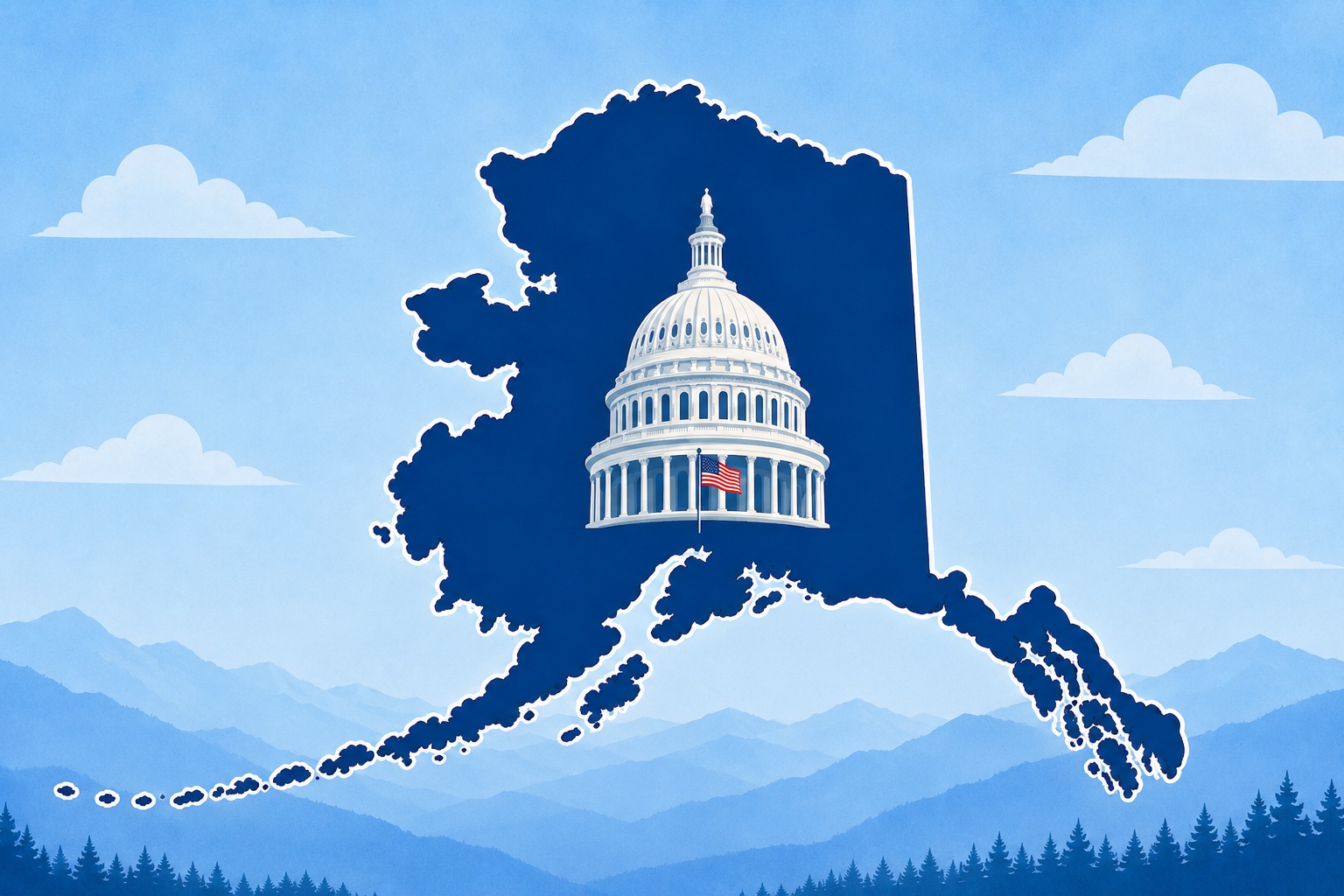
Alaska voters approved the Hare form of Ranked Choice Voting, commonly called Instant Runoff Voting (IRV), on November 3, 2020, when 2020 Alaska Ballot Measure 2 narrowly passed with 50.55% of the statewide vote. Before Alaska voters had any experience using IRV in a statewide election, U.S. Representative Don Young (R) died in March 2022, triggering a special election. As a result, Alaska's first statewide IRV election became the August 16, 2022 U.S. House special general election, accelerating the state's implementation schedule by several months. Although the special election filled the seat for only about five months, its outcome would substantially impact the course of Ranked Choice Voting throughout the rest of the country.
There were three main candidates in this election, Republican Nick Begich, Republican Sarah Palin, and Democrat Mary Peltola:



There were 188,582 valid ballots that expressed a preference for at least one of these three candidates. Among the three candidates, those ballots broke down as follows1:
Voters
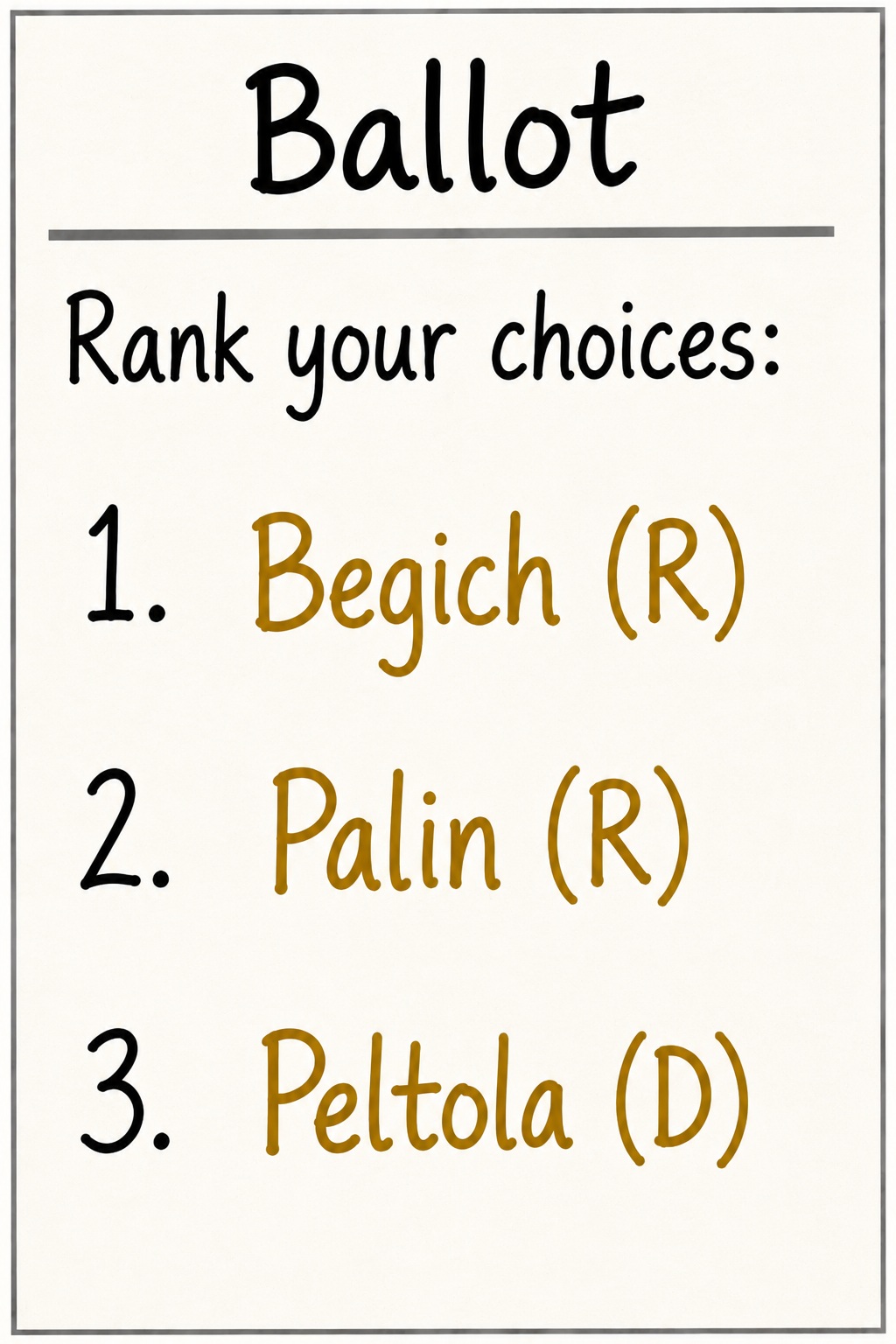
Voters
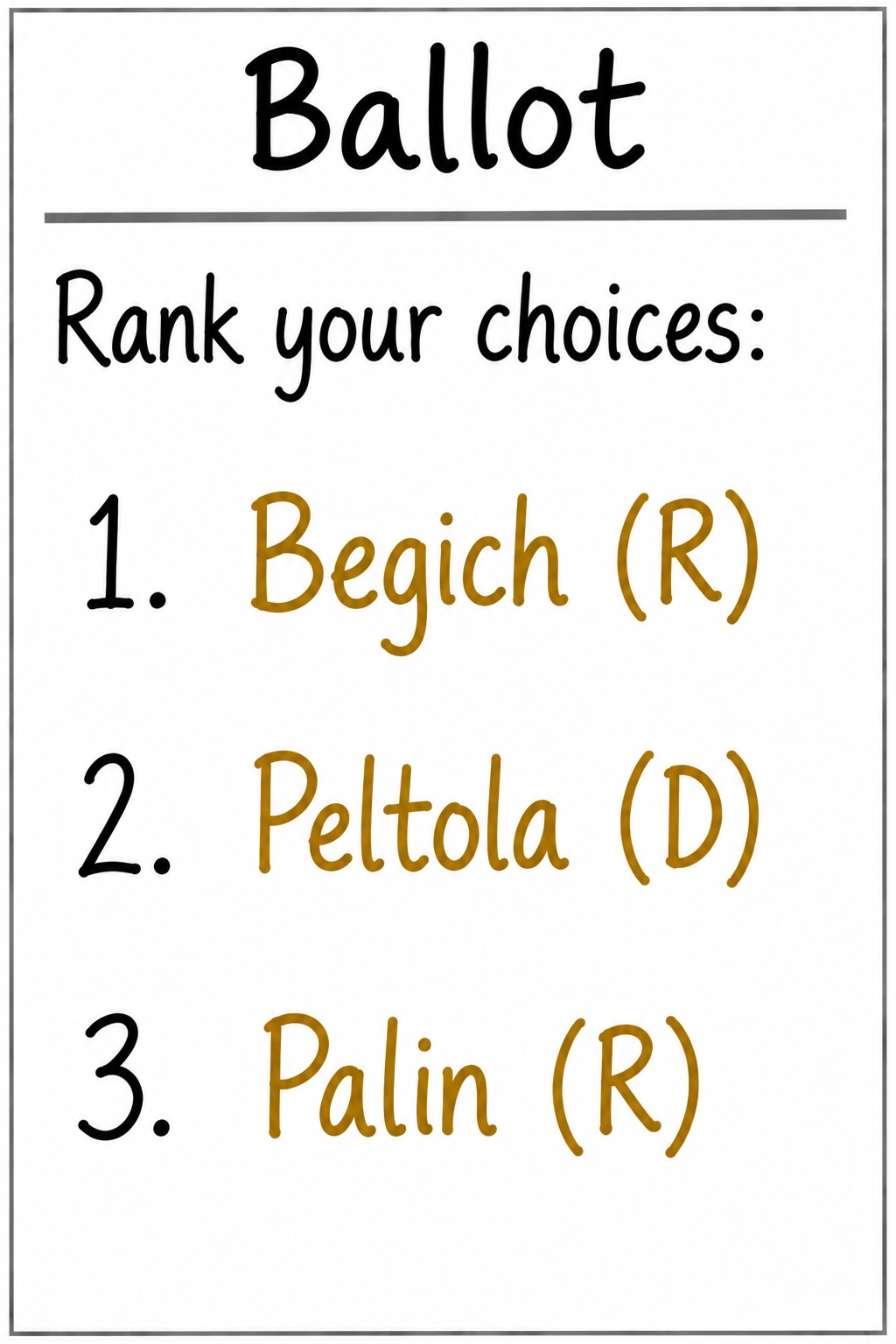
Voters
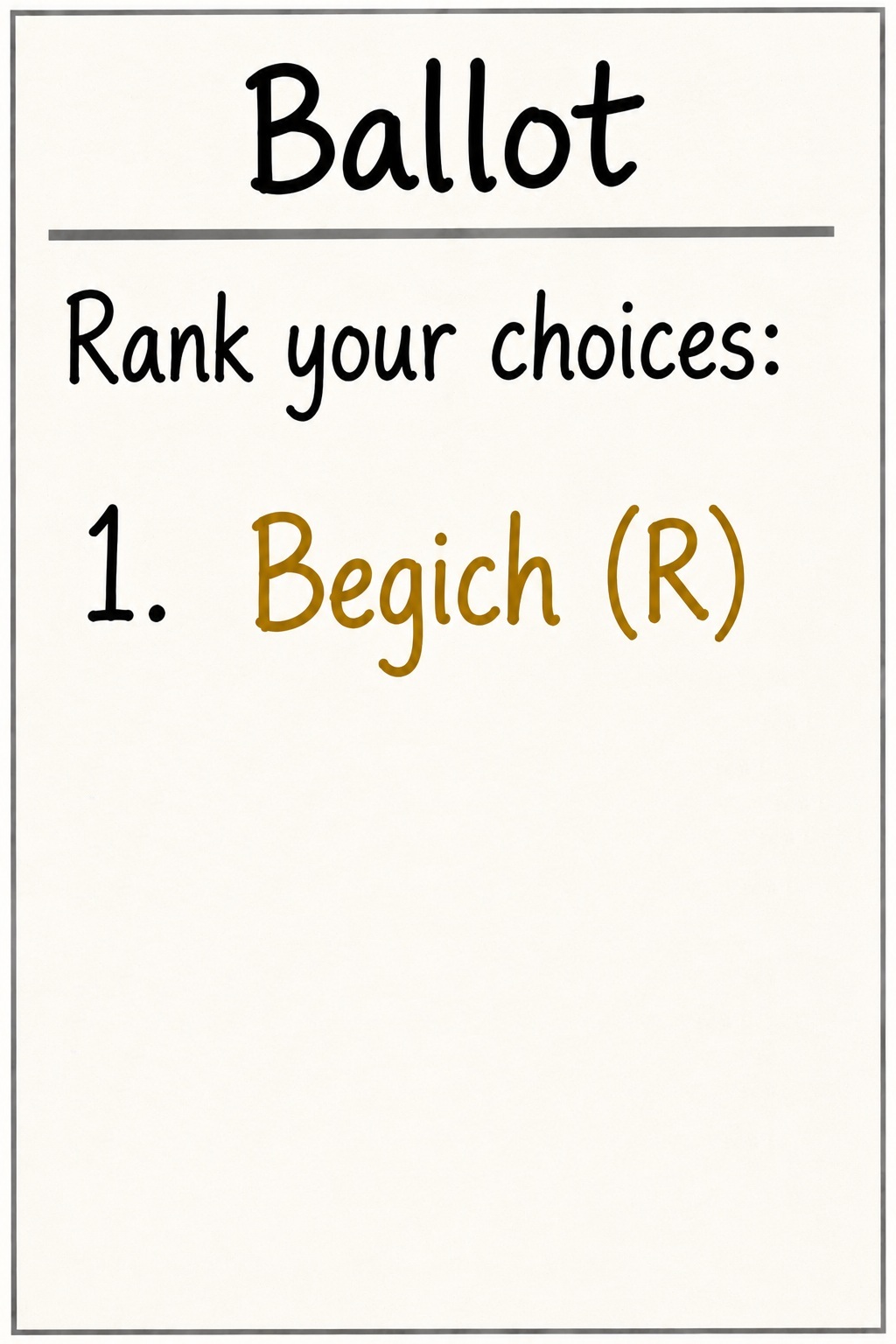
Voters
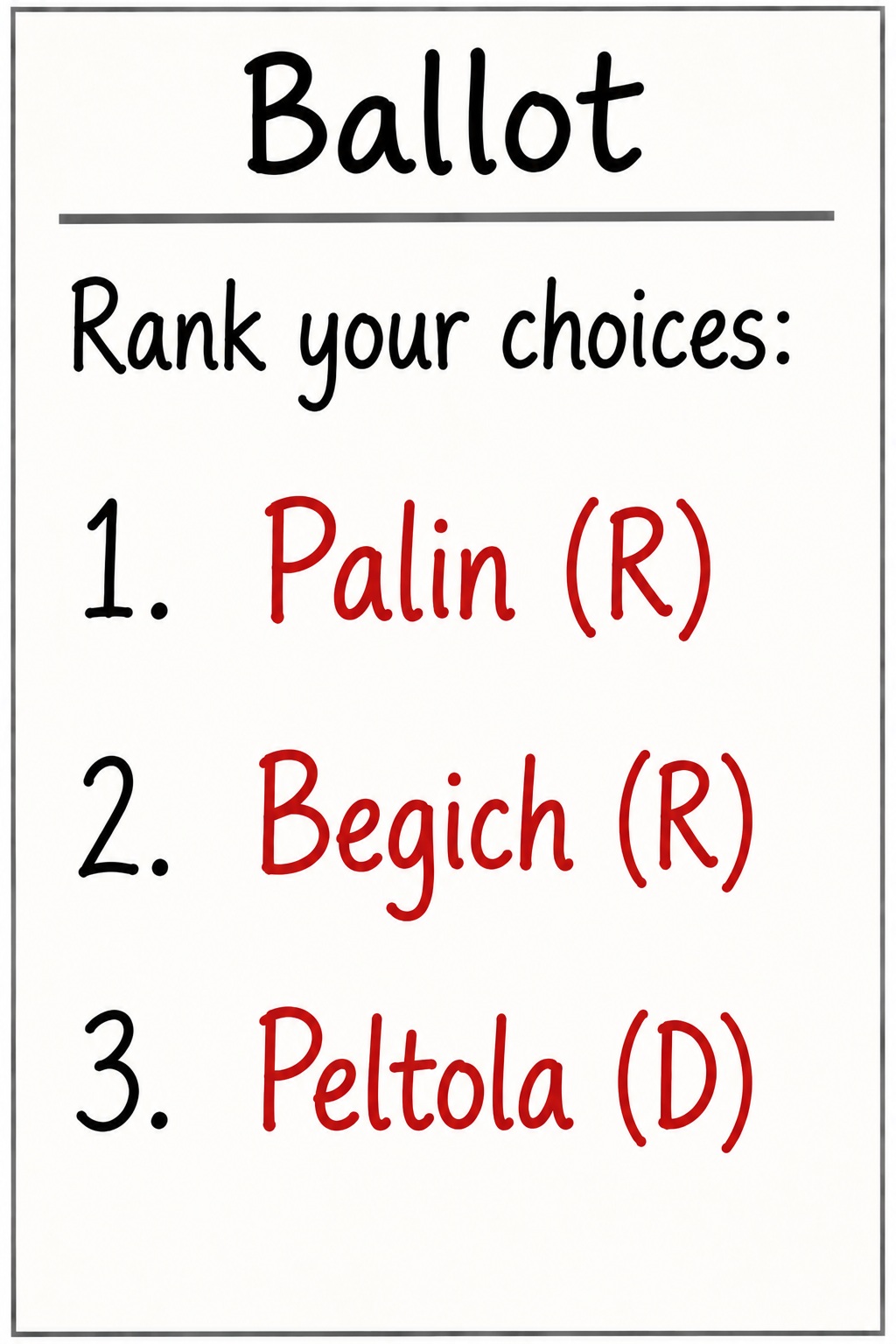
Voters
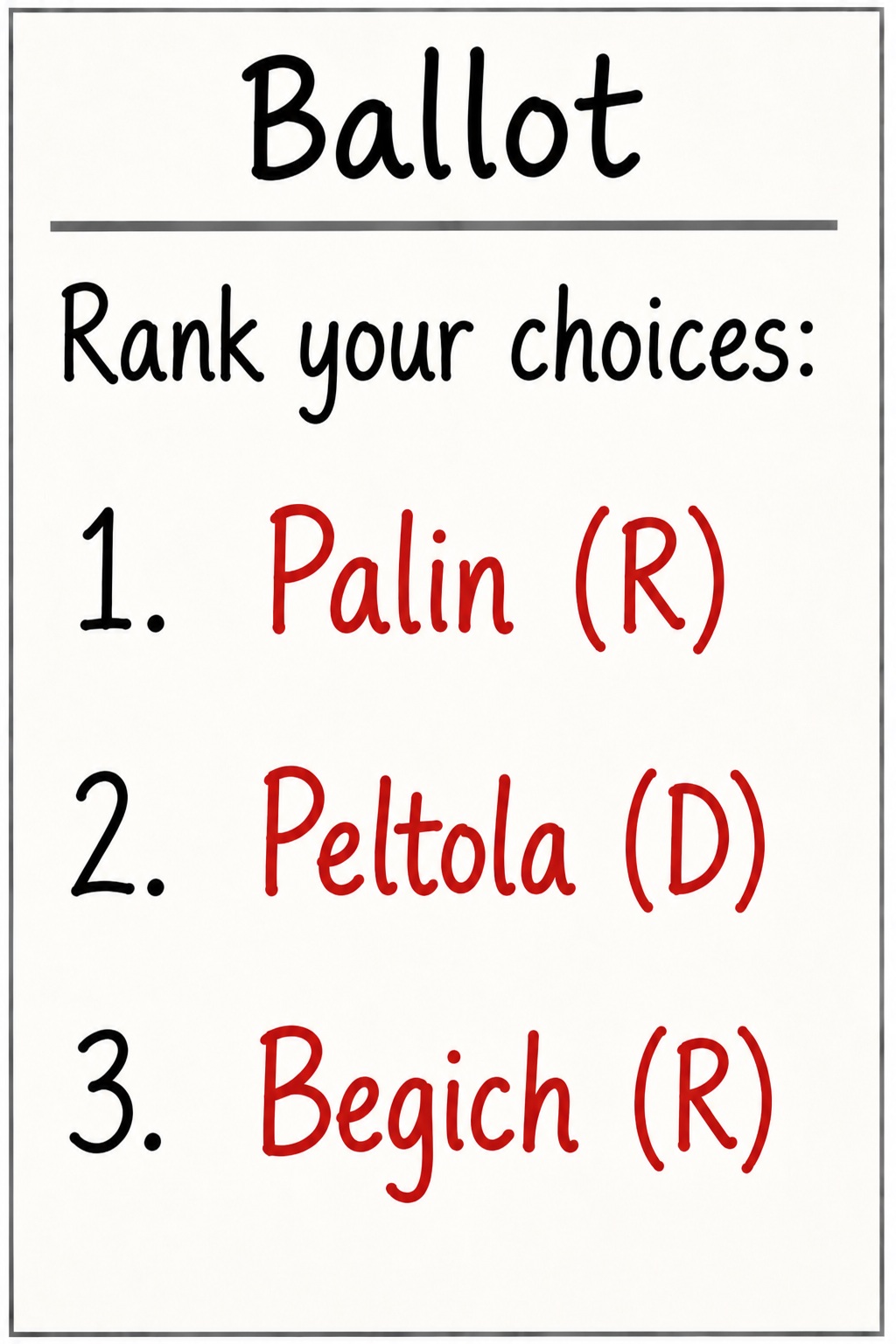
Voters
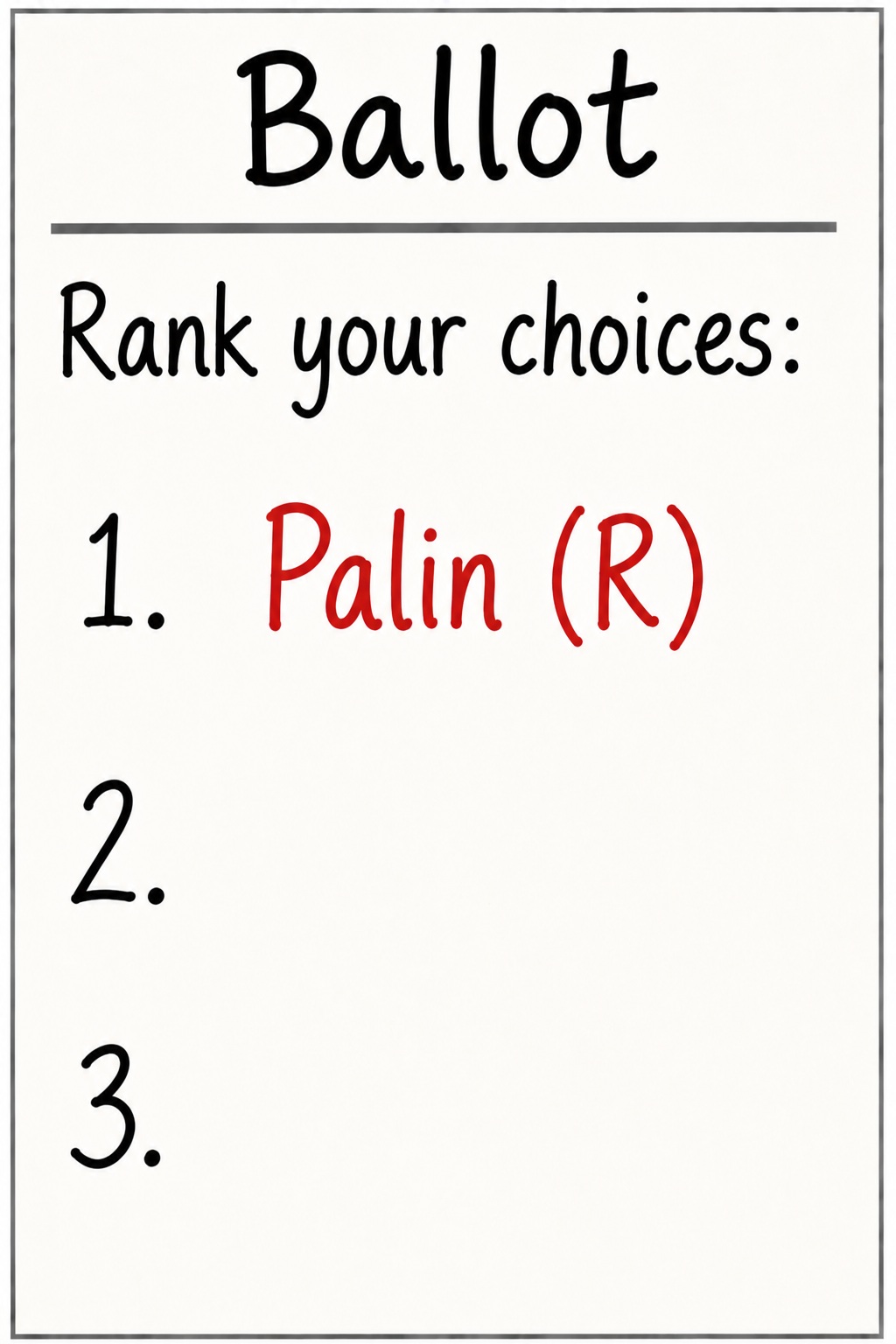
Voters
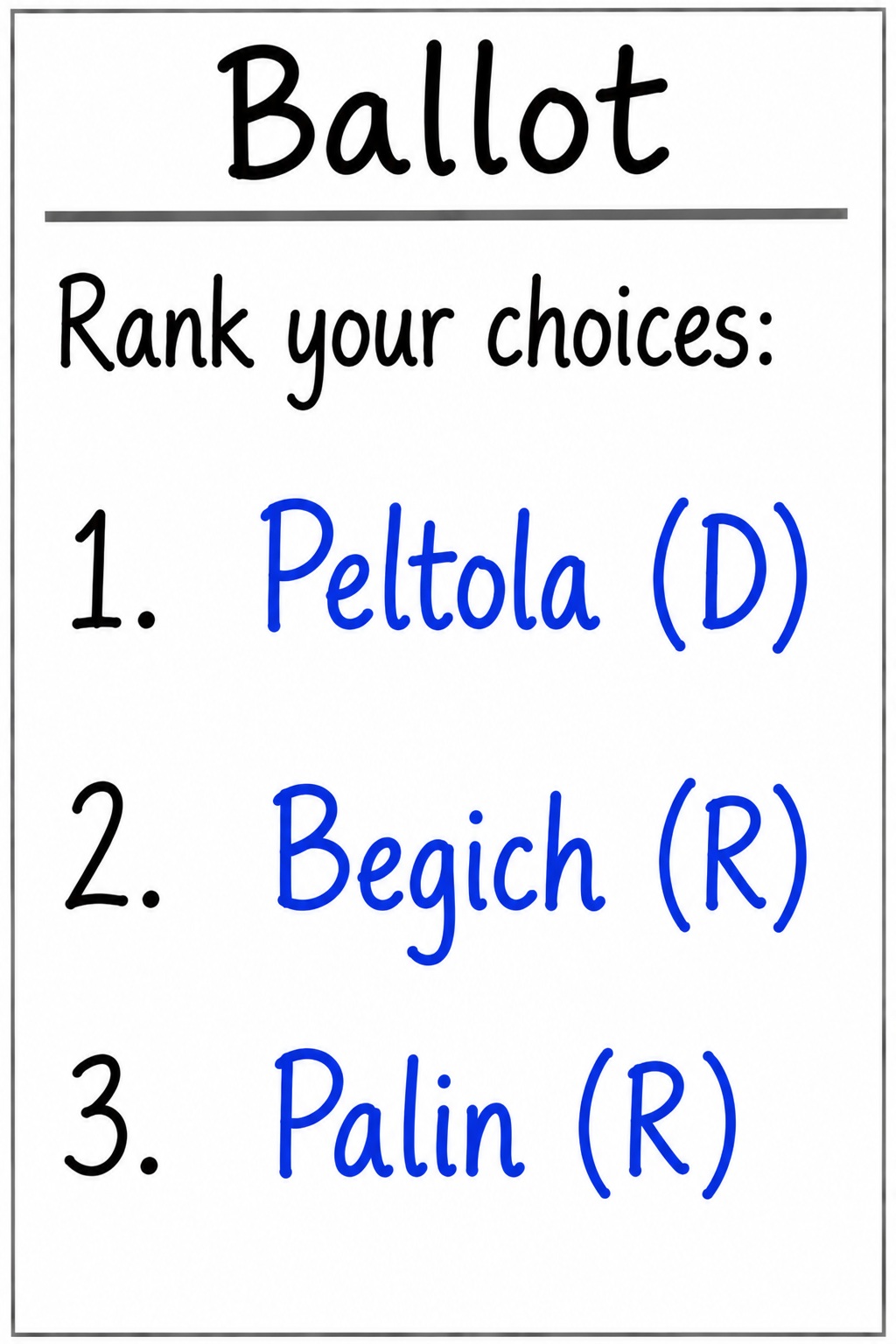
Voters
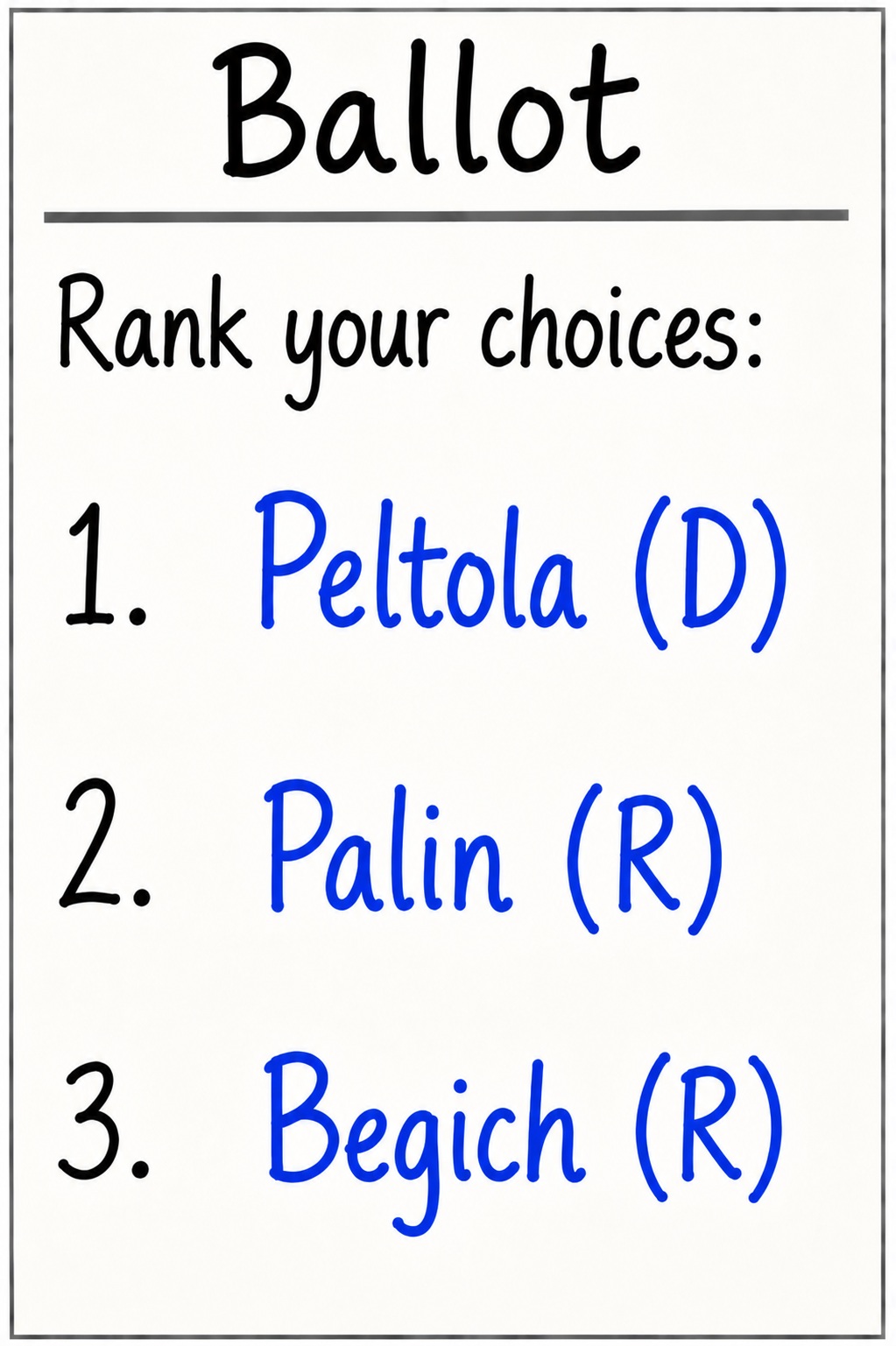
Voters
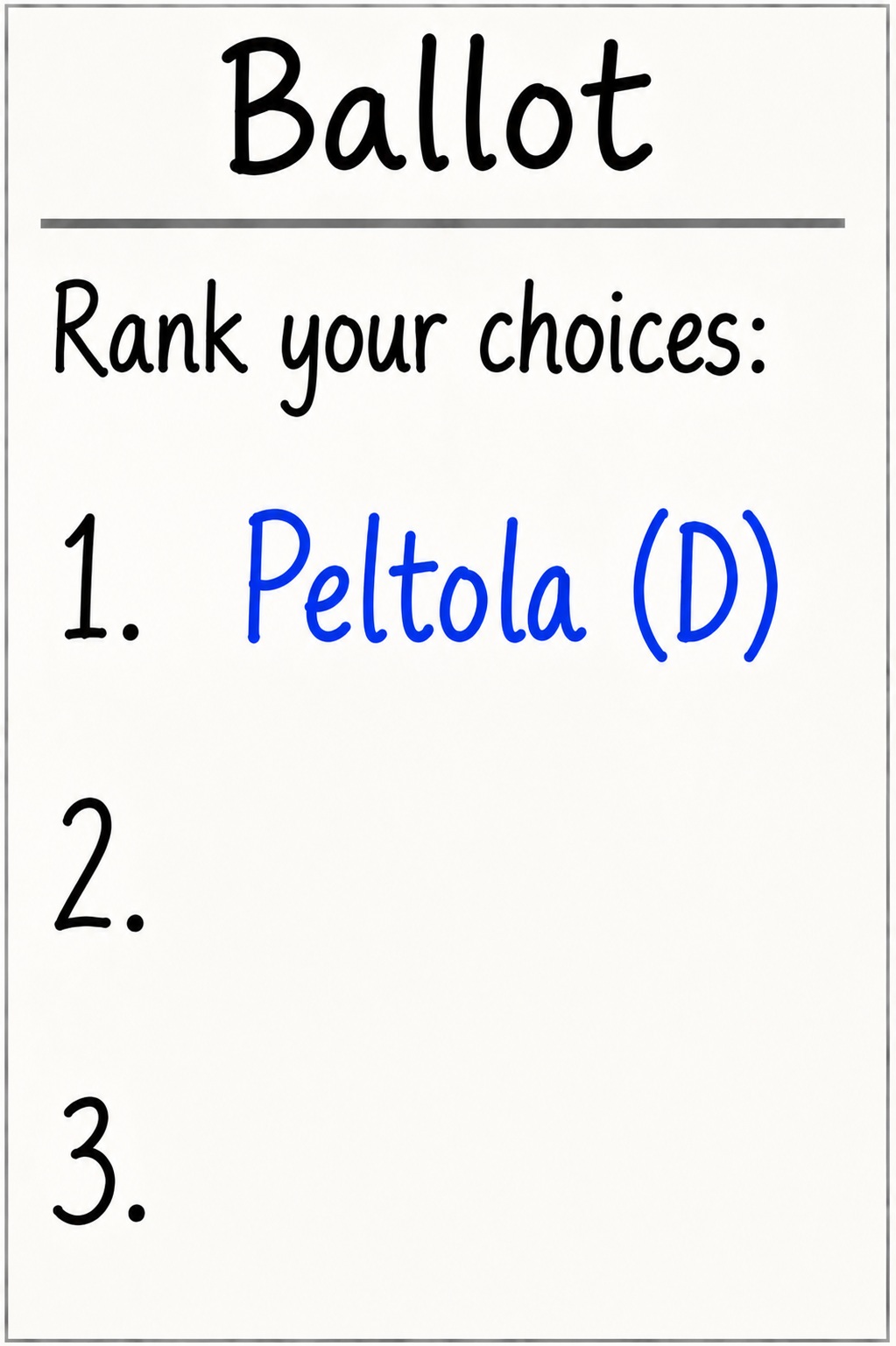
Using Hare RCV, the first-choice preferences were totaled for each candidate:
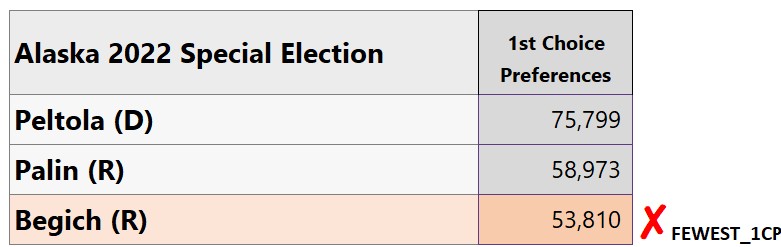
Begich was eliminated for having the fewest first-choice preferences. Ballots that ranked either Palin or Peltola next were transferred to the next-ranked remaining candidate, producing the following final results:
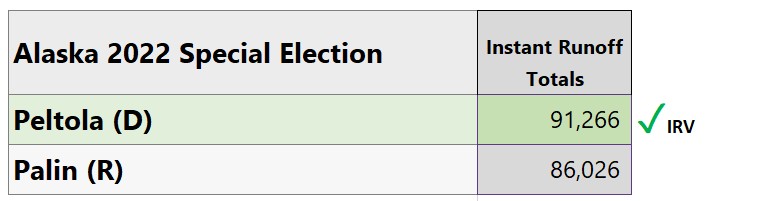
And Democrat Mary Peltola won the election. Republican leaders immediately criticized the result because a majority of voters gave their first-choice preference to Republican candidates, but a Democrat won and flipped a seat in a very closely divided U.S. House of Representatives. Mechanically, after Begich was eliminated, nearly half of Begich's supporters either preferred Peltola or did not express any opinion between the remaining candidates. Republican leaders argued that voter confusion and ballot exhaustion contributed to the outcome. Hare RCV advocates frequently cite this election as an example of the system working exactly as intended, as Hare RCV is explicitly designed to narrow the field based on first-choice preferences.
Head-to-head election supporters criticize the election for a different reason. They point out that if Palin had not run in the election, the ranked ballots clearly indicate that 34,000 Palin voters would have made Begich their first-choice preference, and Begich would have won:
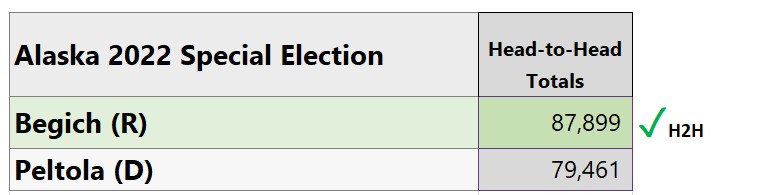
In fact, Begich defeated every other candidate head-to-head, making him the undefeated head-to-head winner:

Advocates of the two election systems interpret this result very differently. Hare RCV advocates do not consider the undefeated head-to-head candidate decisive, arguing that first-choice preferences better represent the strength of a candidate2, so Begich was simply a weak candidate with the fewest first-choice preferences. Head-to-head advocates frequently cite this election as evidence that eliminating the undefeated head-to-head candidate is a fundamental flaw because it incentivizes insincere voting and encourages coalitions to run fewer candidates3. They argue that Palin supporters expected their second-choice preference for Begich to matter if Palin could not win, but Begich's early elimination prevented that preference from affecting the outcome, effectively punishing tens of thousands of voters for sincerely ranking their favorite candidate first and ultimately helping elect the candidate they liked least. They question why ranked ballots are used if the election system does not respect voters' expressed order of preference.
Hare RCV advocates have promoted the system as encouraging voters to support their favorite candidate without fear of changing the outcome. Head-to-head advocates contend that the Alaska election demonstrates the opposite.
On November 5, 2024, Alaska voters narrowly defeated 2024 Alaska Ballot Measure 2, which would have repealed the state's Ranked Choice Voting system, by a statewide vote of 50.12%.4.
Following the 2022 Alaska special election, the debate over Ranked Choice Voting has become increasingly polarized. By March 2026, nineteen Republican-led states had prohibited all forms of Ranked Choice Voting in all public elections, seventeen of them since the 2022 Alaska special election5, and the Make Elections Great Again (MEGA) Act was introduced in 2026 to ban all Ranked Choice Voting in federal elections. During the same period, at least thirteen Democratic-led cities and jurisdictions in Democratic-led states or Washington, D.C. have adopted or expanded IRV6, and Hare RCV advocates press for continued expansion. Neither major party is considering head-to-head RCV, and head-to-head advocates maintain that this is because an election system that consistently respects voters' complete order of preference serves voters better than it serves established political parties.
1 The official election included four named candidates (Mary Peltola, Sarah Palin, Nick Begich III, and Chris Bye) plus write-in candidates. This article considers only the order of preference of the three principal candidates. Chris Bye and the write-in candidates were removed for simplification because the total number of ballots including them was less than the first-choice support received by any of the three principal candidates, meaning they could not defeat any of those candidates in a head-to-head contest.
2 FairVote acknowledges that Begich was the undefeated head-to-head winner, but argues here that a candidate should have sufficient first-choice support to be considered for being elected.
3 “What You Should Know About Ranked-Choice Voting That FairVote Doesn’t Want You to Know” (2024) by Robert Bristow-Johnson argues that Palin’s presence as a candidate caused Begich’s elimination, punished Palin voters for sincerely ranking her first, and created an incentive for them to insincerely rank Begich first.
4 Alaska Lieutenant Governor - Official Ballot Measure 2 recount results (2024).
5 Nineteen states had enacted prohibitions on Ranked Choice Voting by March 2026: 2022: Florida and Tennessee; 2023: Idaho, Montana, and South Dakota; 2024: Alabama, Kentucky, Louisiana, Mississippi, Oklahoma, and Missouri; 2025: Arkansas, Iowa, Kansas, North Dakota, West Virginia, and Wyoming; 2026: Indiana and Ohio. Seventeen of these nineteen states enacted their prohibitions after the August 2022 Alaska special election.
6 These jurisdictions include Seattle, Washington; Portland, Oregon; Multnomah County, Oregon; Evanston, Illinois; Fort Collins, Colorado; Ojai, California; Arlington County, Virginia; Portland, Maine; Burlington, Vermont; Redondo Beach, California; Charlottesville, Virginia; Washington, D.C.; and Oak Park, Illinois. The actions included new adoptions, expansions to additional offices, voter-approved future implementation, and initial implementation of previously authorized systems.
Comments
This site does not manage comment accounts. Comment data is handled by a third-party discussion service.