Head-to-Head Record
Head-to-head methods examine matchups between exactly two candidates from the full set on a ranked choice ballot. To determine a head-to-head winner between two candidates, all ballots are reviewed, and each ballot counts as one vote for whichever candidate is ranked higher. The candidate with more votes between the two wins that matchup. This process is repeated for every pair of candidates, producing a head-to-head record for each candidate.
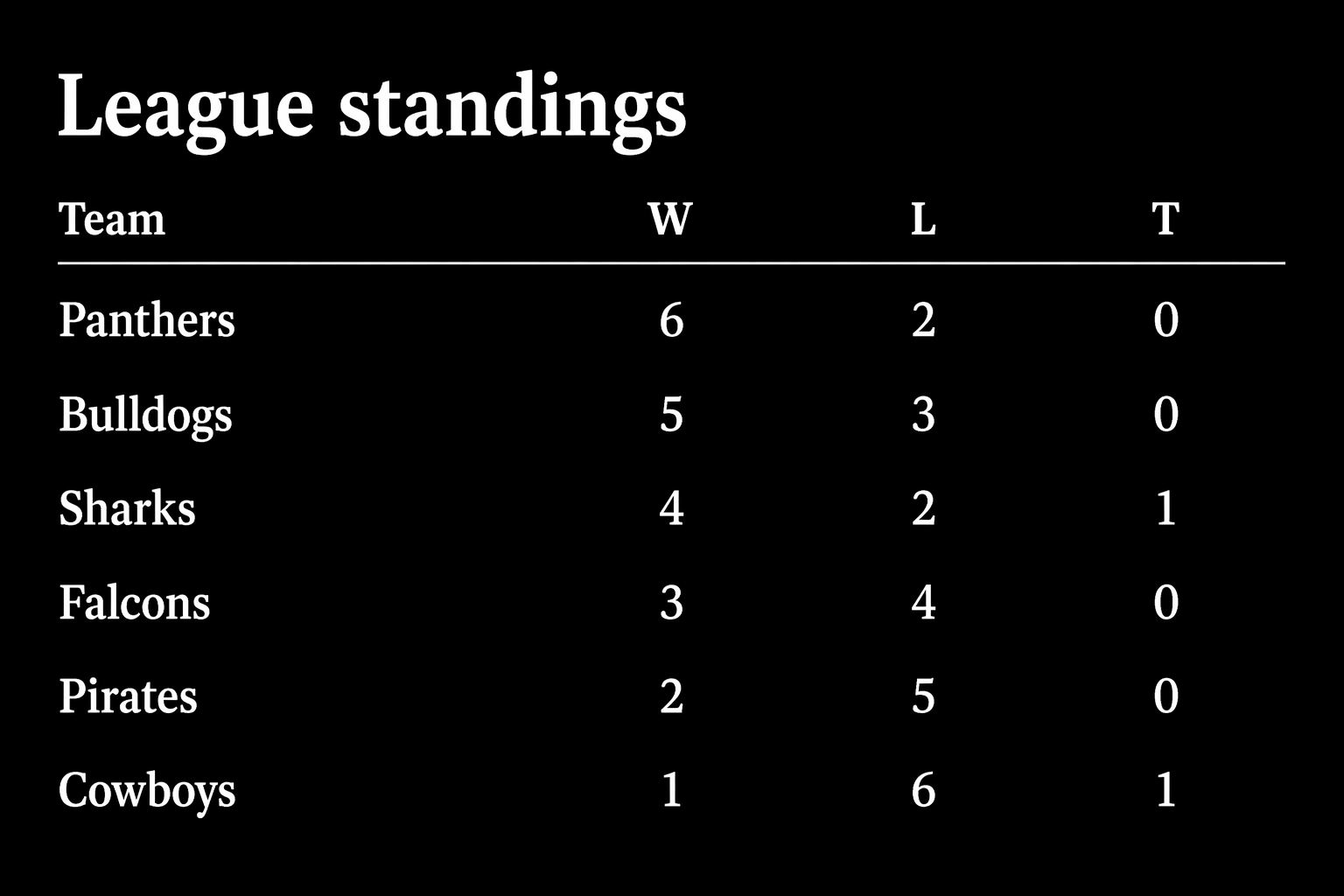
Sports leagues often track teams by their win-loss record. Teams play head-to-head matchups, and each result is recorded as a win, loss, or tie. At the end of the season, those standings determine a champion or which teams advance.
This concept is applied to candidates in an RCV election, where wins and losses are based on head-to-head matchups with every other candidate on the ballot. Unlike a sports league, every possible matchup can be played using the same set of ballots, allowing a complete set of standings to be calculated from a single election.
The Wilderness Example
We return to the wilderness from previous articles:



The 3 factions are the Foresters (who support the Bear), the Felines (who support the Lion), and the Avians (who support the Eagle). The factions fill out their ballots based on their true preferences:
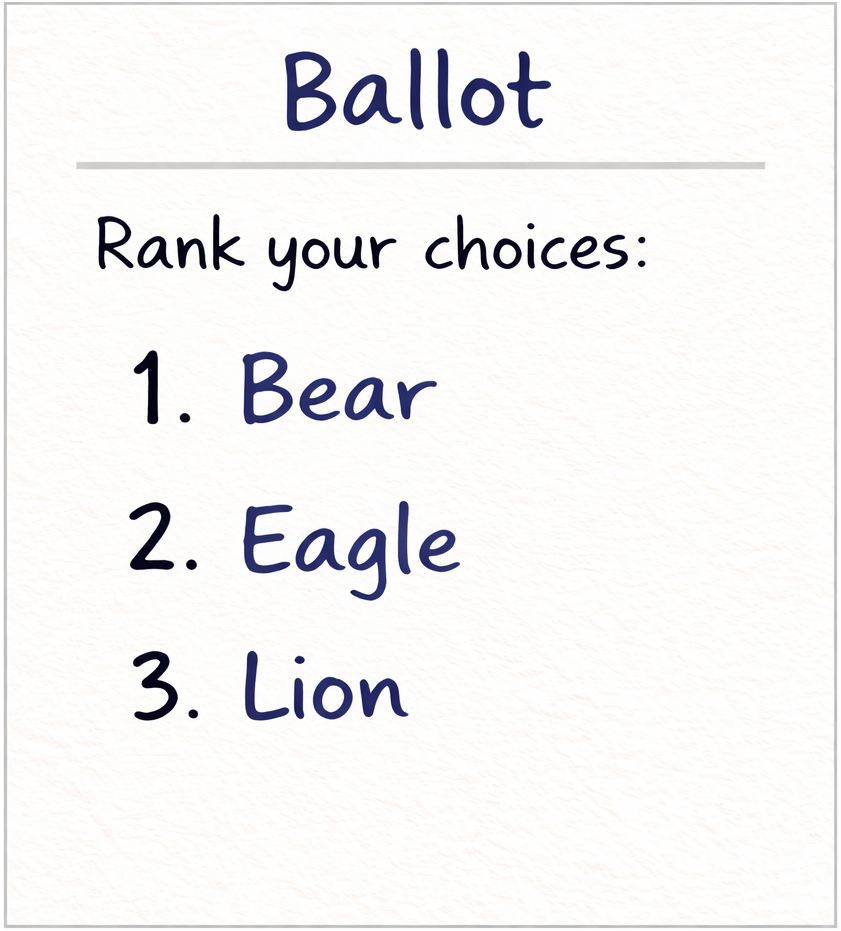
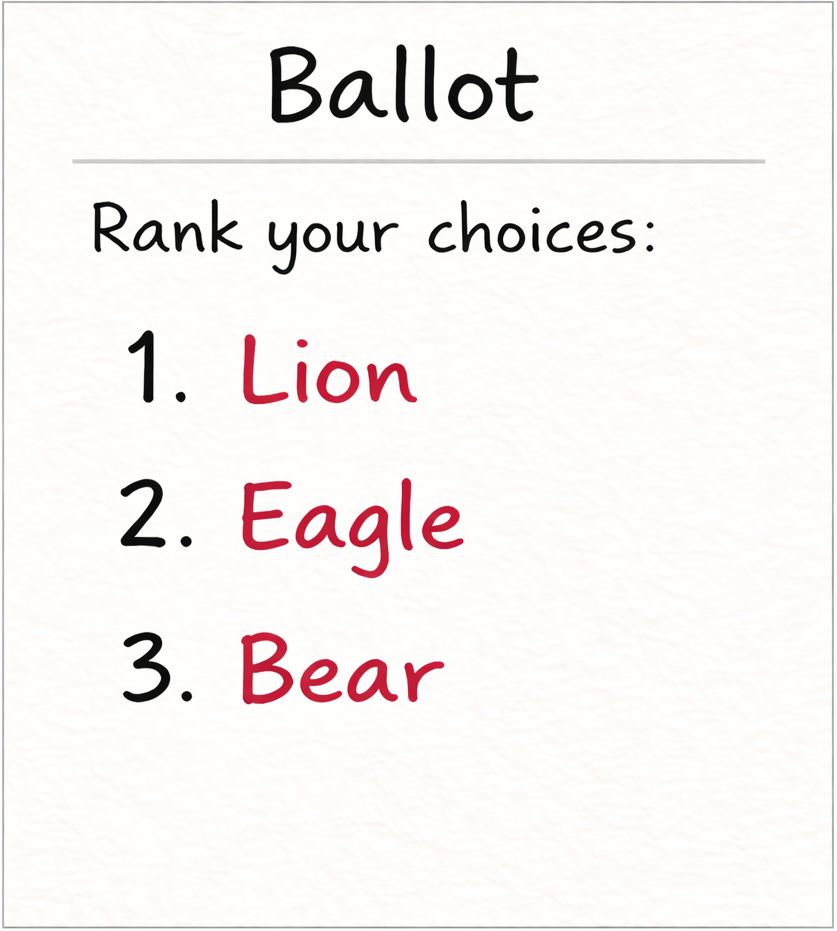
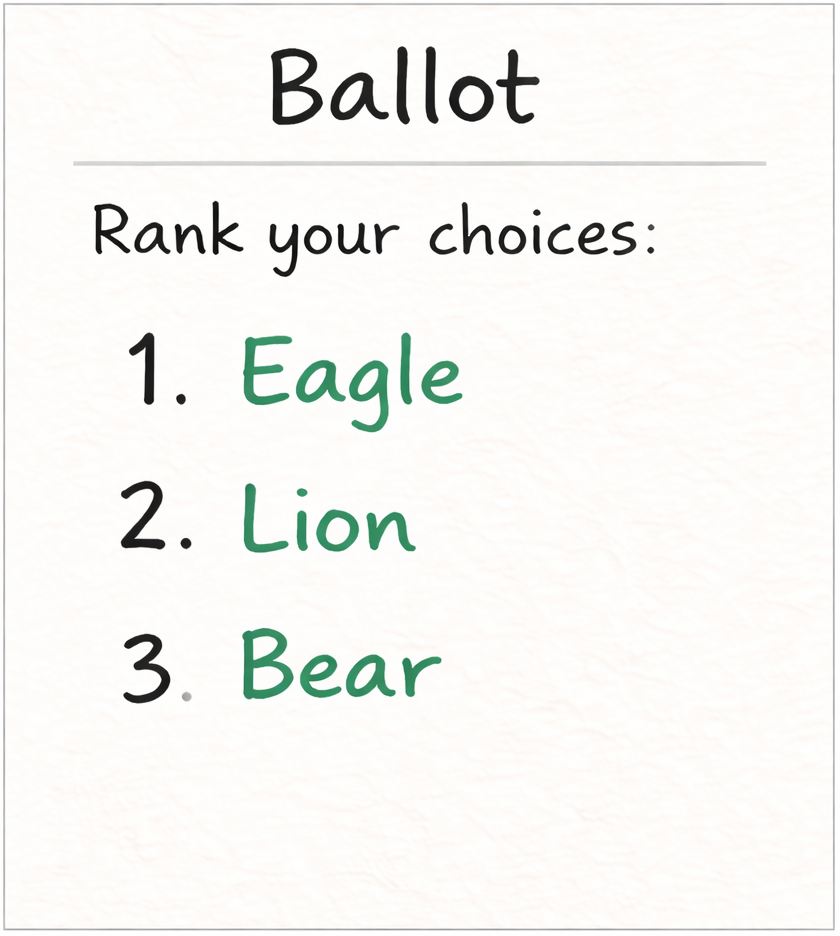
Each head-to-head matchup is examined, and each candidate's record is calculated:
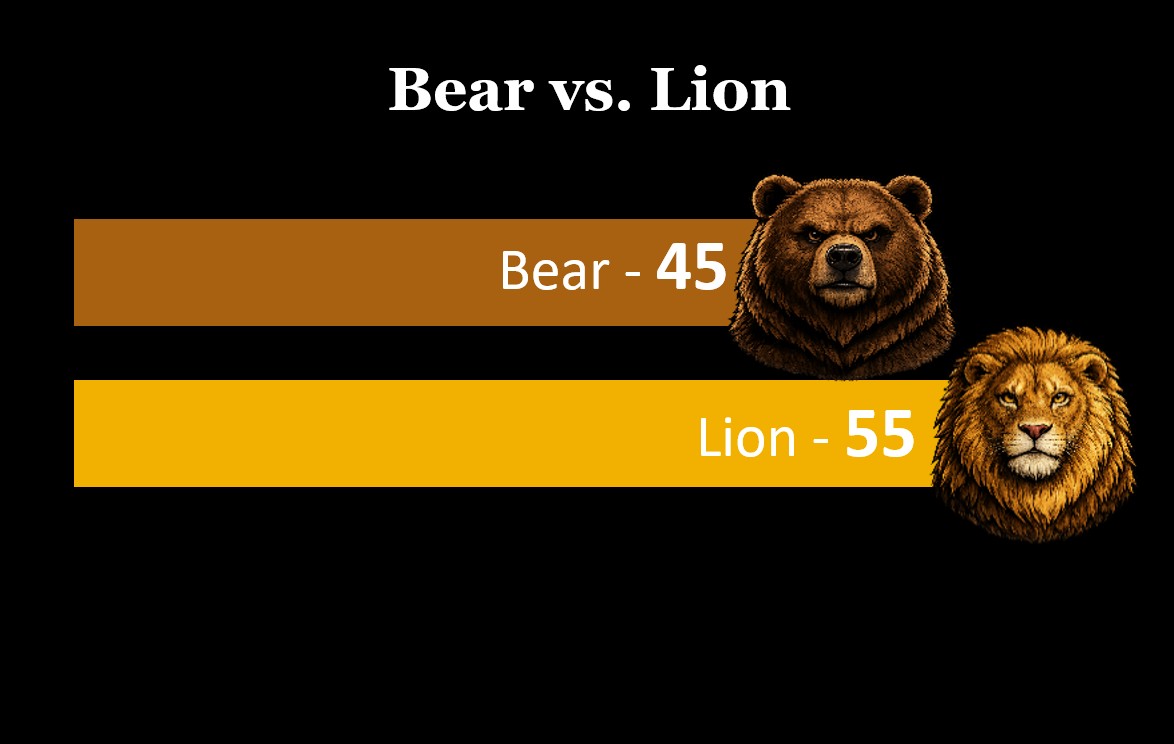
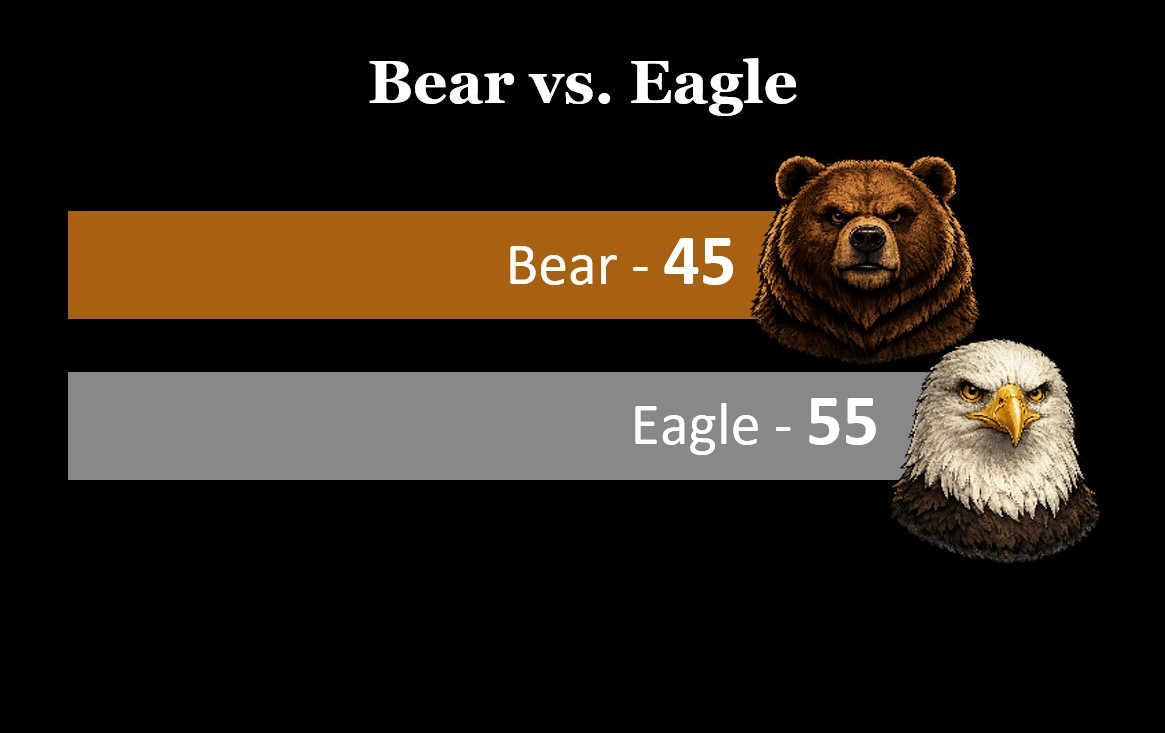
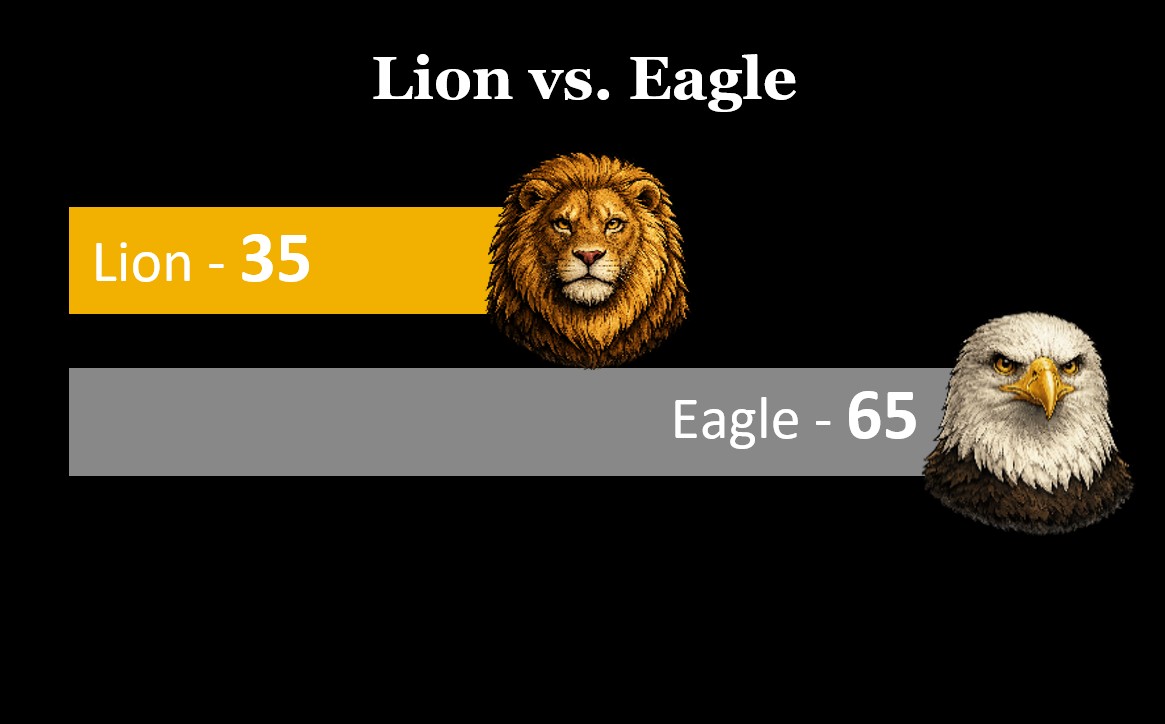
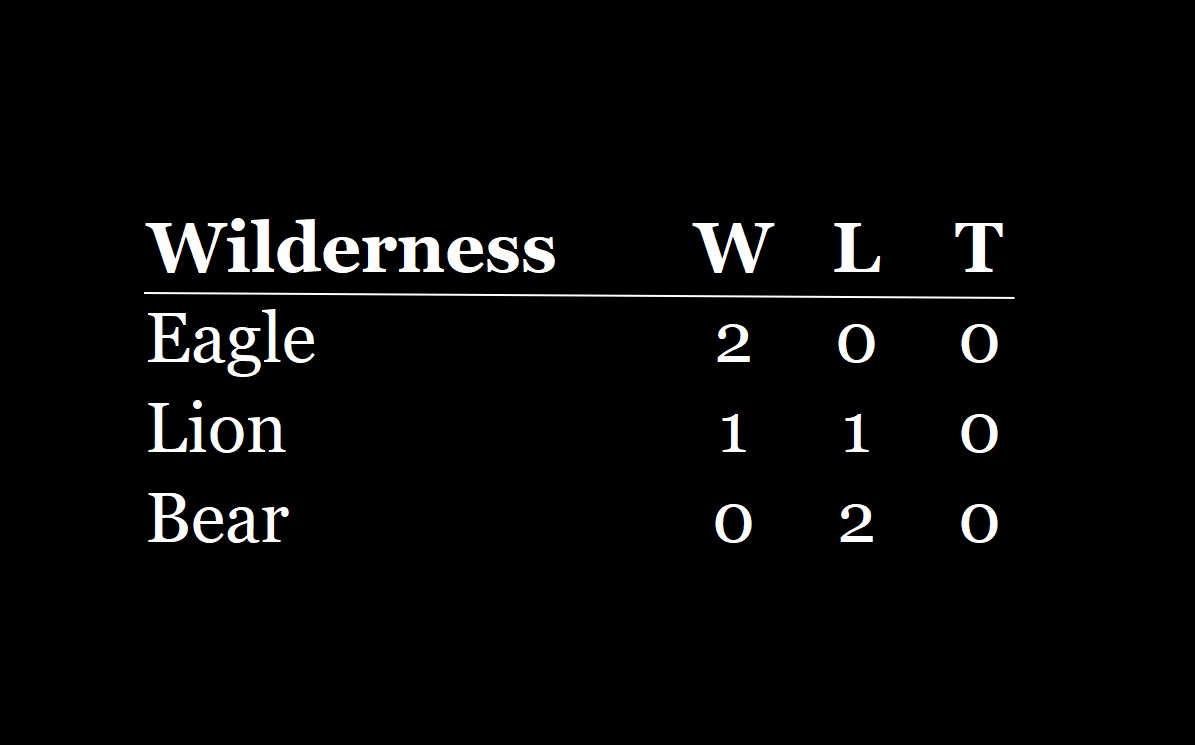
The Eagle finishes 2-0 and is the winner. But there is a much more important aspect of this result. The Avians did not need to coordinate with the Felines to reach their best achievable outcome. The Foresters did not need to coordinate with the Avians to reach their best achievable outcome. Everyone was able to vote their true preferences, and everyone reached their best achievable outcome given how the other voters voted.
The Eagle won this election, despite having the fewest first choice preferences. Now let's suppose a fourth candidate, the Dolphin, were to enter this election:

None of the three Wilderness factions favor the Dolphin as their top choice, but all three factions favor the Dolphin as their second choice:
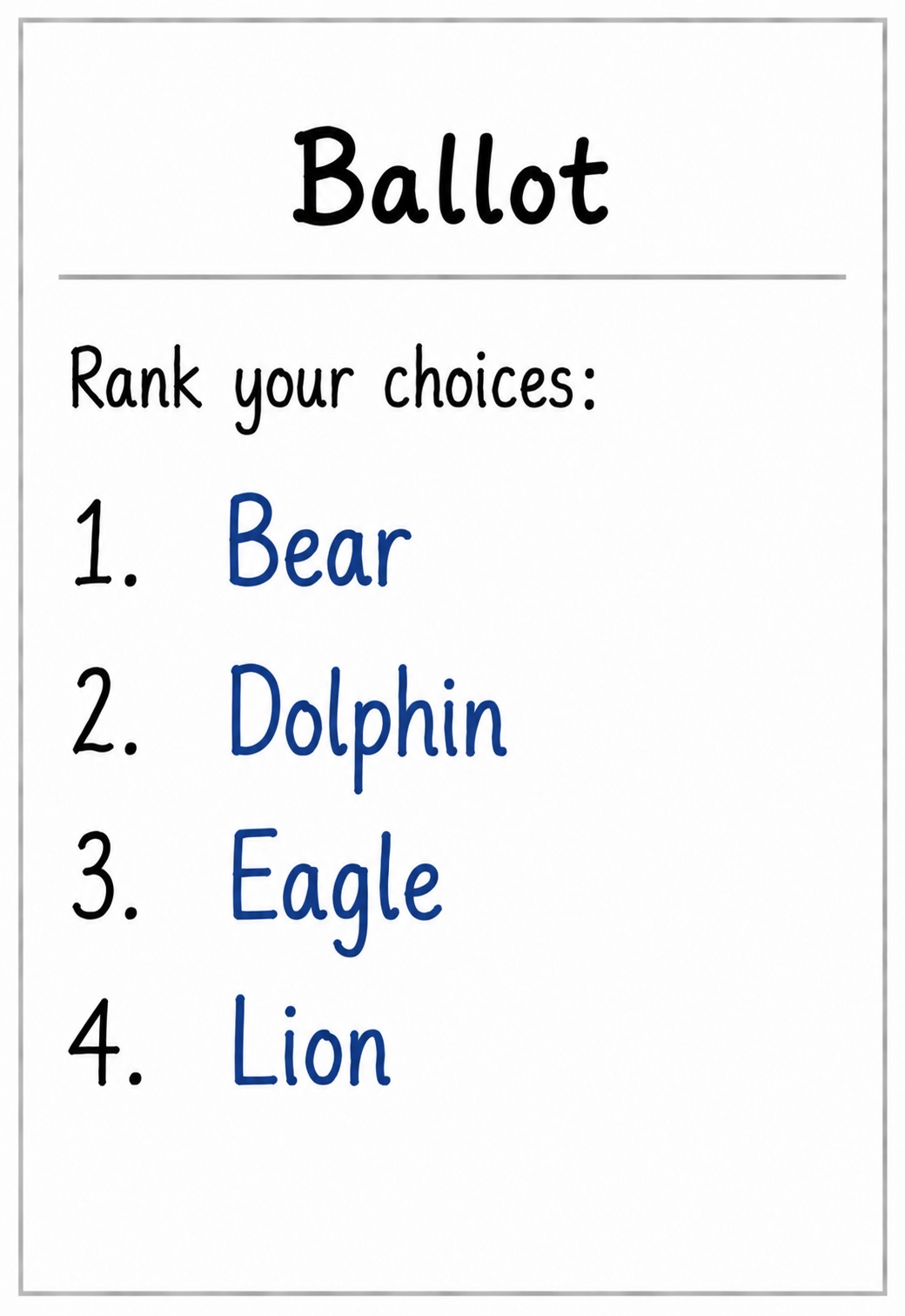
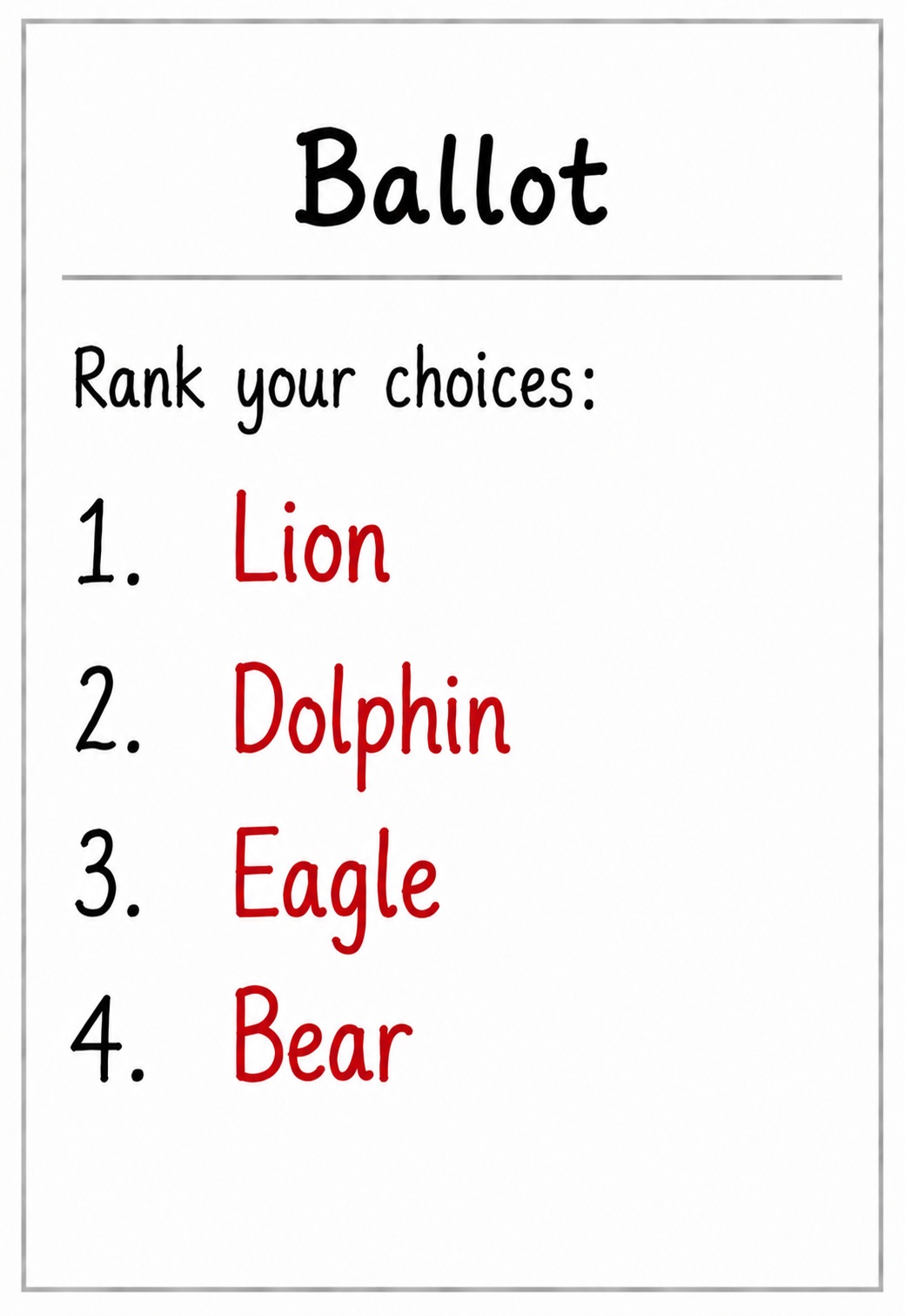
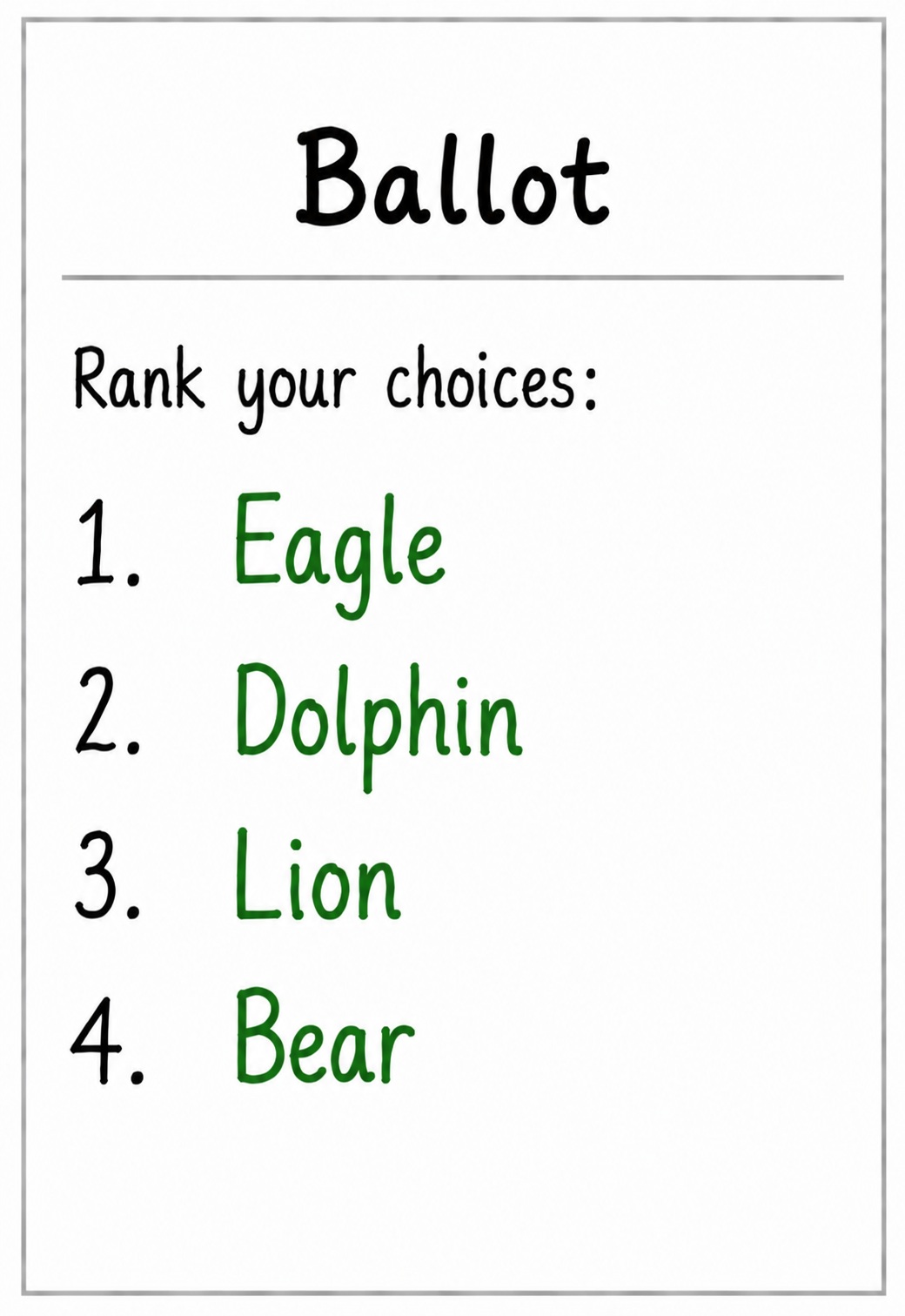
With no first choice preferences, the Dolphin would have been the first eliminated in an IRV or runoff election. But when each head-to-head matchup is examined, and each candidate's record is calculated:
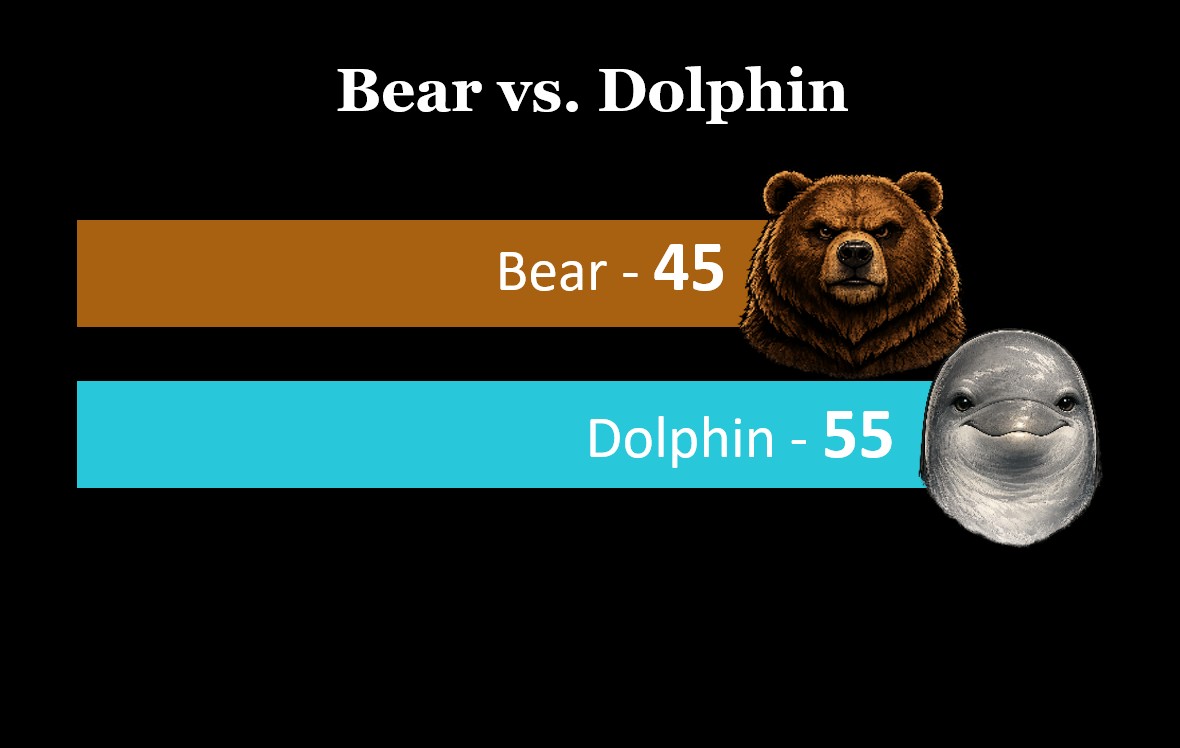
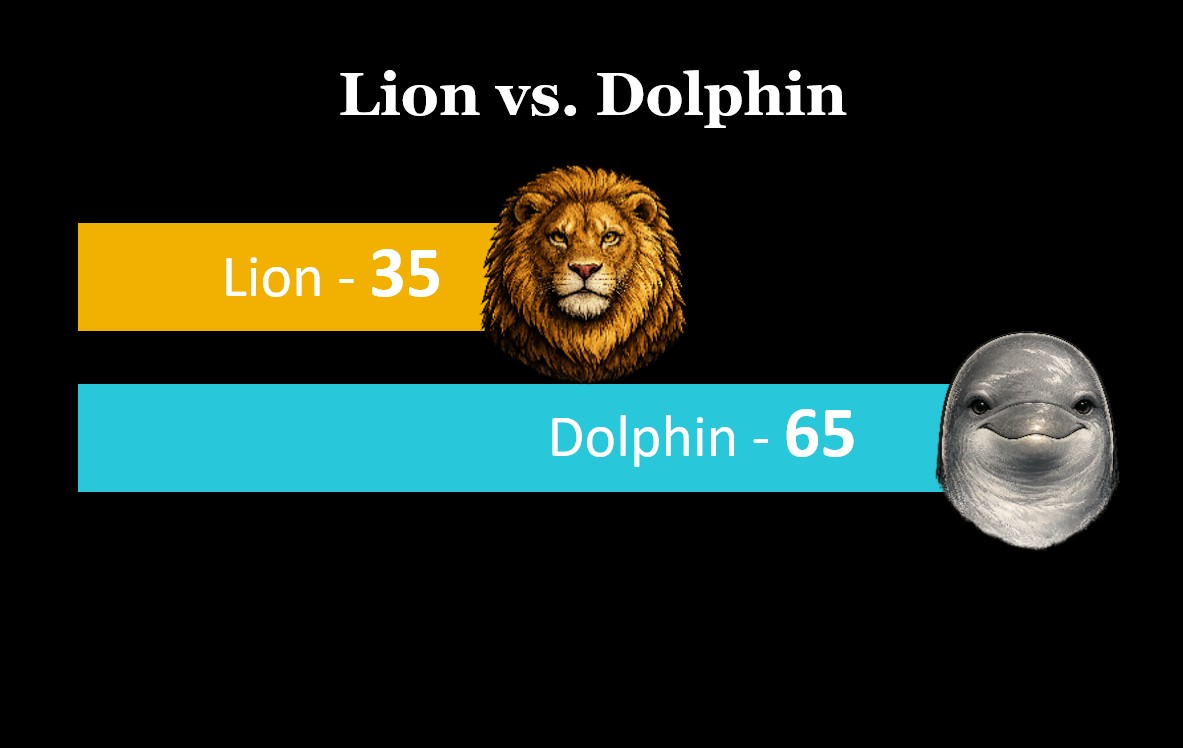
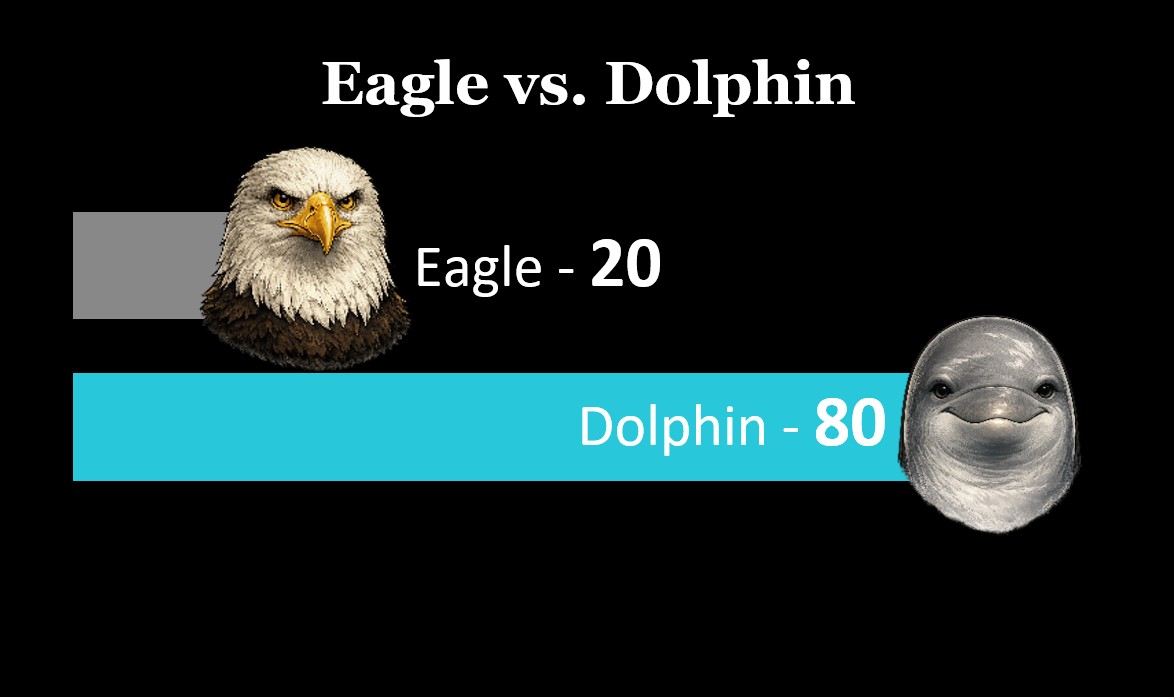
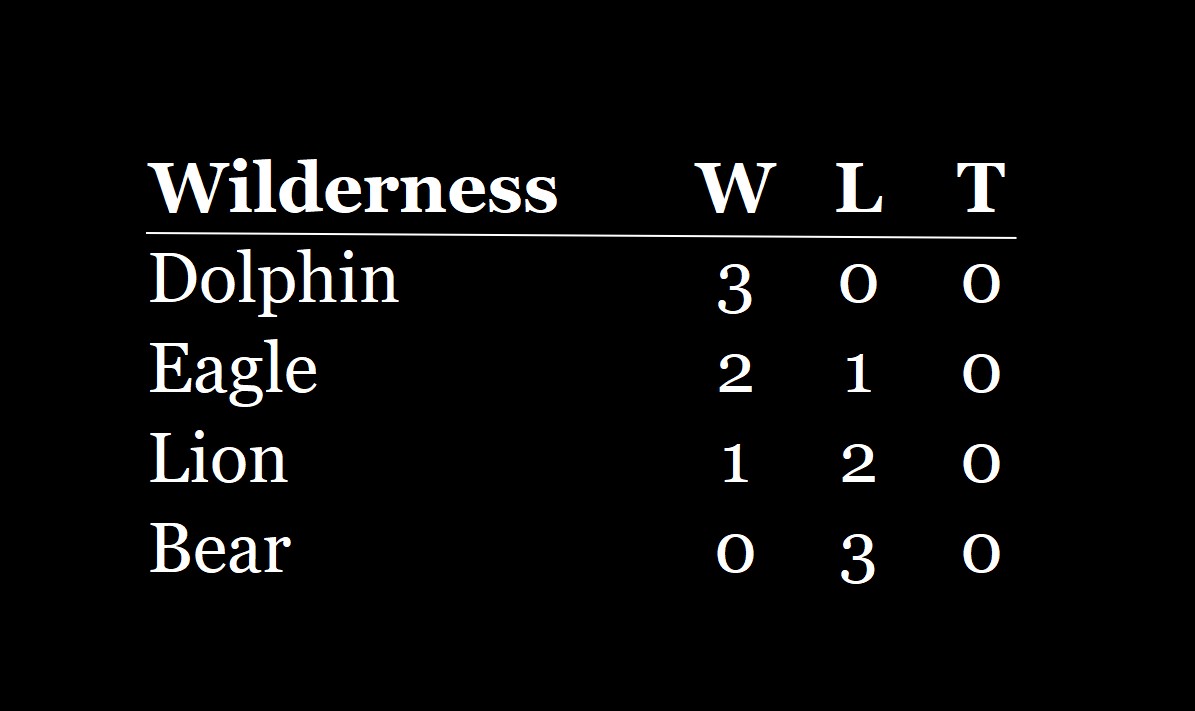
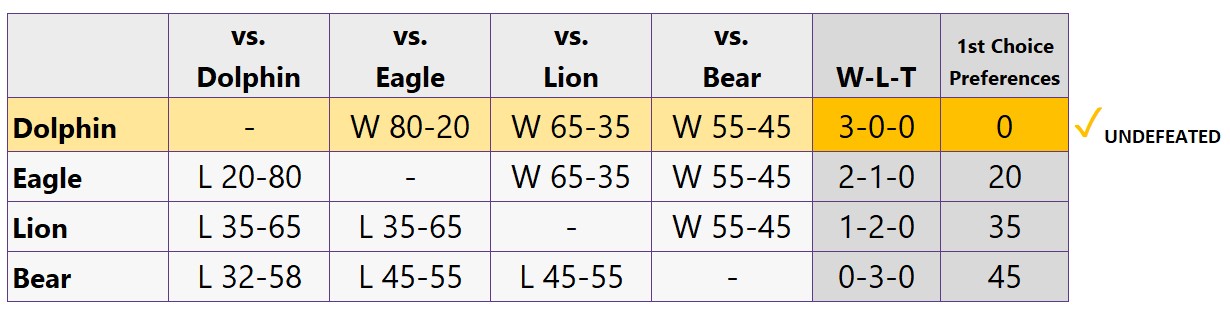
The Dolphin defeats every other candidate head-to-head, without receiving a single first choice preference. This can be very counterintuitive. But there is a deeper principle in play here: every voter was able to vote for their sincere first choice preference without being punished for it. Many critics of head-to-head methods view this as a flaw because they believe first choice preferences define the strength of a candidate.1 Many advocates of head-to-head methods view this as a strength because these methods reward voters for expressing their sincere order of preference with their best achievable outcome, rather than incentivizing them to study polls and vote strategically.
In social choice theory, a candidate who can defeat every other candidate head-to-head is called the Condorcet winner. A candidate who receives over 50% of the first choice preferences will always be the Condorcet winner, but a candidate can be a Condorcet winner without receiving any first choice preferences. On this website, we will simply refer to such a candidate as the head-to-head undefeated candidate. In these examples, the Eagle was the head-to-head undefeated candidate in the 3-way race, while the Dolphin was the head-to-head undefeated candidate in the 4-way race.
This matters, because a processing method that both allows voters to reach their best achievable outcome without voting strategically, and incentivizes voters to vote sincerely rather than manipulate ballots, is going to be a powerful way to process ranked ballots. Head-to-Head Record does however have an important caveat that needs to be understood, which the following example will illustrate:
Rail Corridor Commissioner
This is a different type of election. These voters came for the mayor race at the top of the ballot. The ballot includes numerous down-ballot races that not all voters are familiar with.
One of those down-ballot races is the race for Rail Corridor Commissioner, which has three candidates.



There are three voting groups.
- The Transit voters rank Bellingham first because of his experience. They rank Cole second because he has good intentions, but also see him as someone just looking for a job. They rank Arnold last because of his questionable intentions.
- The Short-name voters came to this election because they had a strong opinion on the mayor race, but they know nothing about the candidates in this race. This group looks at the names on the ballot and ranks them by length, choosing the shortest names first. They rank Cole first, Arnold second, and Bellingham last.
- The ABC-voters also came to this election because of the mayor race and have no opinion on this contest. They like completing the ballot, so they fill in ovals even in races where they have no opinion. In those cases, they simply vote in ballot order, ranking Arnold first, Bellingham second, and Cole last.
In an election with 40 Transit voters, 35 Short-name voters, and 25 ABC voters, the ballots look like:
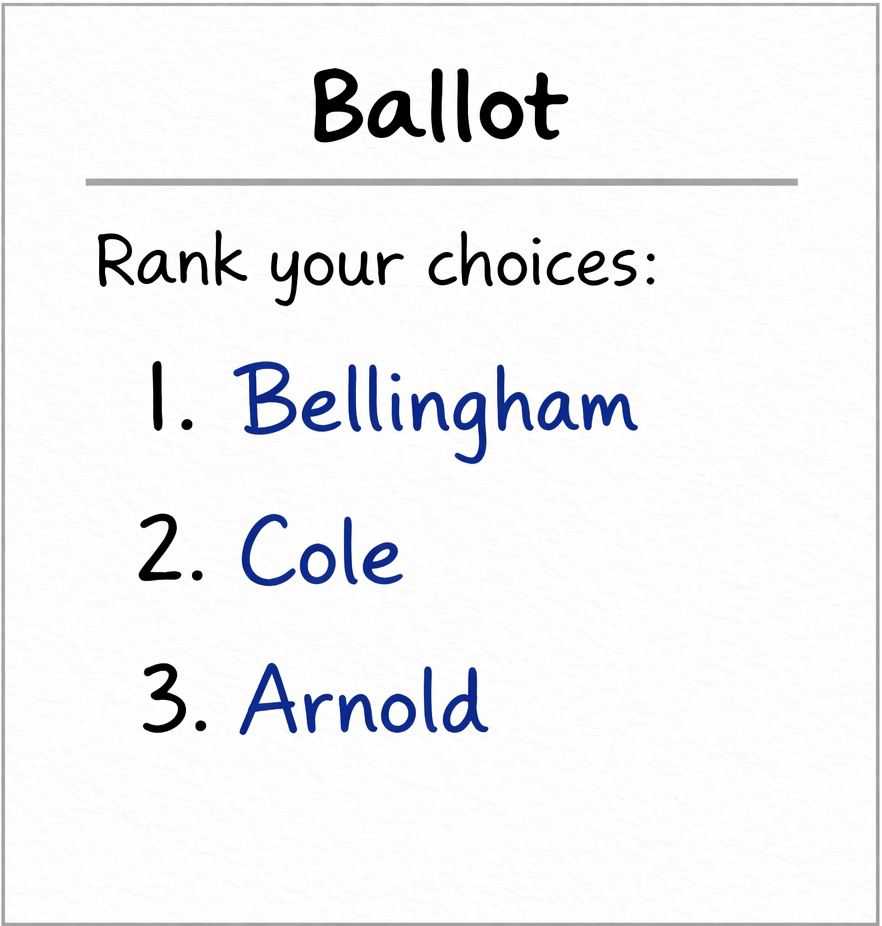
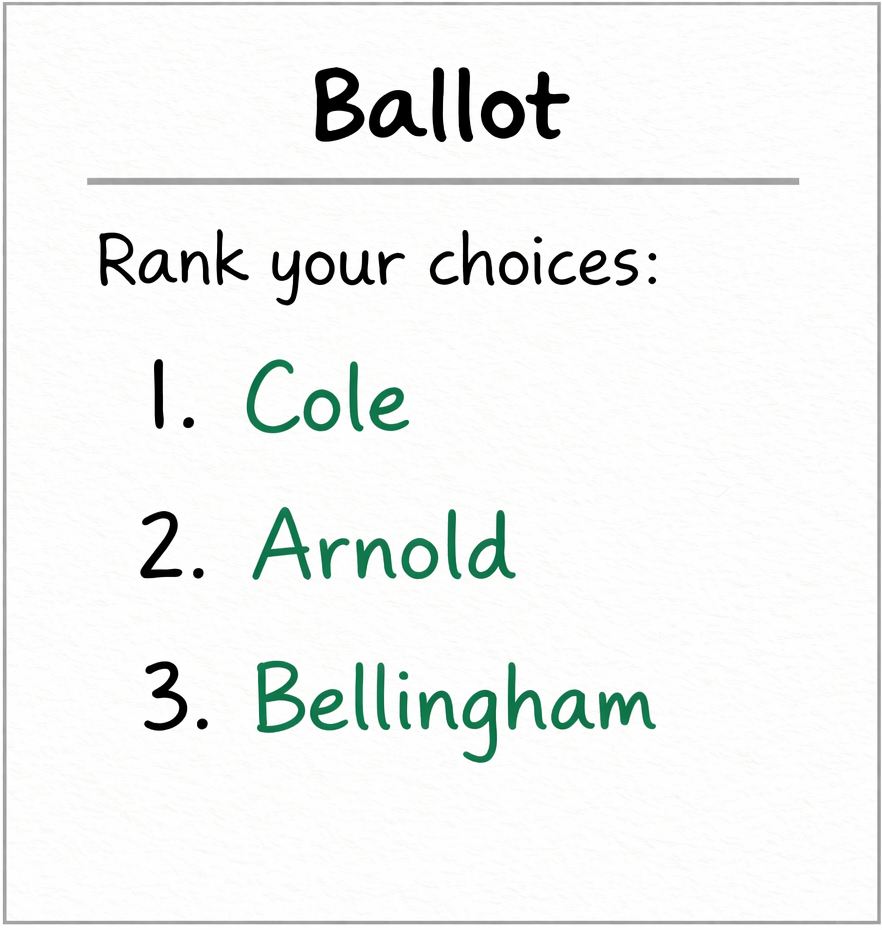
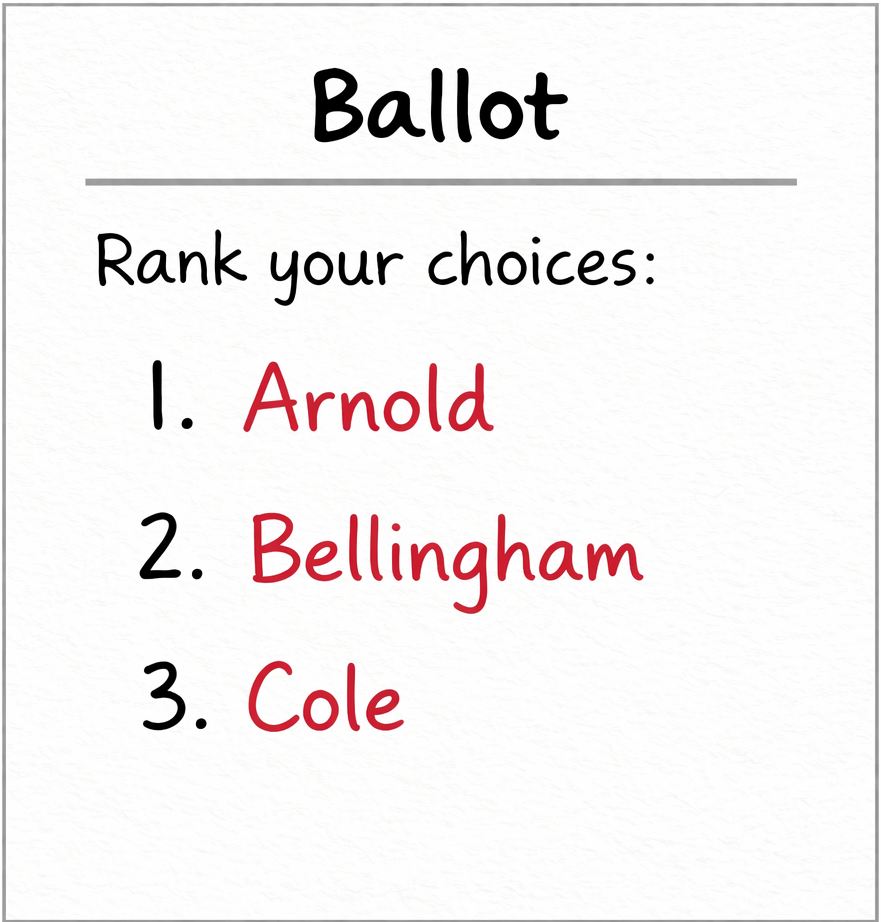
Each head-to-head matchup is examined, and each candidate's record is calculated:
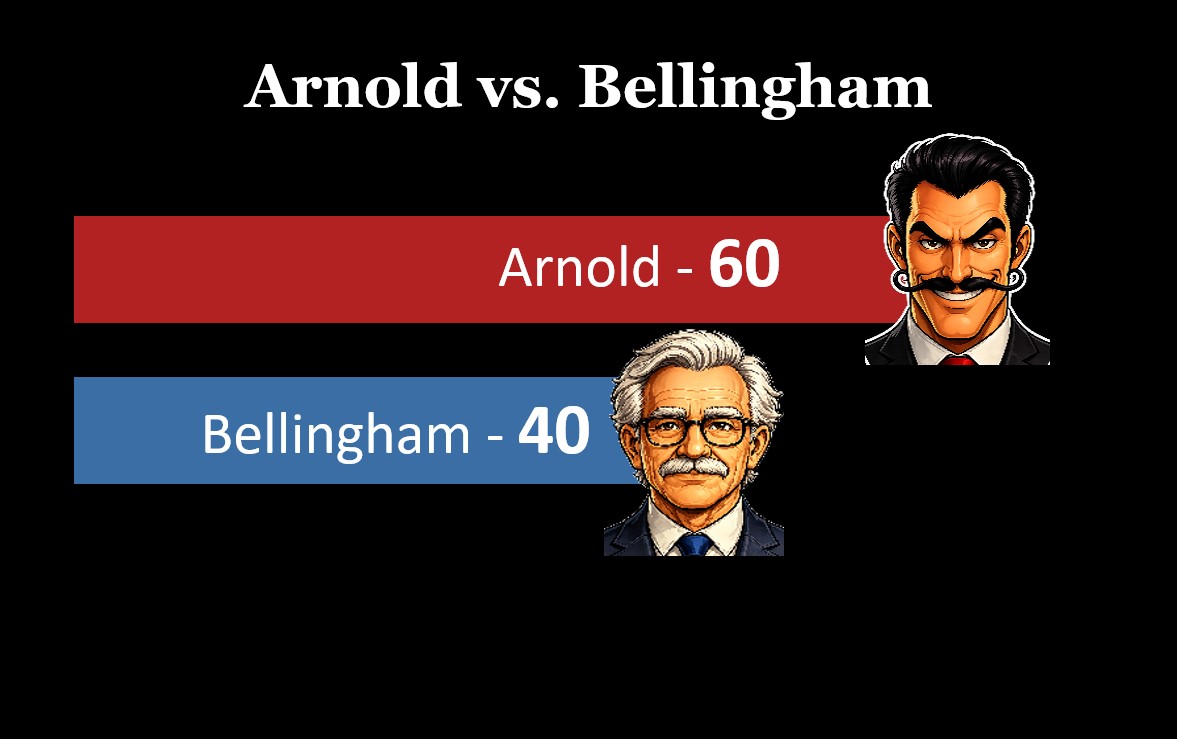
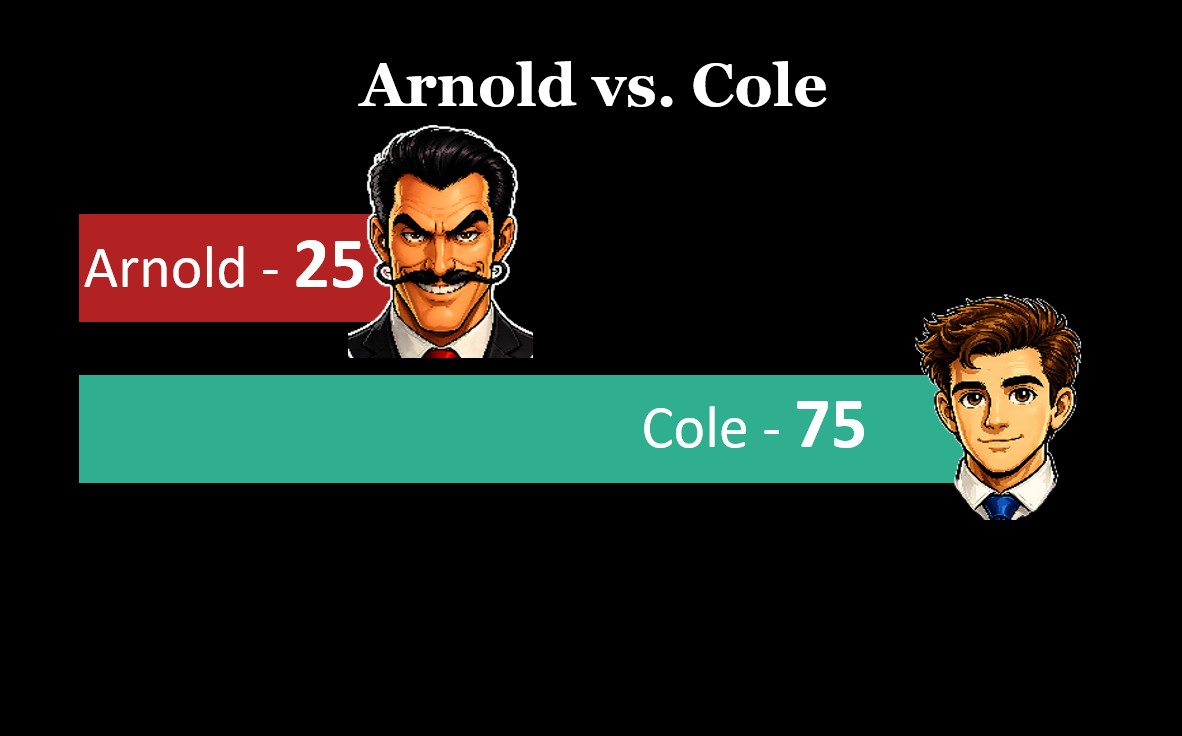
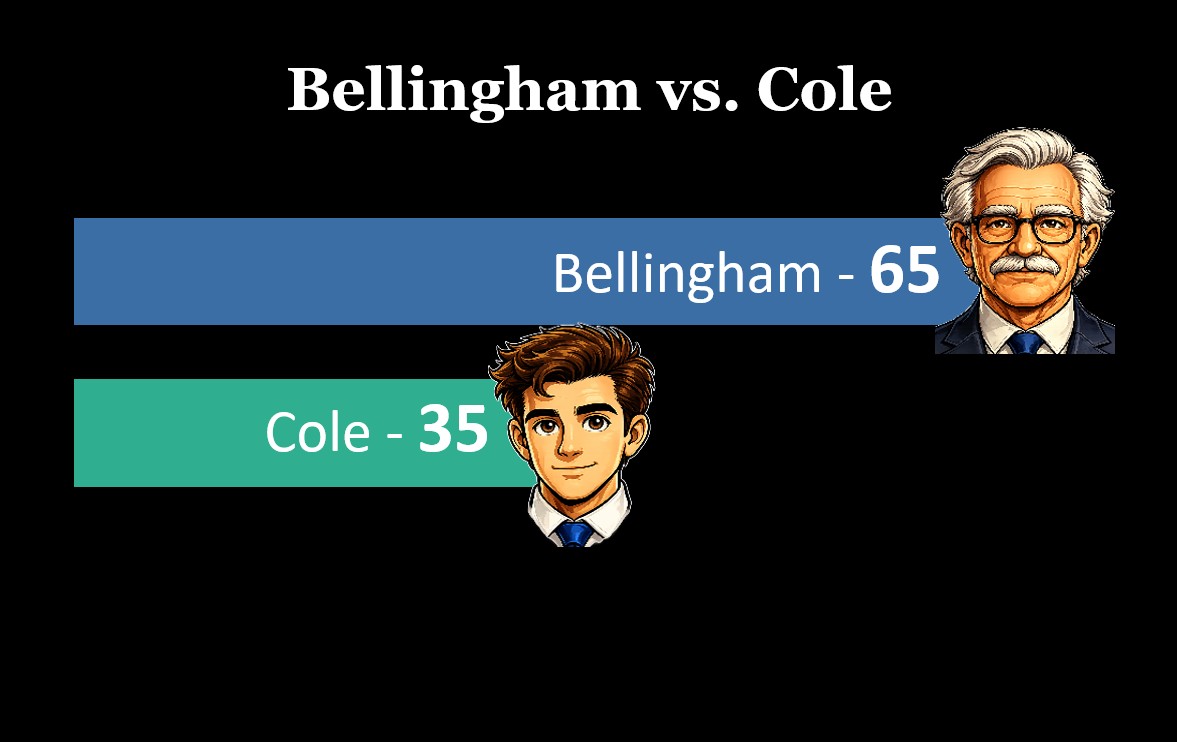
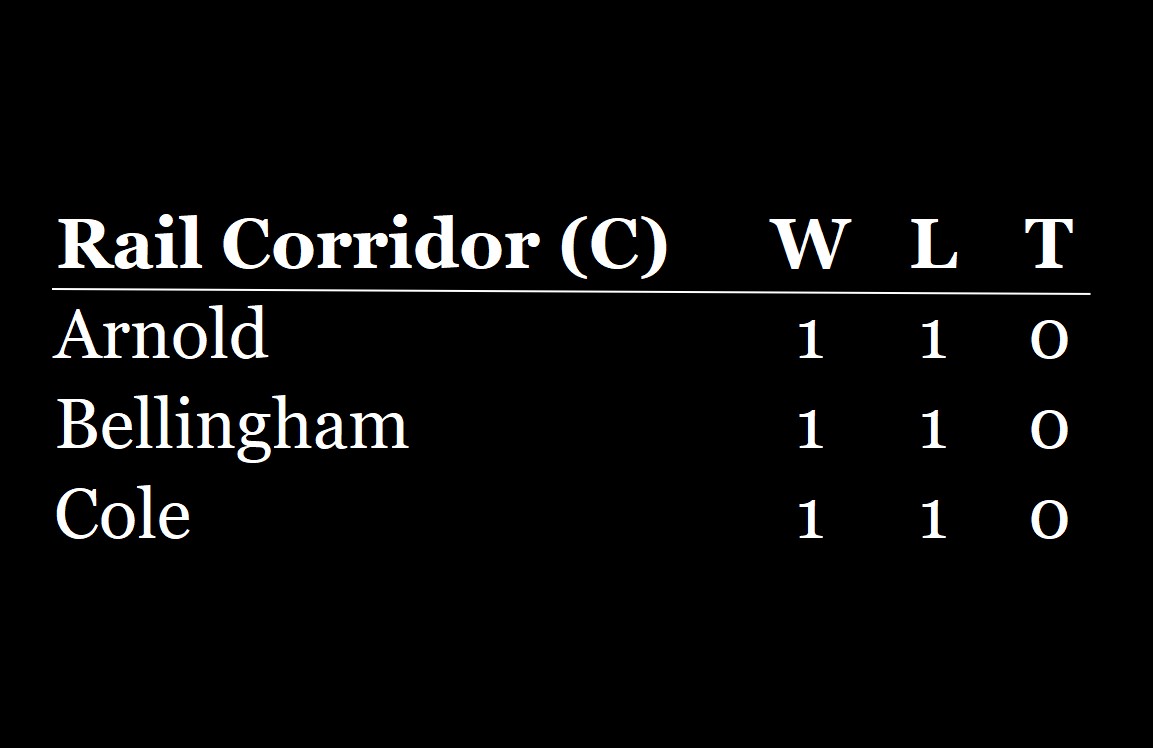
The head-to-head results produce a three-way tie with no clear winner.
Each candidate has a reasonable claim to winning. Bellingham could argue he has the most first choice preferences. Arnold could argue he beats Bellingham head-to-head. Cole could argue that with the fewest last choice preferences, he is the "least hated," and therefore should be considered the most broadly acceptable candidate. Depending on how the tie is broken, any of the three could win.
While preference cycles receive significant attention in theoretical discussions, they are rare in ideologically driven real-world elections. Critics argue that cycles are a flaw in preferential ranking systems because no winner selected from a cycle can be considered uniquely legitimate. Even some election reform advocates argue that election systems should avoid collecting preferential orderings altogether. Others reach the opposite conclusion. They argue that when a sincere cycle exists, discovering the cycle may be more important than the particular procedure used to find the winner. They view the cycle as meaningful information that should be transparent and understood. For example, consider the three reasons that could cause a cycle:
- Voters having little interest in a race and submitting arbitrary preferences, as in the previous example.
- Voters strategically manipulating their rankings to create a cycle that helps a preferred candidate, a strategy explored later on this site.
- Voters sincerely disagreeing about the candidates in a manner that produces a genuine preference cycle within the electorate.
It is this final case where advocates would rather preserve this information than discard it. A sincere ideological cycle suggests an electorate has evolved beyond bitterly polarized politics. But more importantly, understanding these cyclical preferences may provide insight into areas where responsibility could be divided among different offices or institutions. From that perspective, the cycle is not merely a tie to be broken, but meaningful information about the structure of an electorate.
In sports, teams frequently finish a season with the same record. Most leagues have built-in tiebreaker systems, which consider factors such as head-to-head results, point differentials, and strength of schedule. There have been many cases where tiebreaker methods across different leagues have been widely debated. Different tiebreaker methods can produce different winners, and different cycle resolution methods are no exception. The next section examines several commonly used cycle resolution methods.
1 FairVote argues here that candidates should have substantial first-choice support to remain competitive and ultimately win an election.
Comments
This site does not manage comment accounts. Comment data is handled by a third-party discussion service.