Single Transferable Vote with Head-to-Head Record
Single Transferable Vote (STV) systems can produce proportional representation through Ranked Choice Voting. By ranking coalition allies high, transferable votes can continue supporting aligned candidates and allow coalitions to approach proportional representation within a multi-winner election. However, as we showed in the previous section, there can still be situations where coalitions face strategic incentives to support other candidates in order to reach their best achievable outcome.

In single-winner election systems, we have shown that some counting methods can allow voters to reach their best outcome without the need to strategically alter their rankings. If we were to use Head-to-Head Record from ranked ballots in a multi-winner election, and simply elect the candidates with the best head-to-head records, the results would not be proportional to the population, but instead would become heavily skewed toward a single coalition. For example, if a single coalition held a narrow majority of the population, that coalition could take all the seats in a multi-winner election. This method would fail for proportional representation.
However, Head-to-Head Record can be incorporated directly into proportional transferable-ballot systems, creating a substantially different elimination process that can reduce strategic voting incentives. A candidate standings table would be created from the voters' ranked ballots as described earlier. Candidates would still claim seats by reaching quota, and surplus votes would still transfer proportionally after candidates are elected. However, when no remaining candidate has reached quota, eliminations would be based on the candidate's head-to-head record instead of the candidate's current vote strength. The eliminated candidate's ballots would still continue transferring at their existing voting strength.
We will describe this process using the same executive council election from the previous article:
The Wilderlands Executive Council
Seven candidates are competing in a 5-member executive council election:







- The Foresters hope to secure 3 of the 5 seats using the Bear, Wolf, and Fox, but the Eagle is their next choice to block the Felines from controlling the council.
- The Felines hope to secure 3 of the 5 seats using the Lion, Tiger, and Cheetah, but the Eagle is their next choice to block the Foresters from controlling the council.
- The Avians hope the Eagle can become the deciding coalition voice on the council, but prefer the Felines if one coalition ultimately controls the council.
The same 2000 ballots from the previous example are used again:
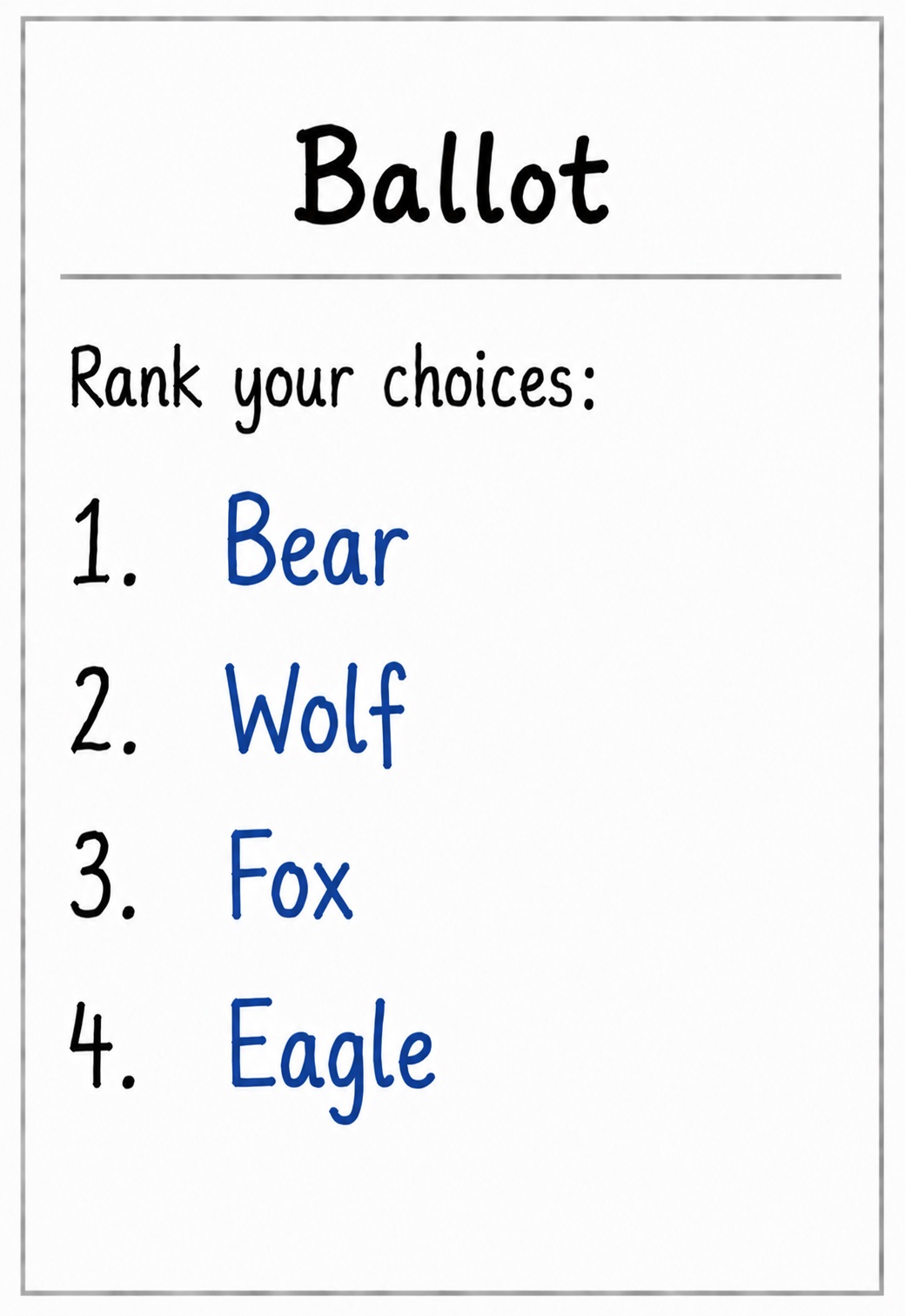
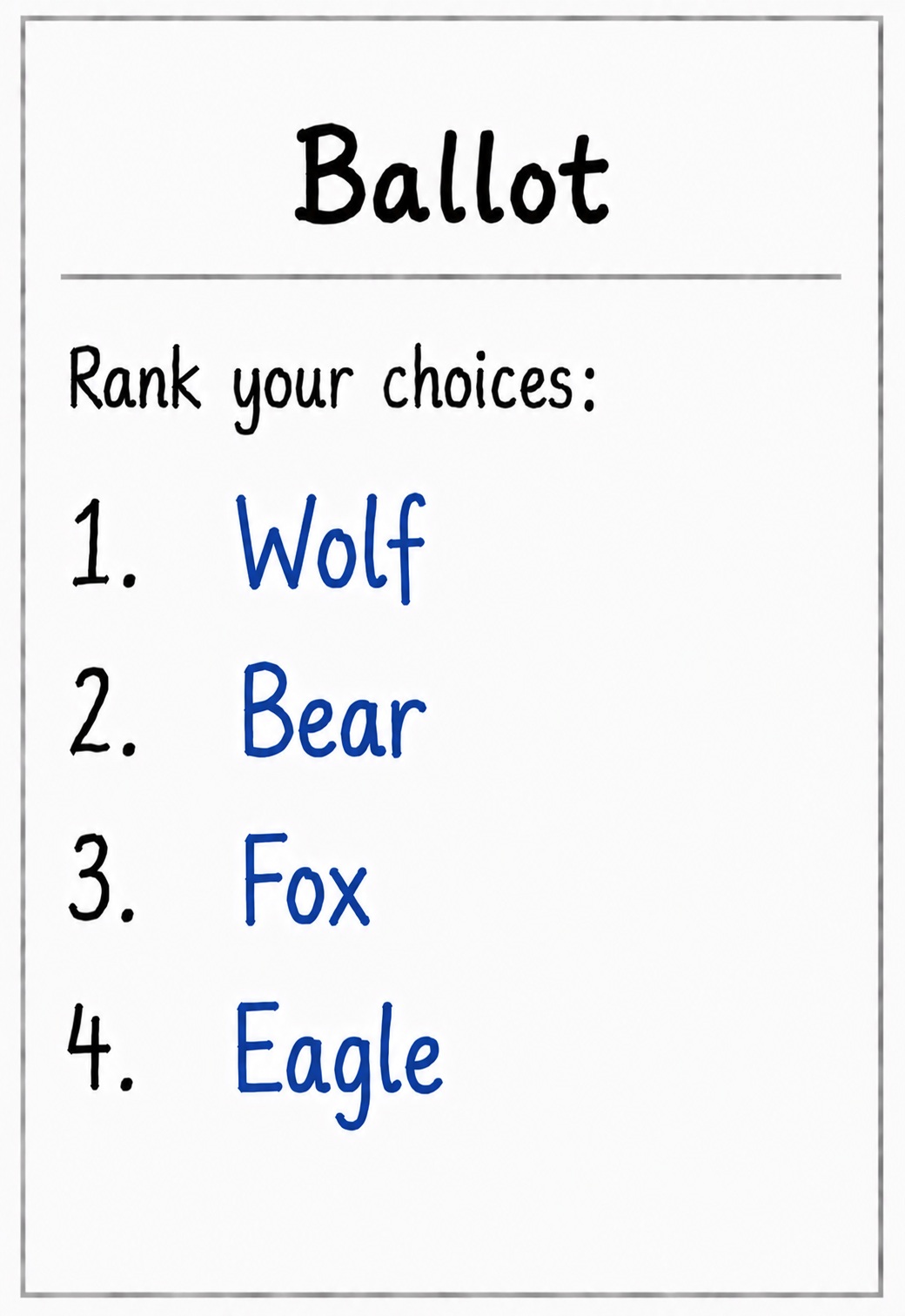
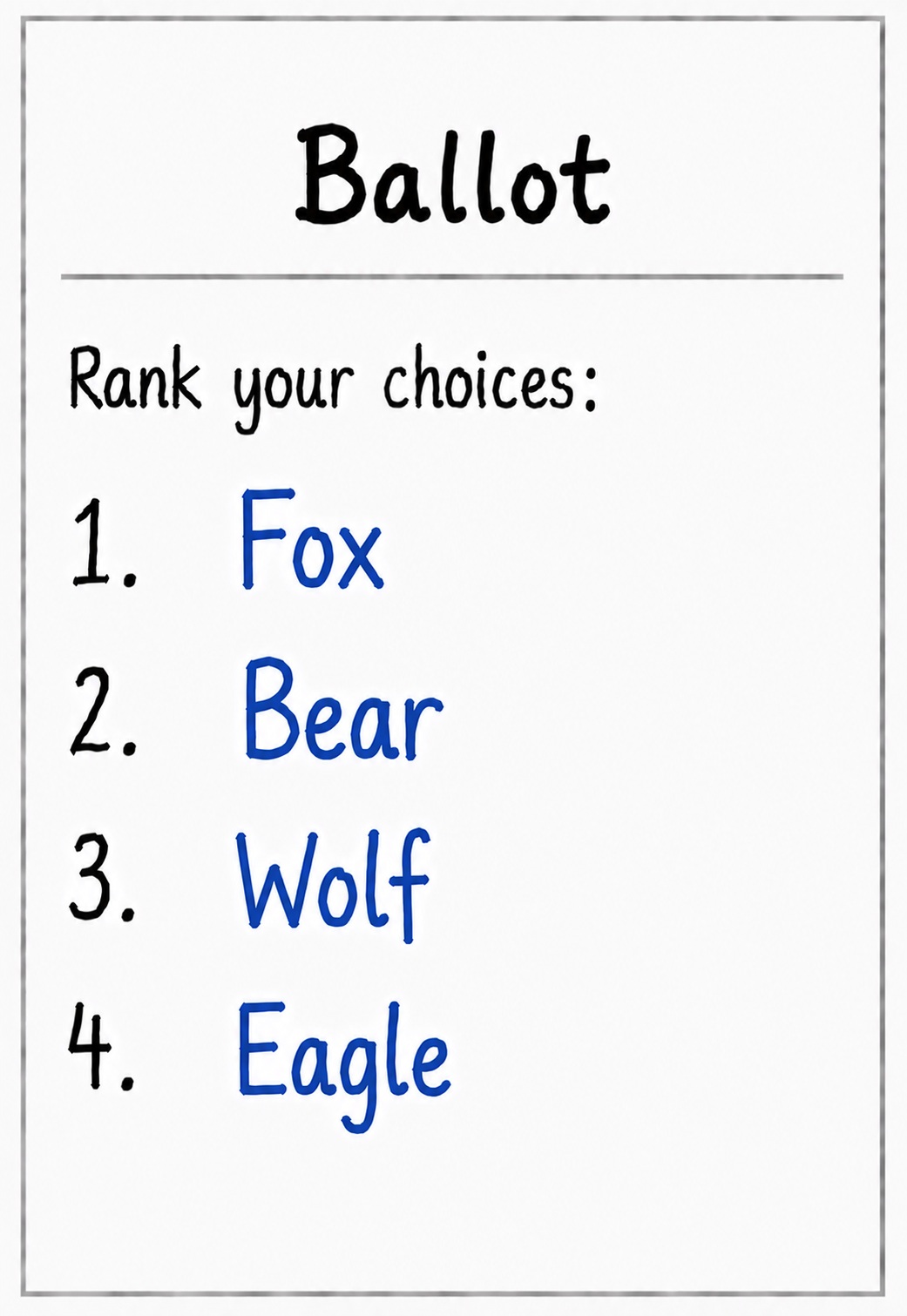
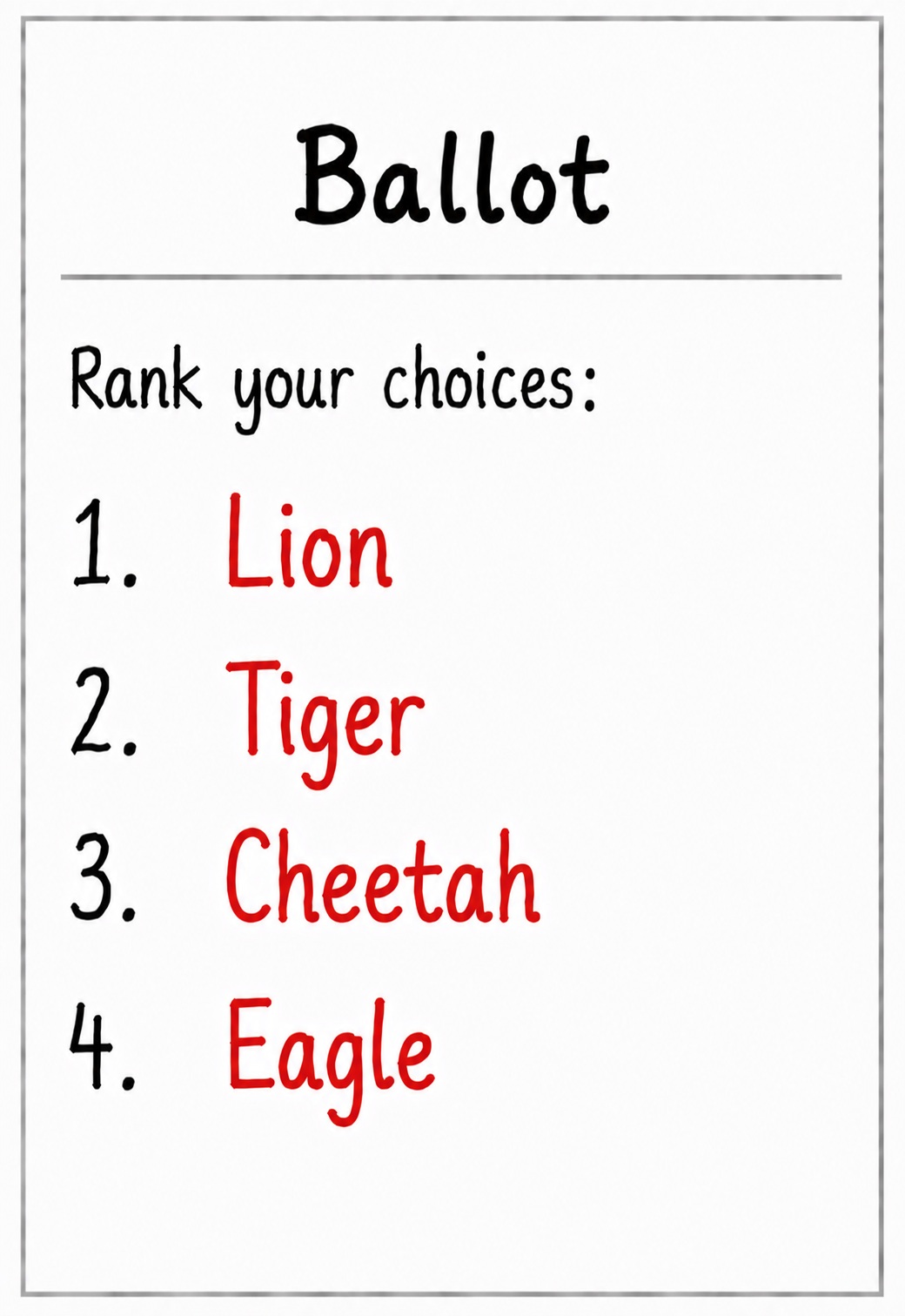
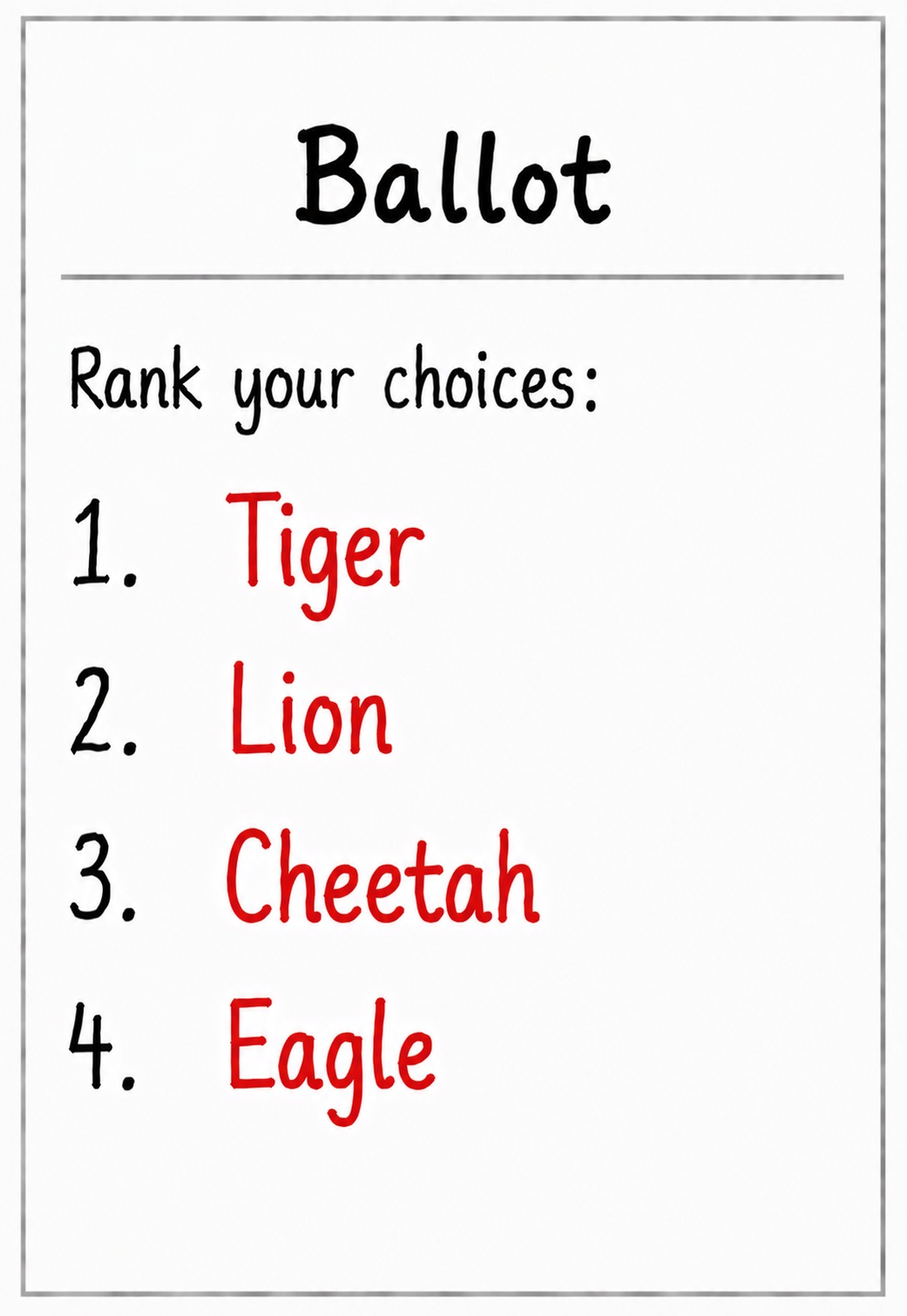
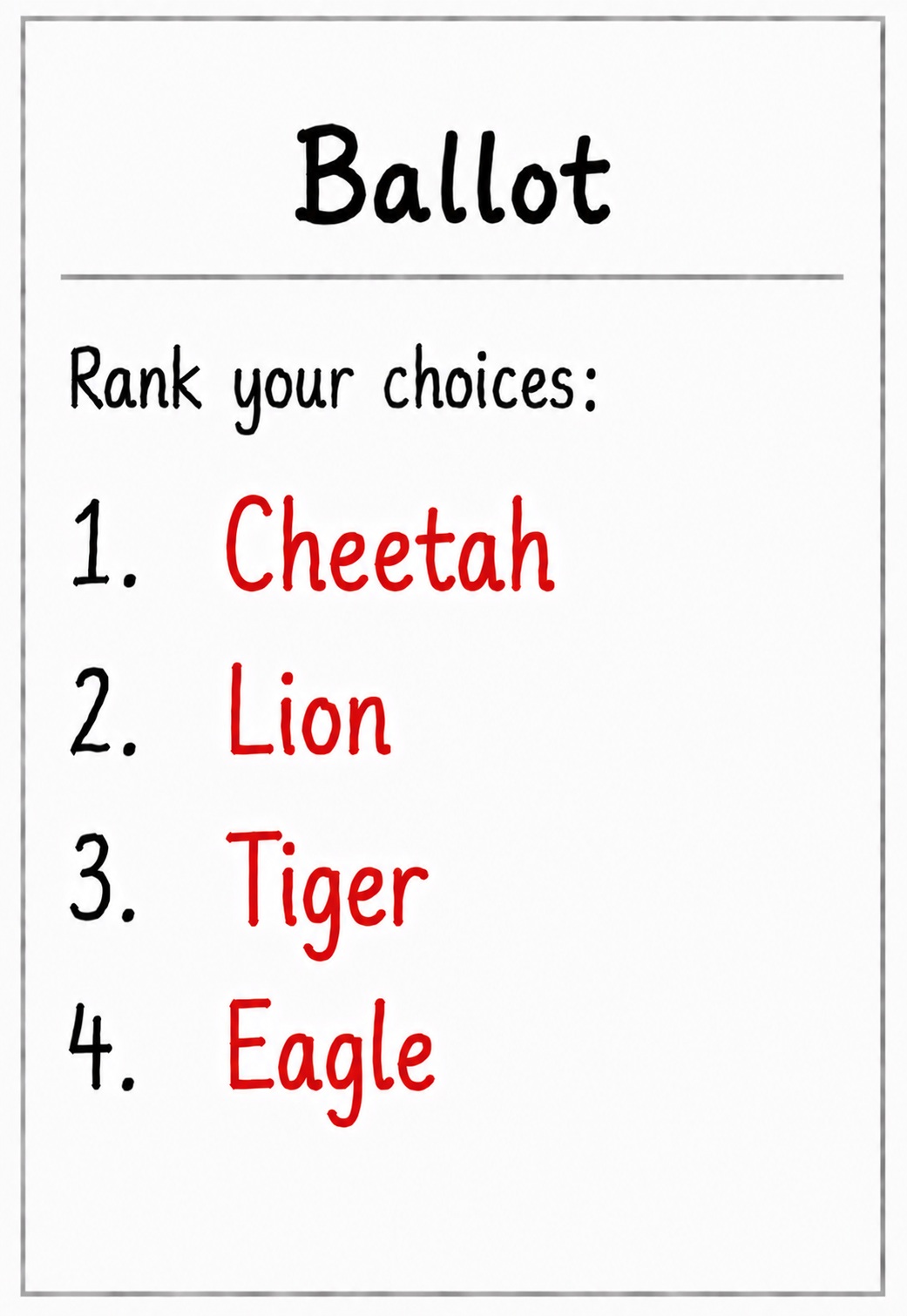
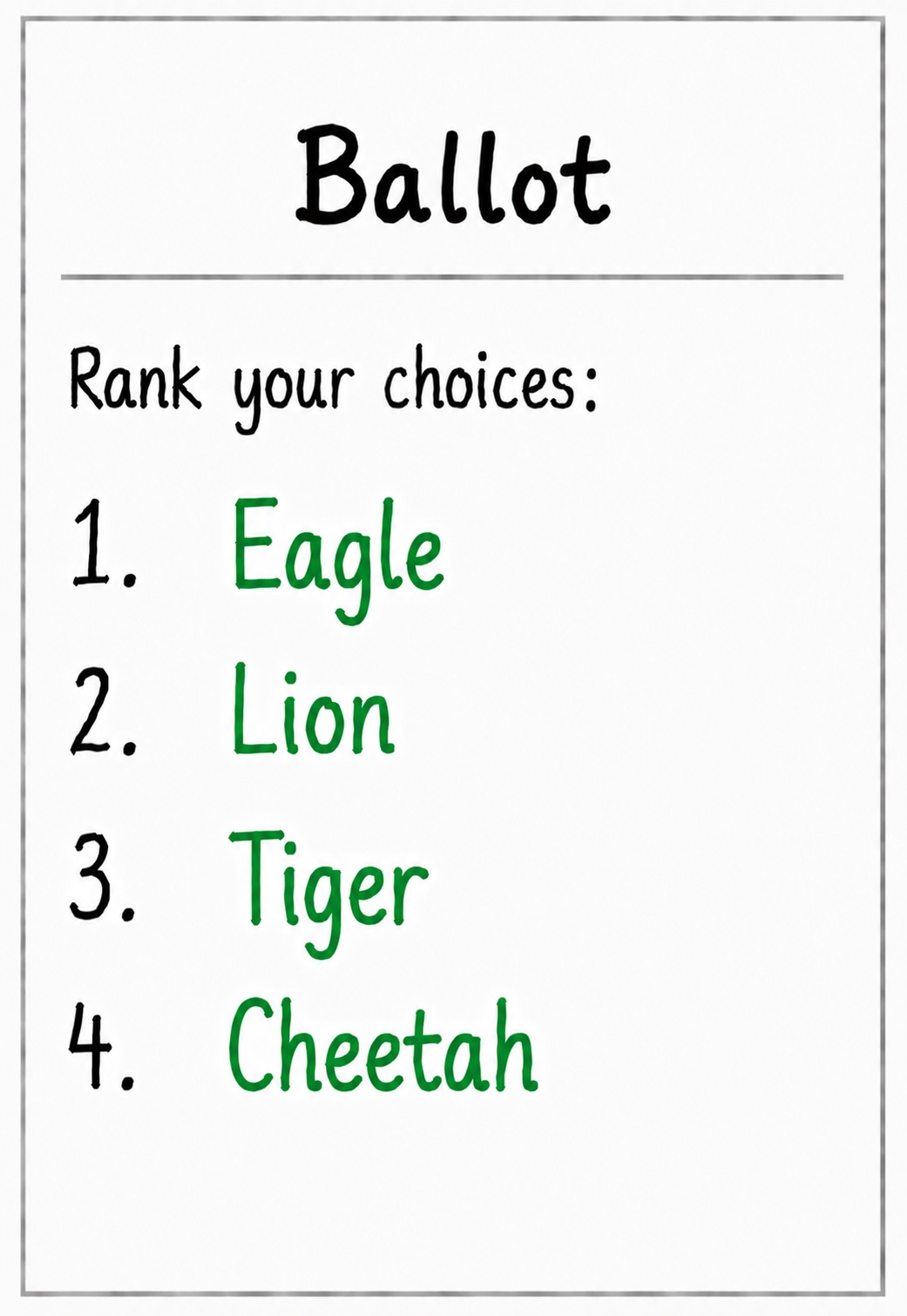
A head-to-head ranking table is then calculated for the 7 candidates. The table below shows which candidates defeat other candidates head-to-head across all ranked ballots:
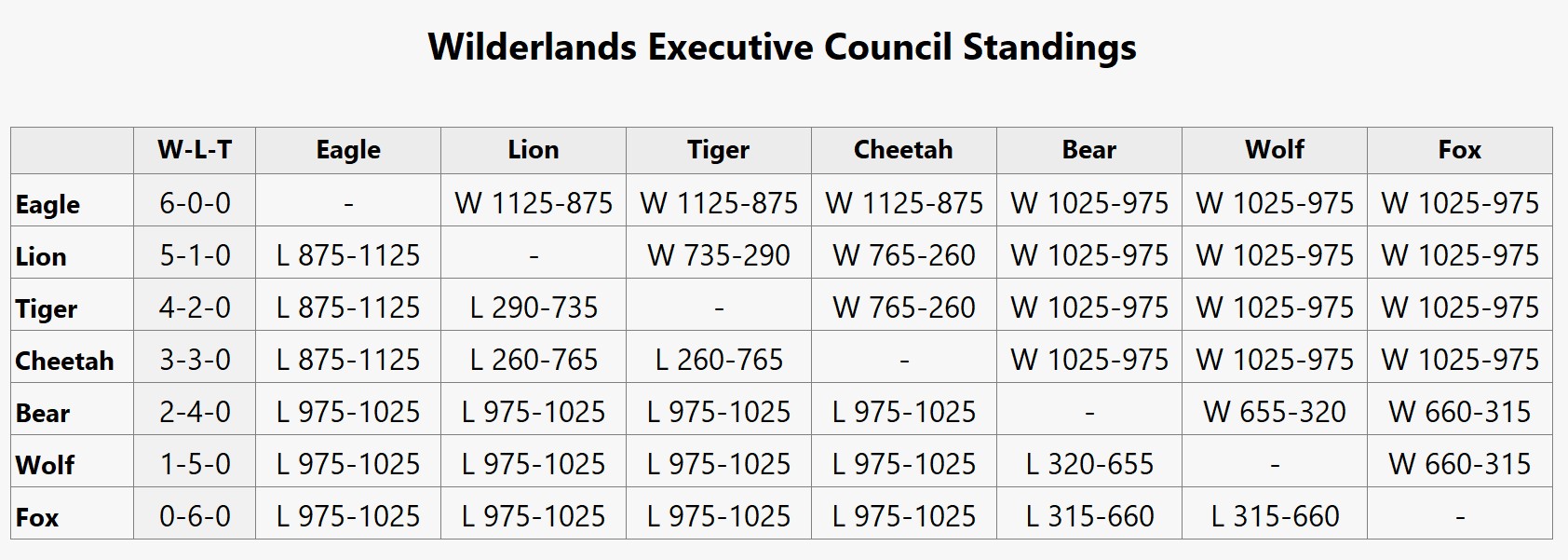
In this example, the head-to-head rankings contain no ties or cycles, so the candidate order can remain fixed throughout the election. The election quota remains:
The candidates are now sorted by their head-to-head record. The initial first-place totals are:
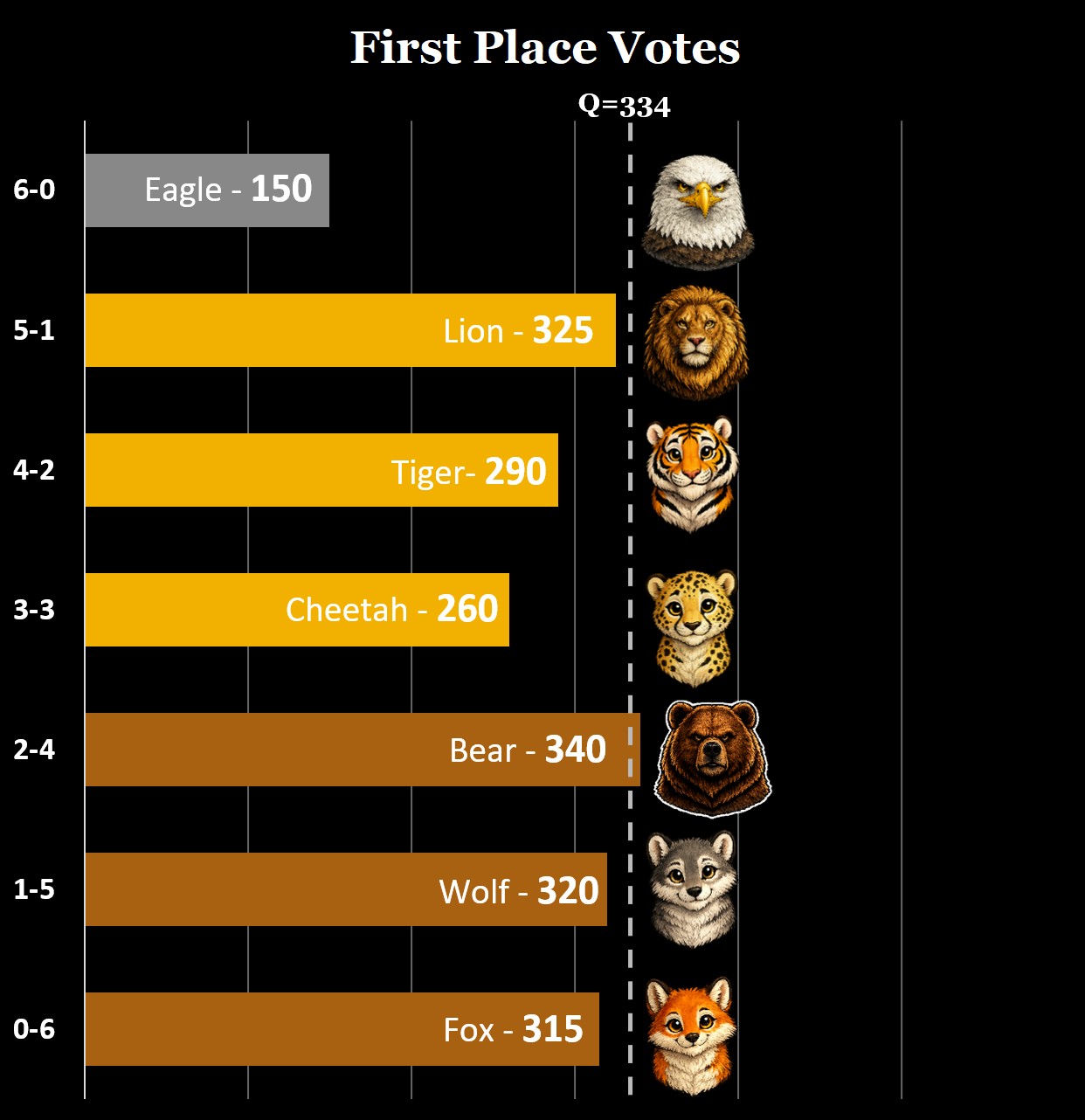
Even though the Eagle has the strongest head-to-head record at 6-0, it does not have enough votes to claim a seat. However, the 2-4 Bear does have enough votes to secure the first seat on the council. The Bear's 6 excess votes then transfer to the 1-5 Wolf:
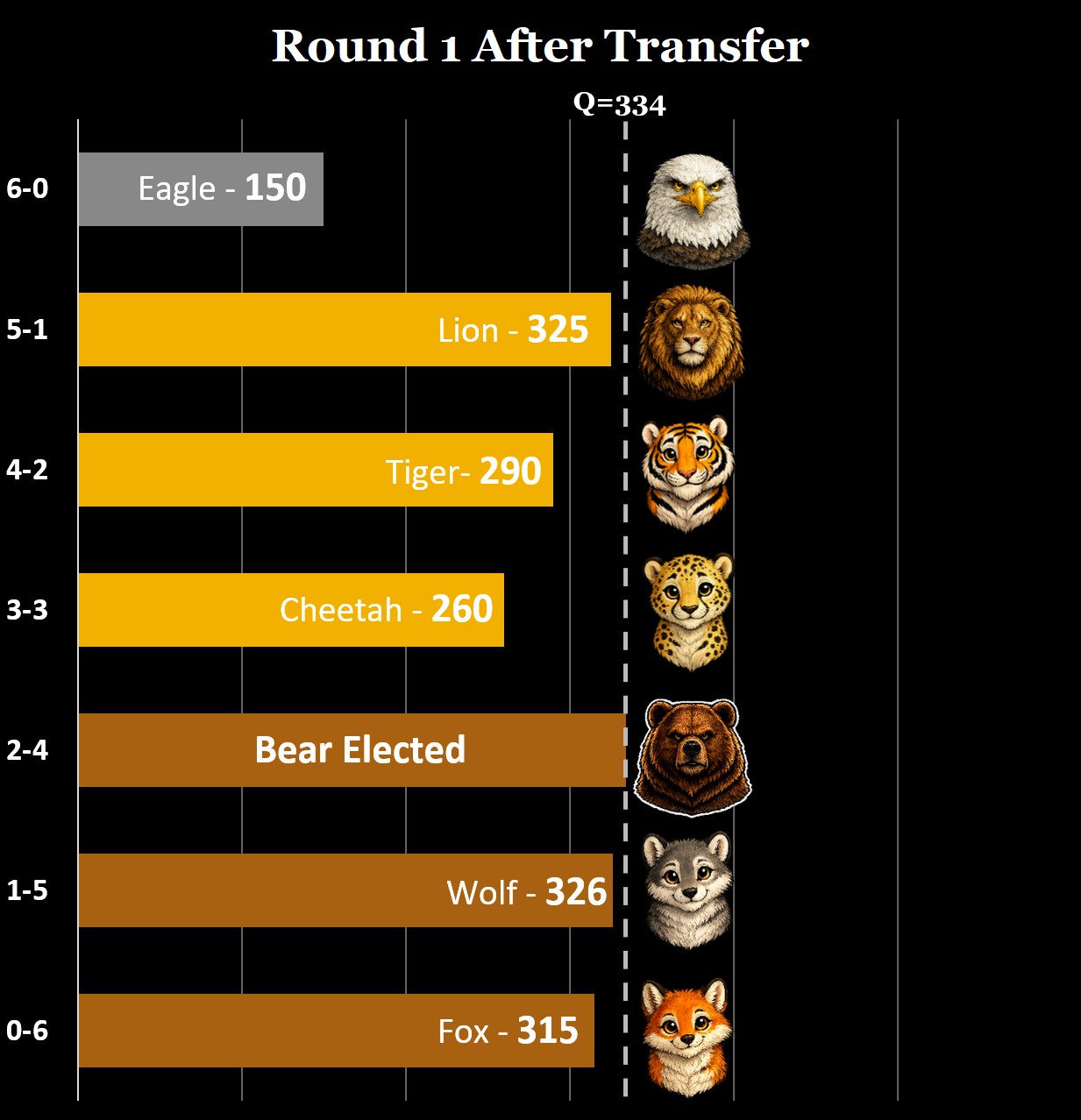
After the transfer, no remaining candidate has reached quota. Under ordinary STV, the 6-0 Eagle would now be eliminated for having the fewest current votes. Instead, the 0-6 Fox is eliminated because eliminations are based on head-to-head record rather than current vote strength. The Fox transfers all 315 votes to the 1-5 Wolf:
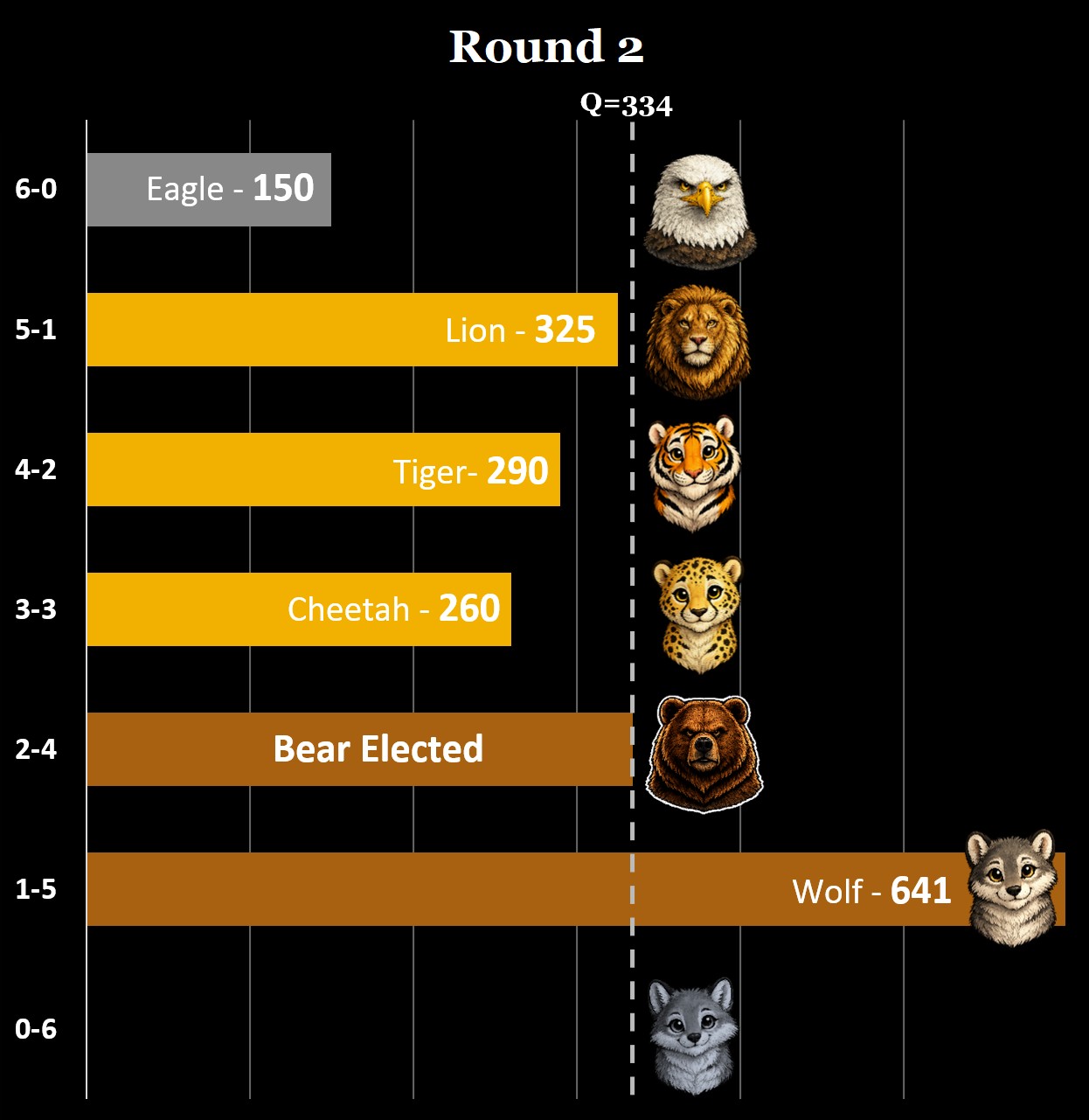
The 1-5 Wolf now crosses the quota threshold and secures the second council seat. The Wolf is now 307 votes over quota. Since the Fox was previously eliminated, those 307 votes transfer to the next remaining candidate on the Forester ballots, which is the 6-0 Eagle.
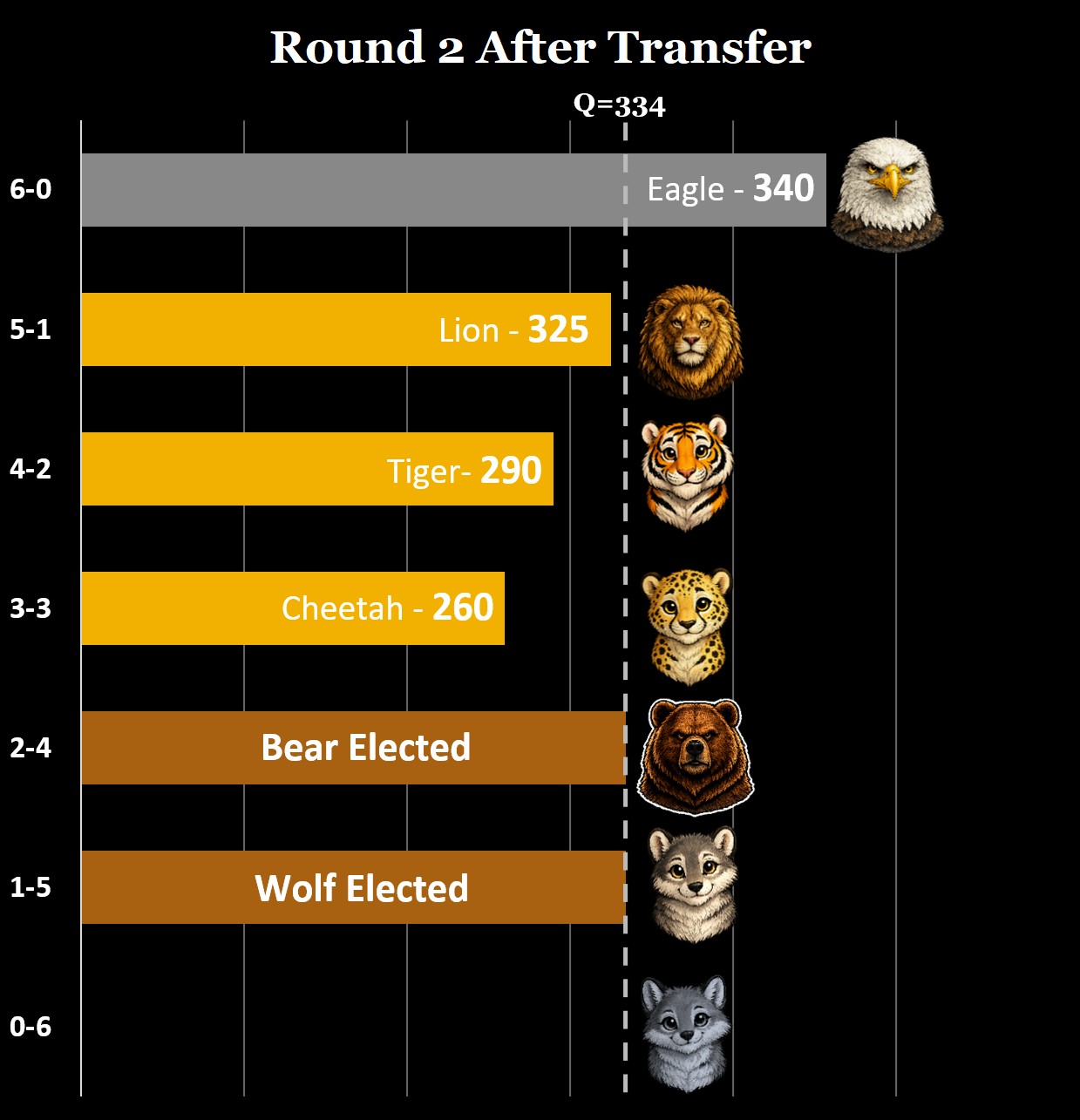
The 6-0 Eagle is now elected with 457 votes, with an excess of 123 votes. Of Eagle's 457 votes, 307 came from Forester ballots, which are now exhausted because the Foresters listed no candidates below the Eagle. The remaining 150 votes came from Avian ballots, and those ballots do continue transferring. They are reweighted as:
The Avian ballots then transfer to the 5-1 Lion with a total voting strength of:
After these ballots transfer, the totals become:
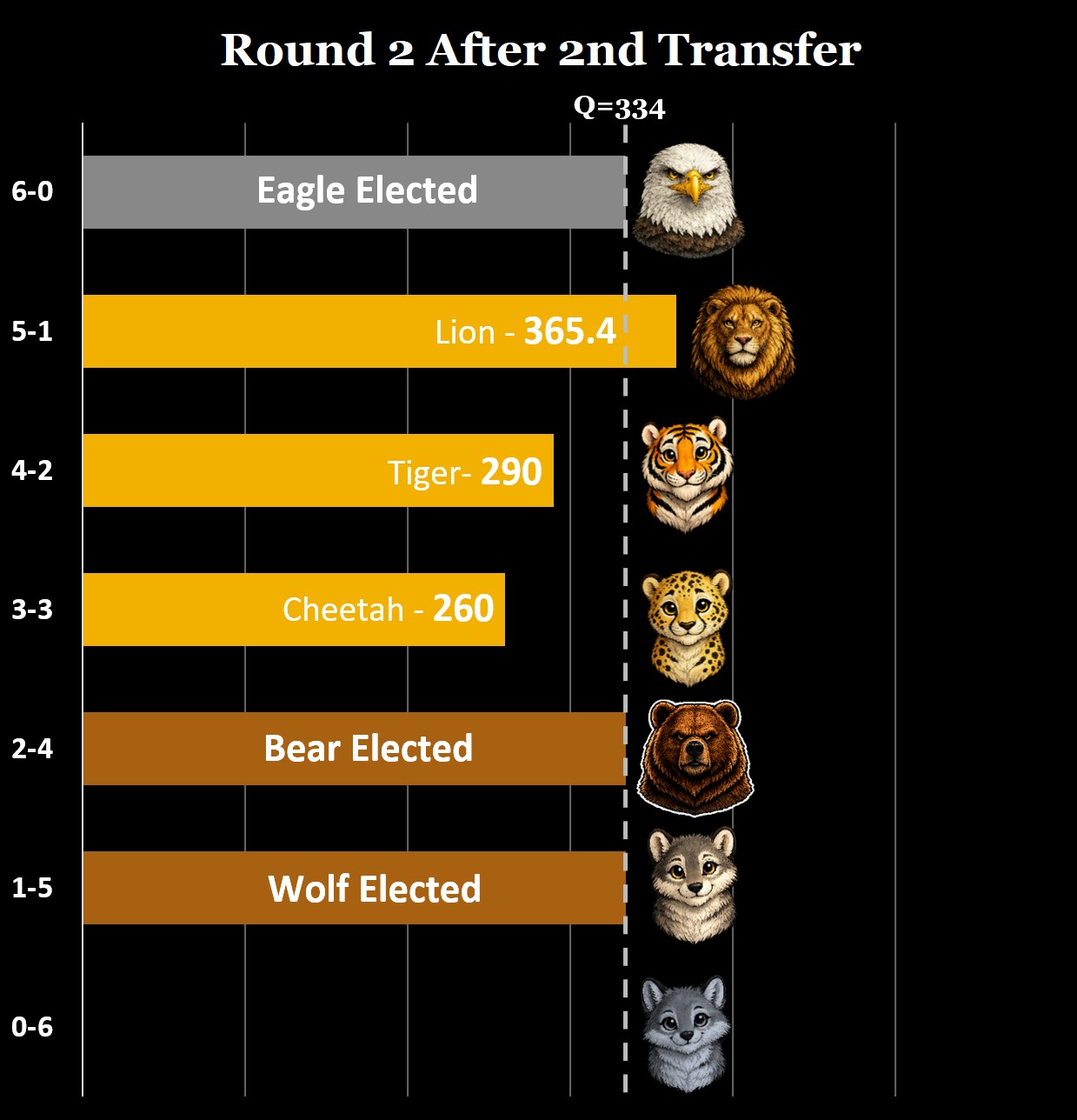
The 5-1 Lion now claims a seat, with an excess of 31.4 votes, which then transfer to the 4-2 Tiger:
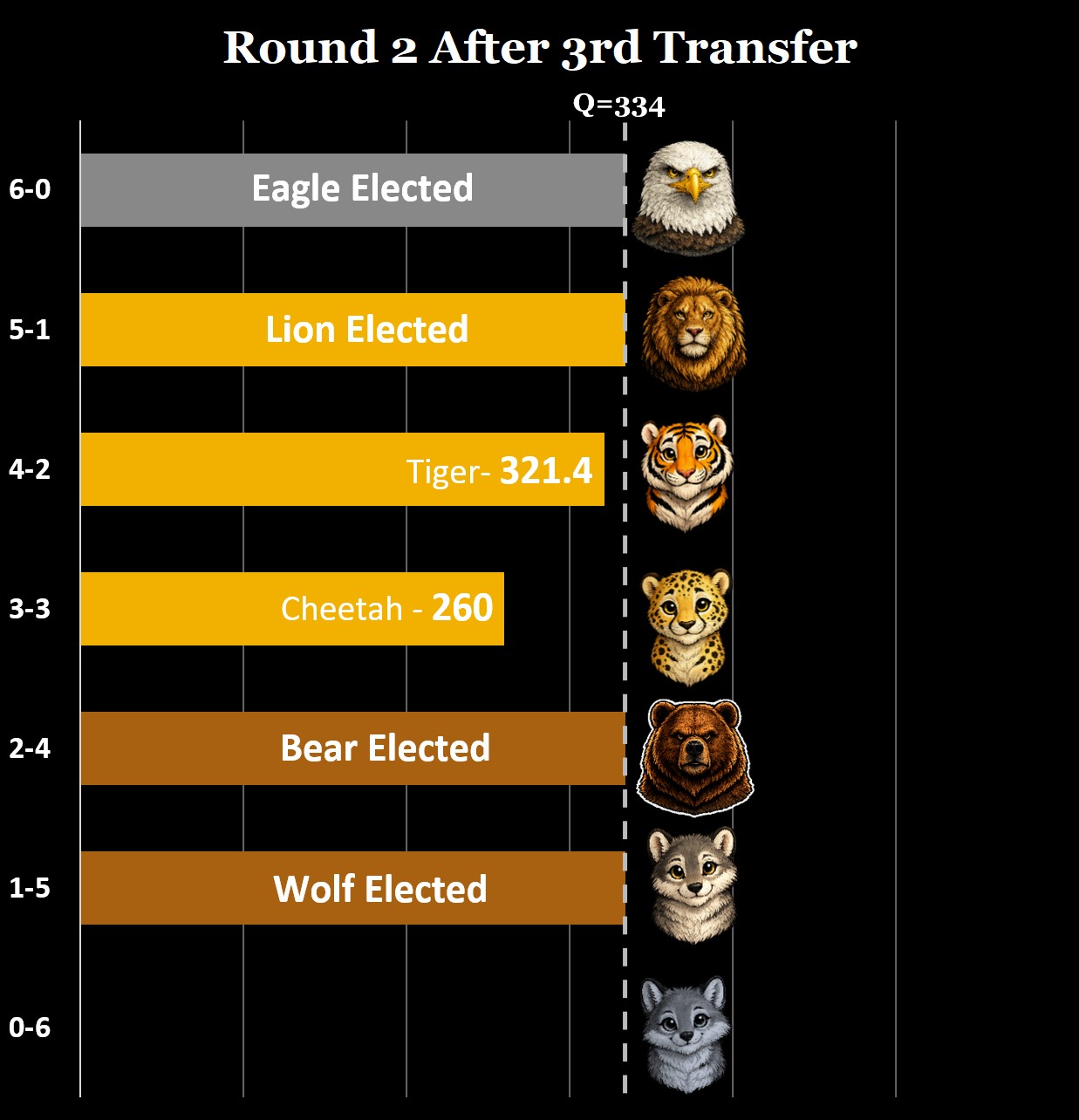
The only remaining candidates are the 4-2 Tiger and the 3-3 Cheetah. The Cheetah is eliminated next because it has the weaker head-to-head record, and the resulting council becomes:





In this example, quotas, transfers, and coalition proportions still determined most of the election outcome. First-place support and coalition transfers still matter, as the Bear and Wolf were able to claim seats despite relatively weak head-to-head records. Head-to-head records only influenced the elimination order, which resulted in the Eagle making the council instead of the Cheetah. More importantly, all of the voters were able to support their preferred coalition ordering without needing to strategically alter their rankings.
Despite the strengths of this system, there are also tradeoffs. As we have shown before, head-to-head results can sometimes produce preference cycles between candidates, resulting in tied head-to-head records. In larger elections with many voters, cyclical ties may be rare, but additional cycle-resolution procedures would still need to be put in place in advance to resolve those ties. Once cycle-resolution procedures are put in place to create an order of candidates, the order can remain fixed throughout the election and would not need to be recalculated after each elimination.
Head-to-Head Record may provide one possible way to preserve some broadly acceptable candidates within proportional transferable-ballot systems, while still allowing voters to support their true coalition preferences. Quotas, transfers, and coalition size still determined the overall balance of representation, while head-to-head records primarily influenced which candidates remained alive long enough for later transfers to develop. Like all ranked-ballot systems, this approach still involves tradeoffs, particularly because quota transfers and head-to-head eliminations are operating simultaneously. Different elimination rules can produce different outcomes, and additional procedures may still be required when candidates become tied or when cycles occur. But this system better allows voters to support their true coalition preferences in multi-way elections without needing to strategically alter their rankings.
Comments
This site does not manage comment accounts. Comment data is handled by a third-party discussion service.