Reverse Instant Runoff Voting
Reverse Instant Runoff Voting (sometimes called Coombs’ Method) takes a different approach to ranked ballots. It still proceeds round by round, eliminating candidates, but instead of removing the candidate with the fewest first-place votes, it removes the candidate with the most last-place votes. In simple terms, this approach tends to favor the candidate who is “least hated,” rather than the one who is “most liked.” While this method is rarely used in public elections, the idea may feel familiar. In many settings, people vote to eliminate an option rather than select a winner.
In many reality television shows, such as Survivor, participants do not vote to select a winner. Instead, they vote to eliminate one contestant at a time. The person who receives the most votes-against them leaves, and the process repeats until only one remains. Reverse Instant Runoff Voting applies a similar idea to ranked ballots by removing the candidate with the most last-place votes until a winner emerges.

The Wilderness Example
Returning to the wilderness example from the previous article.



The Foresters (who support the Bear) were in a dilemma when using IRV. If they voted their true preferences, the candidate they opposed the most (the Lion) would win. They would need to change their votes strategically to reach their best achievable outcome (the Eagle). Let’s consider the same race using Reverse IRV. The voters rank their true preferences:
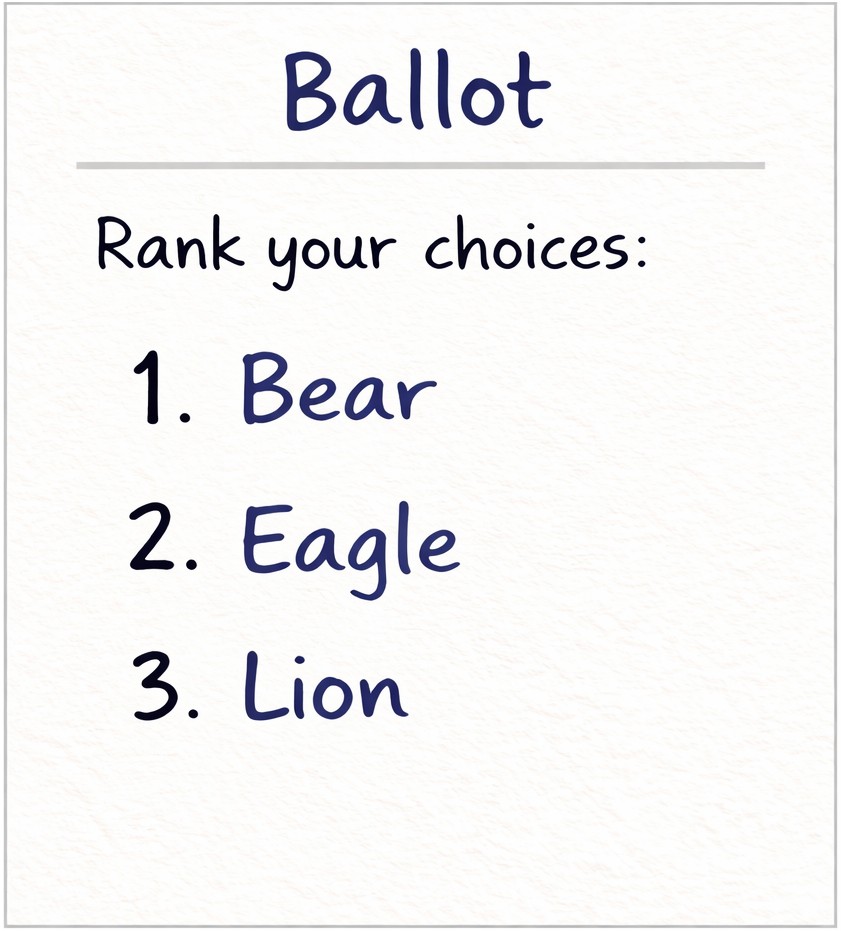
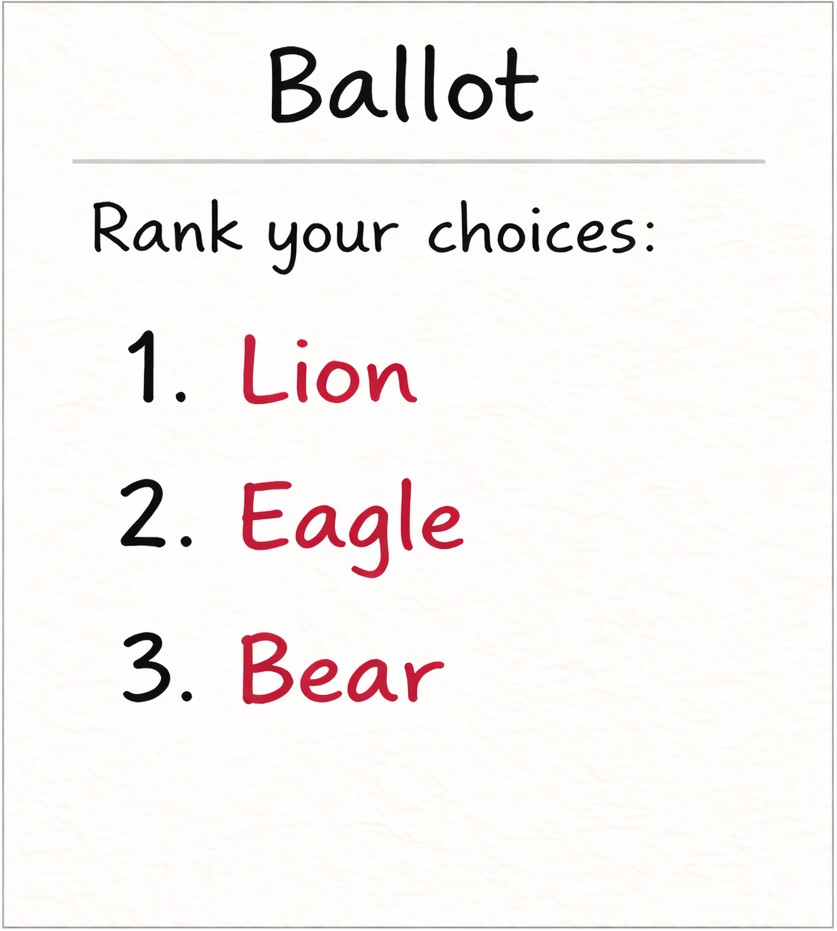
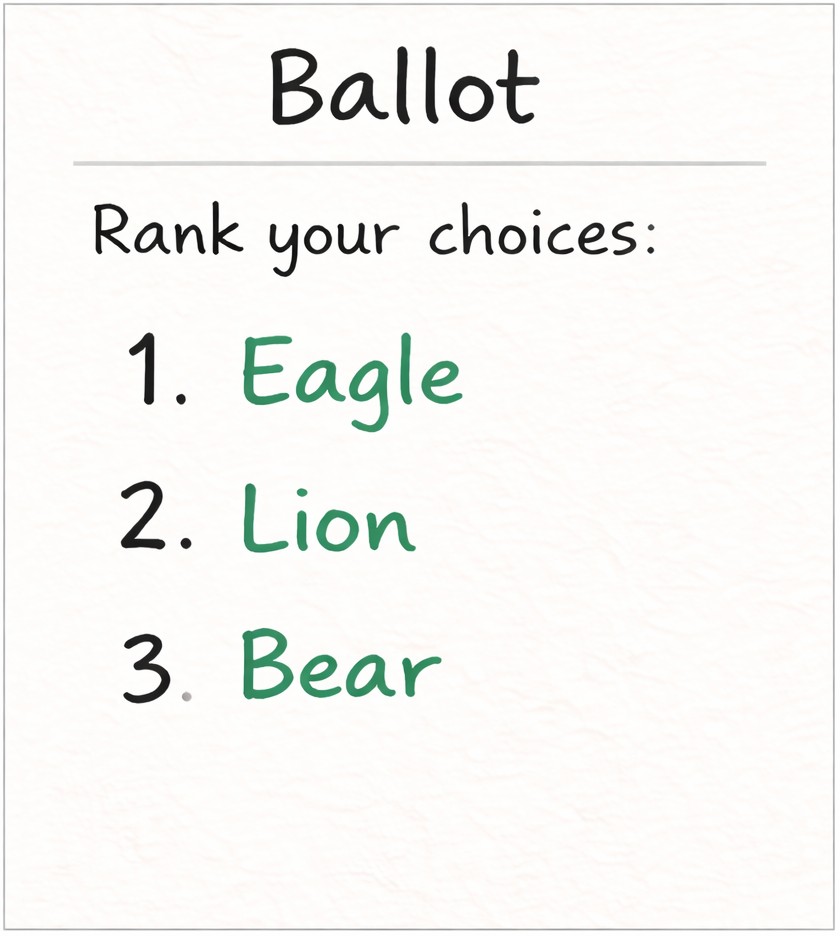
This time, the ballots are processed using the reverse runoff approach. When the last-place votes are counted, the results of the initial round are:
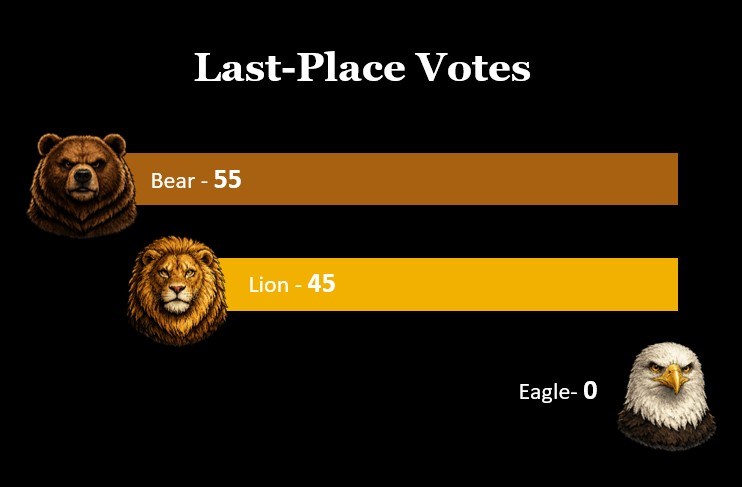
The Bear receives the most last-place votes and is eliminated. Comparing last-place votes between the Lion and the Eagle:
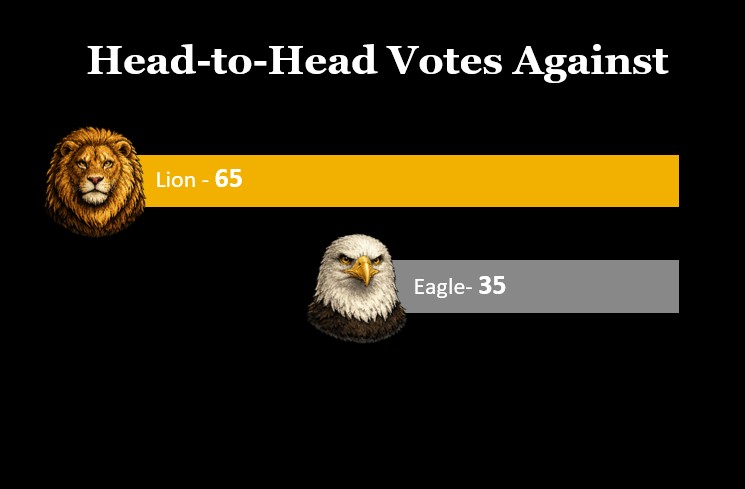
The Eagle receives fewer votes-against and is the winner. In this case, the Foresters are able to rank their true preferences and reach their best achievable outcome. The result is a candidate acceptable to most of the wilderness, rather than one strongly opposed by a large portion of it.
However, this approach does not always produce intuitive results.
The Feline Community
Returning to the more friendly feline community from a previous article:



This community has 60 members from the Jungle group who prefer the Tiger and 40 members from the Plains group who prefer the Cheetah. The Plains group uses a strategy of ranking the Skunk over the Tiger, not because they prefer the Skunk, but to improve the Cheetah’s chances of winning. Now suppose that 25 members of the Jungle group do the same and rank the Skunk ahead of the Cheetah, even though they believe the Cheetah is the better candidate. The ballots now look like:
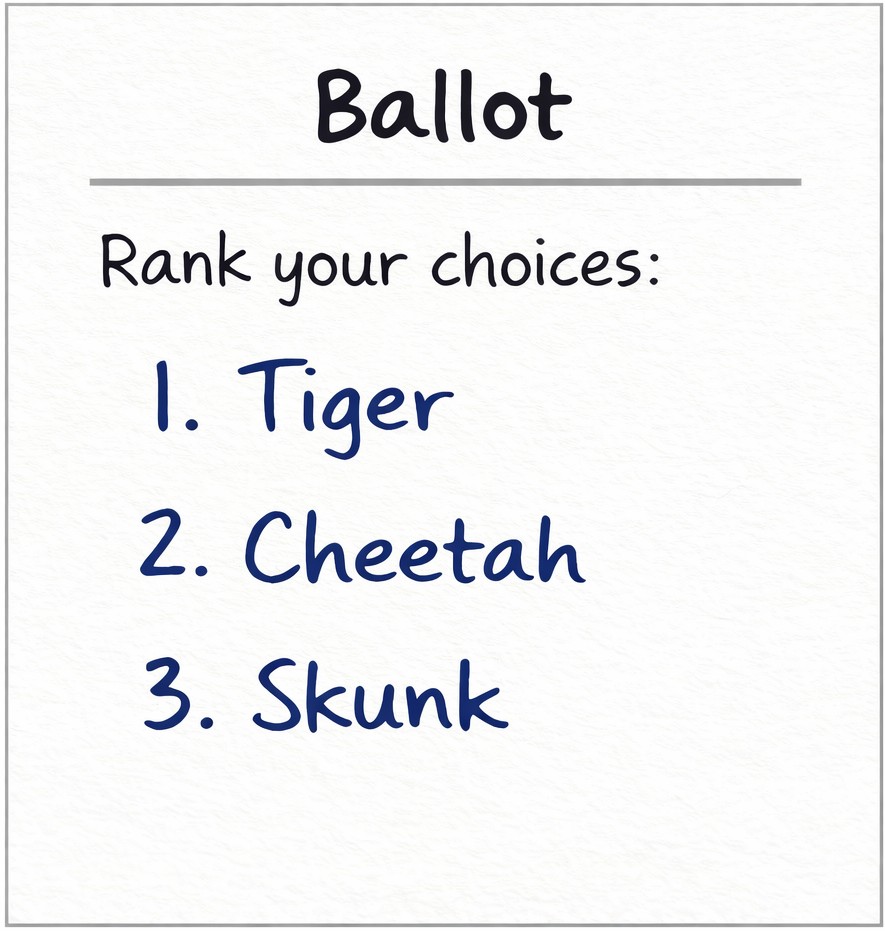
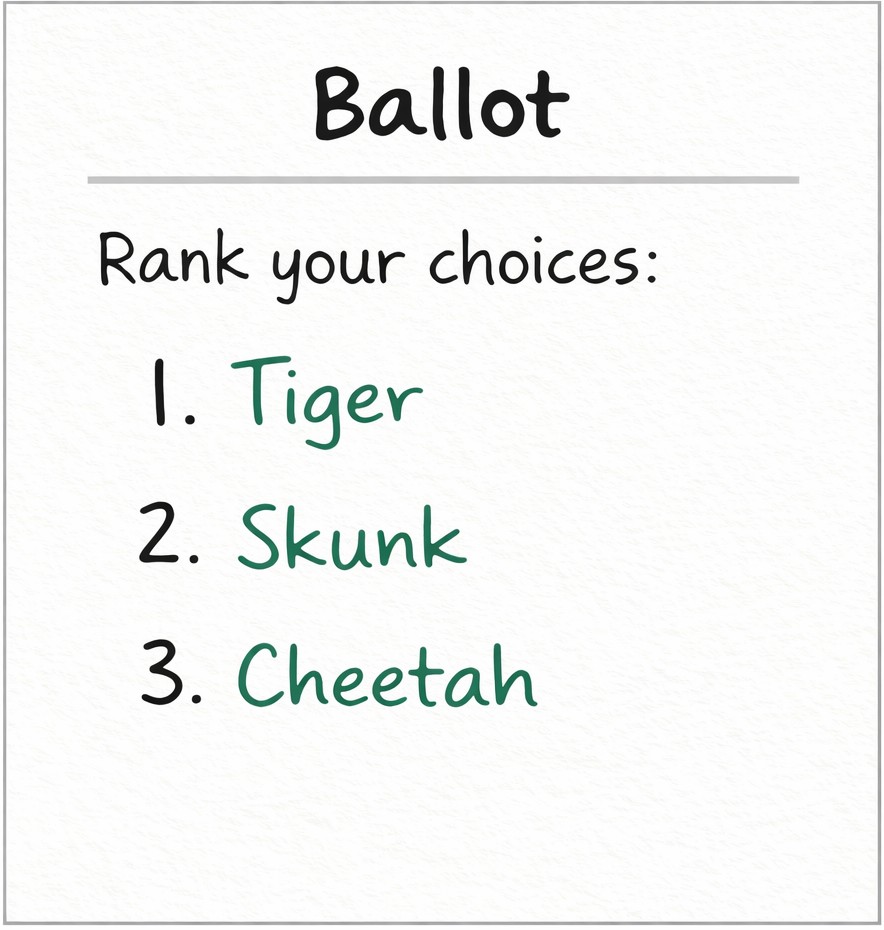
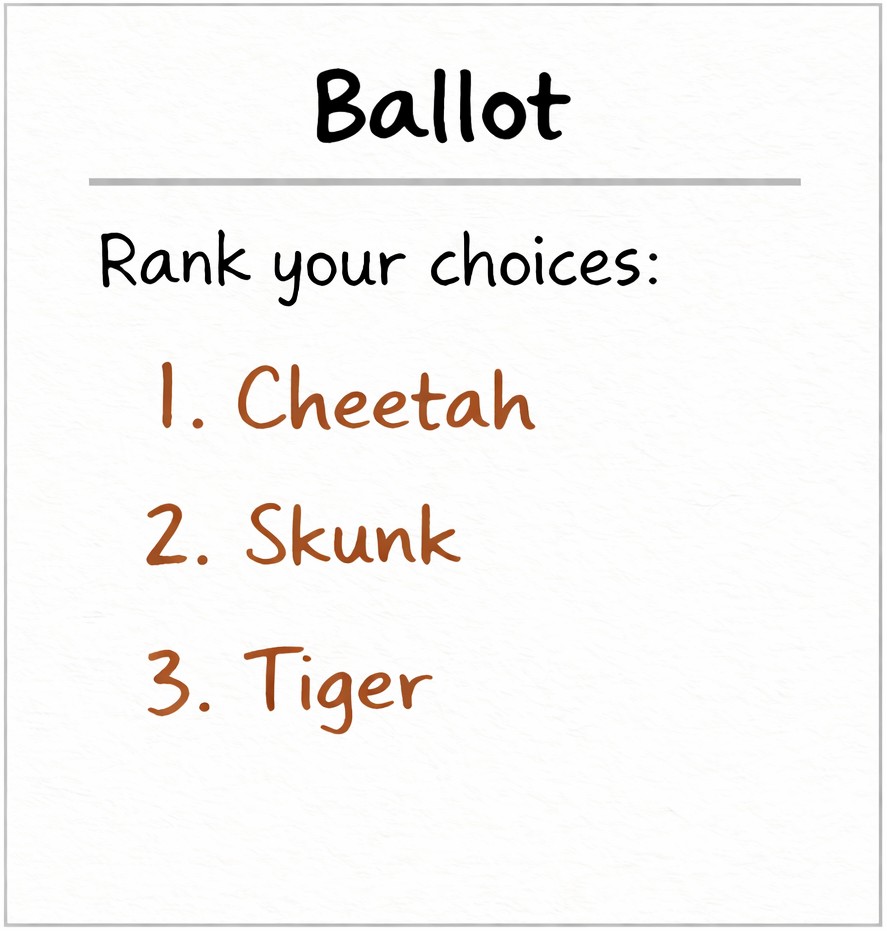
Under normal IRV:
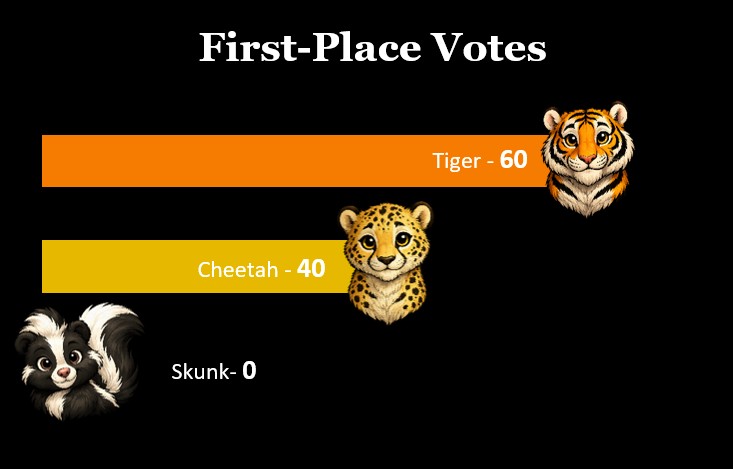
The Tiger has 60 first-place votes and wins immediately with a majority. However, under Reverse IRV, when the last-place votes are counted, the results are:
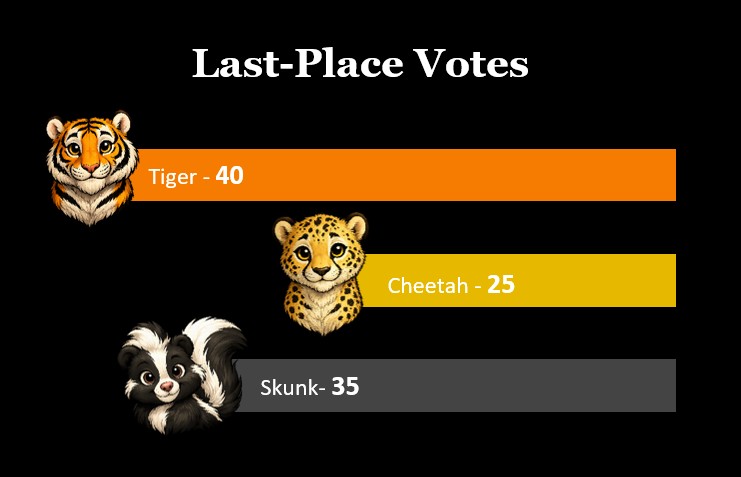
The Tiger has the most last-place votes and is eliminated in the first round, despite having a majority of first-place votes. With the Tiger removed, the remaining candidates are the Cheetah and the Skunk. Comparing votes-against between the remaining candidates:
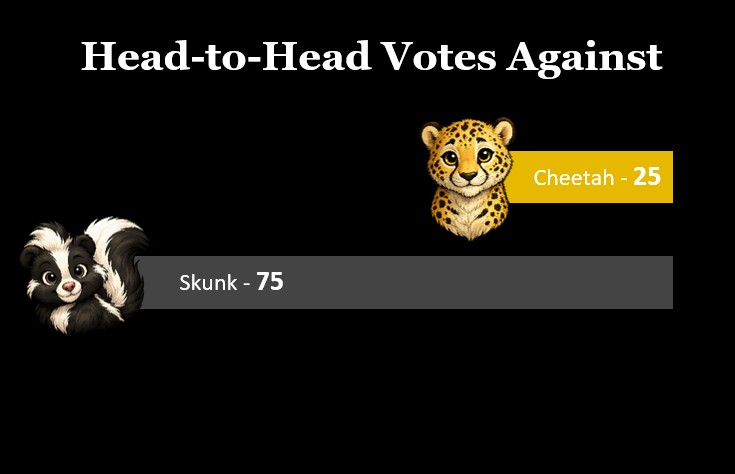
The Cheetah receives fewer votes-against and is the winner.
This leads to an important tradeoff with Reverse IRV. Reverse IRV can eliminate a candidate even when they have a majority of first-place votes. This shifts the incentives for voters. Instead of adjusting their rankings to support another candidate, voters may now be encouraged to rank competing candidates last to influence elimination. The incentive to vote strategically remains, but takes a different form.
Comments
This site does not manage comment accounts. Comment data is handled by a third-party discussion service.