The Participation Paradox in IRV
Another frequent criticism of Ranked Choice Voting is that in rare situations, a voter can actually hurt their preferred candidates just by participating. This can happen in IRV systems, as well as in standard runoff elections. This article will explain the mechanics of this paradox.
 For this to happen in an IRV election, it requires (1) a cyclical voting pattern that was described in a previous article, (2) the top candidate on the leading ballots not having enough support to win outright, and (3) the top candidates on 2 or more remaining cyclical ballots nearly tied. Under these conditions, 2 voters could show up, and by voting for their preferred candidates they could help a less preferred candidate to win.
The purpose of this article is not to delve into the likelihood of this ever happening, but only to explain how this can happen. We will use the Rail Corridor Commissioner case described in a previous article, which described a cyclical voting pattern:
Rail Corridor Commissioner
Most voters came for the mayor race at the top of the ballot. This, however, is a down-ballot race that most voters are not familiar with. The 3 candidates are:



The Transit voters rank Bellingham first because of his experience, Cole second because of his good intentions, and Arnold last because of his questionable intentions. The Short-name voters rank Cole first, Arnold second, and Bellingham last. The ABC voters rank Arnold first, Bellingham second, and Cole last.
Baseline Case
We first consider a case of 29 Transit Voters, 30 Short-name voters, and 40 ABC voters:
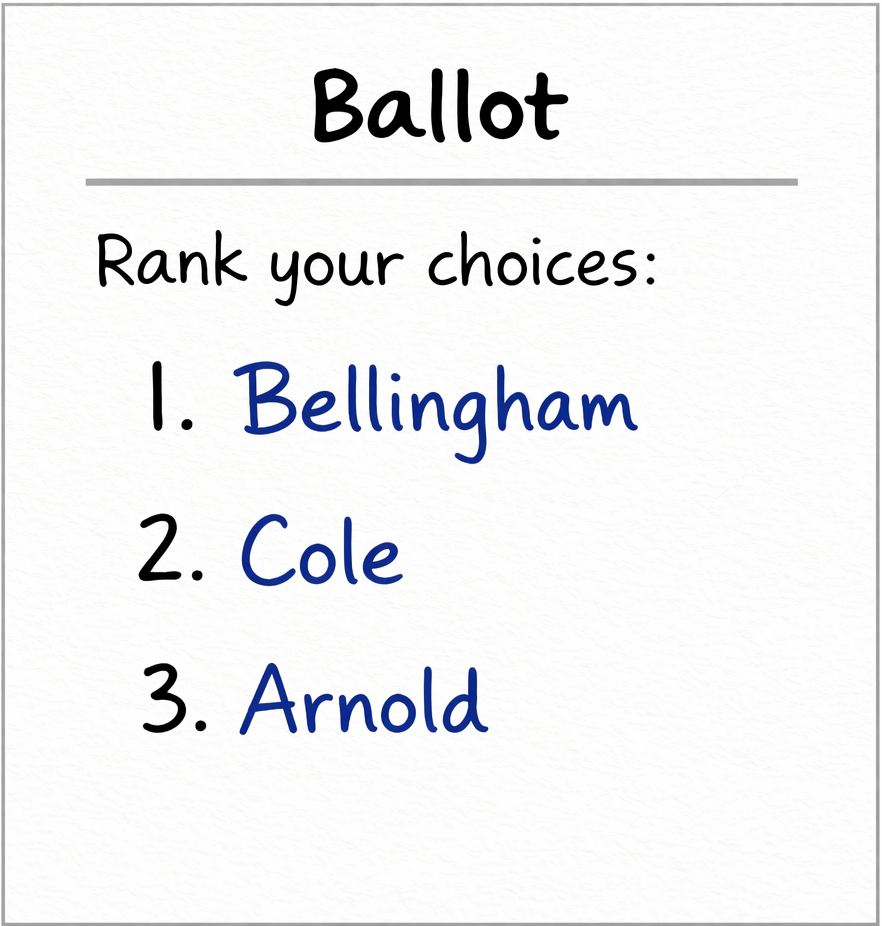
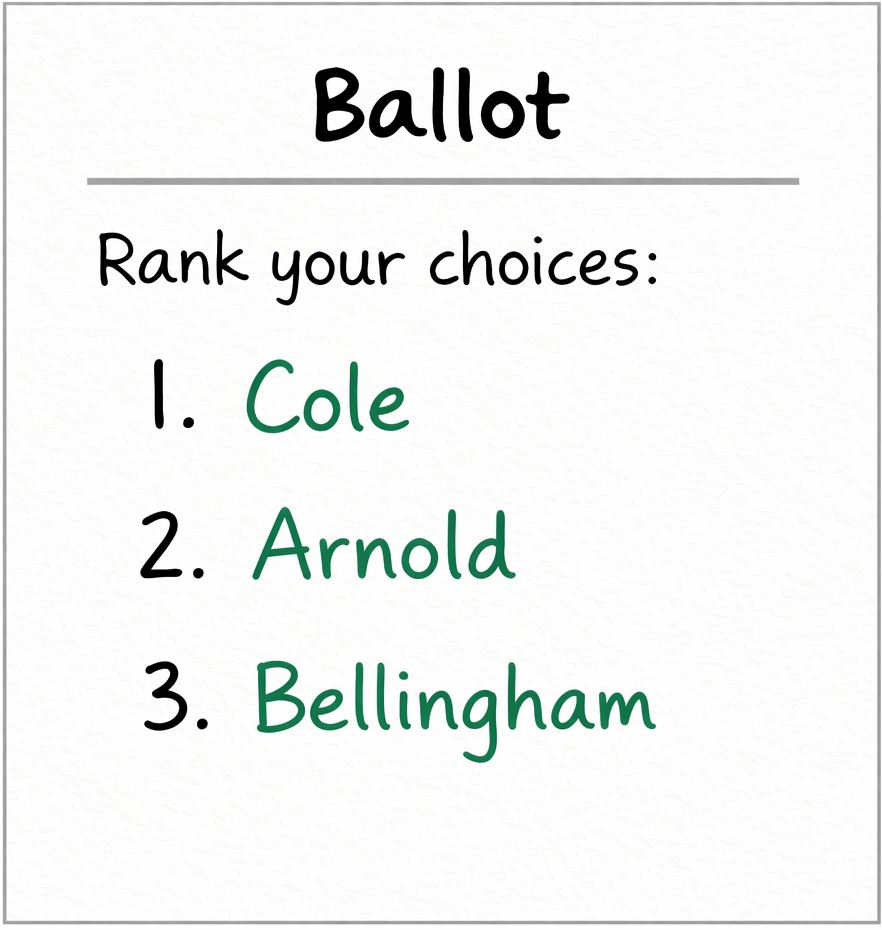
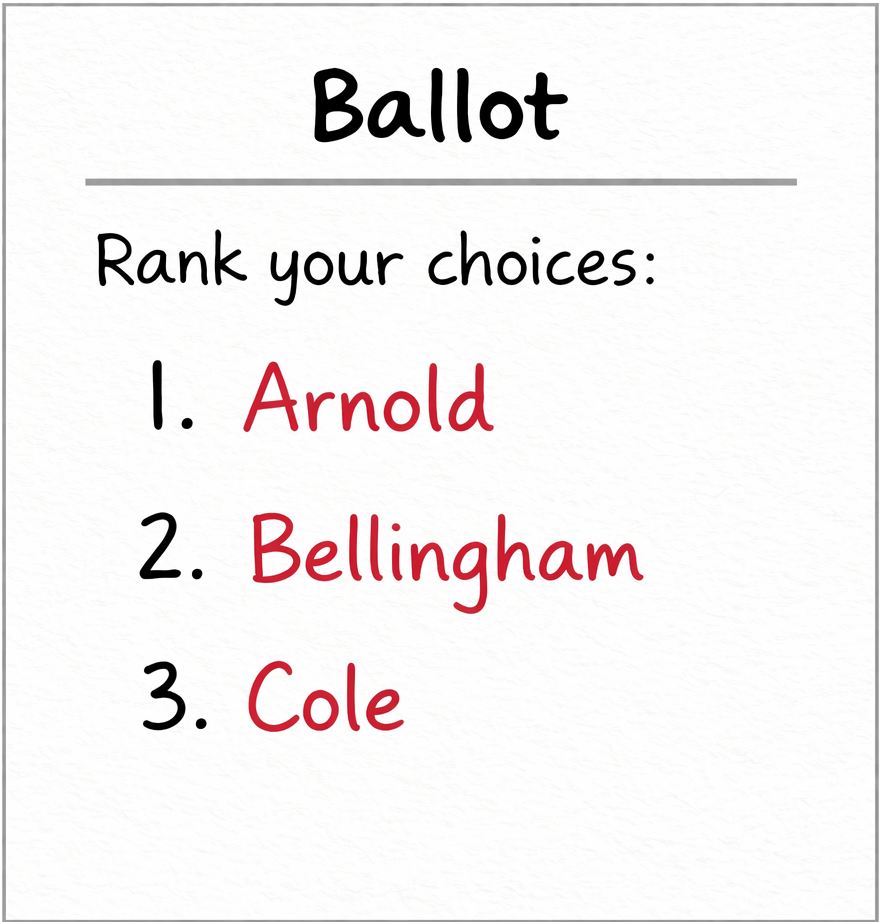
The IRV process starts by counting the first-place votes:
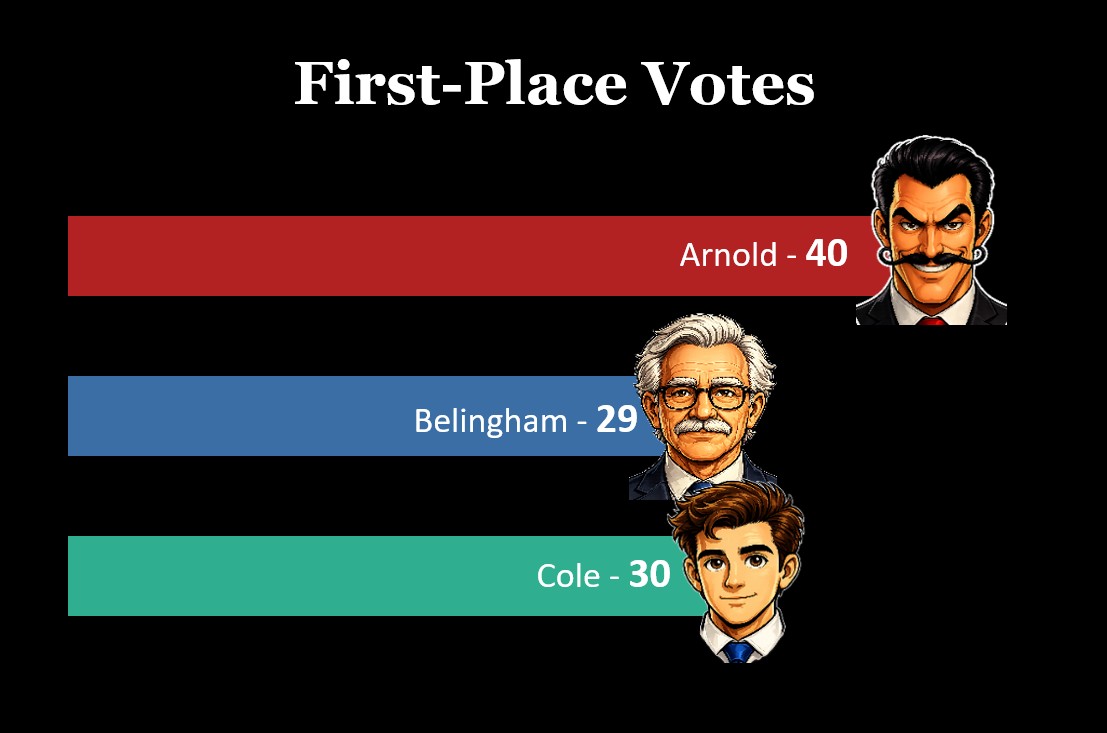
Bellingham has the fewest first-place votes and is eliminated. The Transit voters ballots are transferred to Cole:
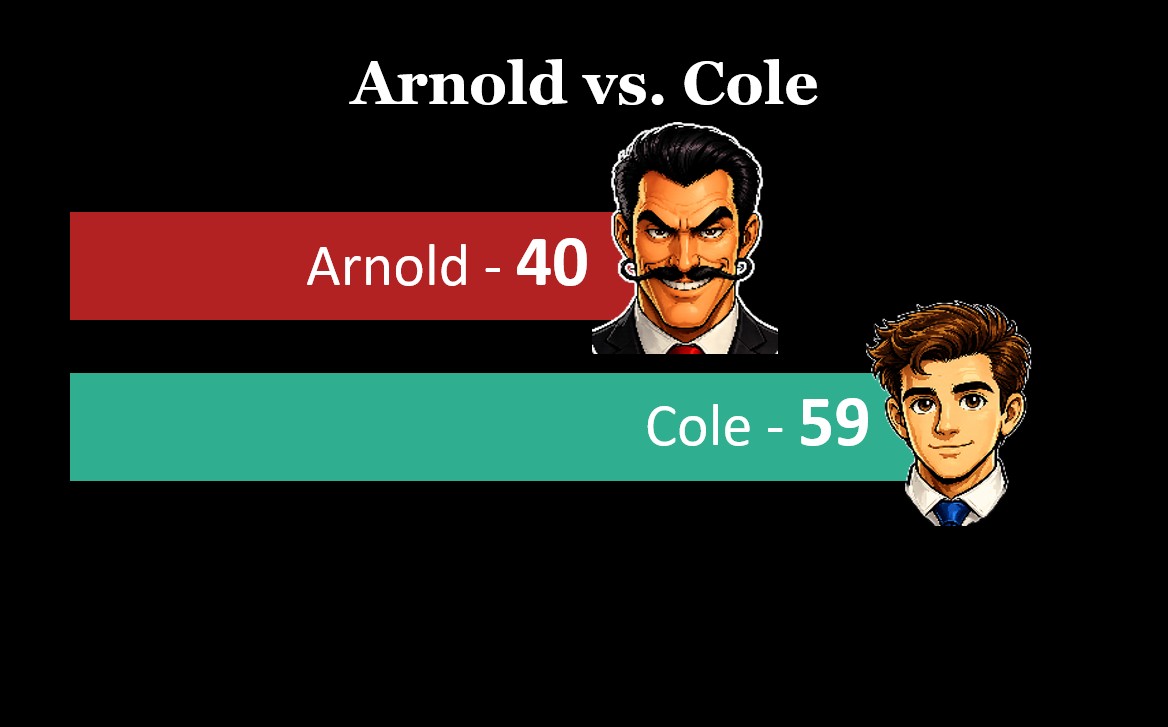
And Cole wins. In this case, the transferred votes from the Transit voters allow Cole to pass Arnold and win the election.
After Adding 2 Voters
Now we consider what happens when 2 additional Transit voters decide to participate. The totals become 31 Transit Voters, 30 Short-name voters, and 40 ABC voters:
Again, the process begins by counting the first-place votes:
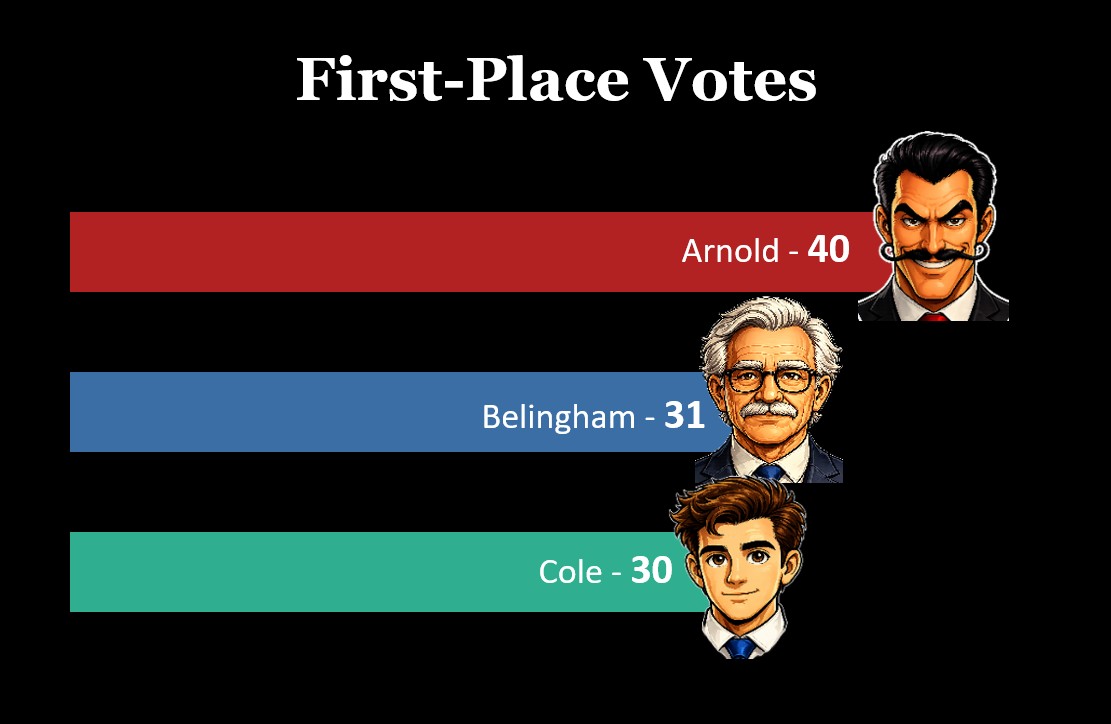
Cole now has the fewest first-place votes and is eliminated. The Short-name voters ballots are transferred to Arnold:
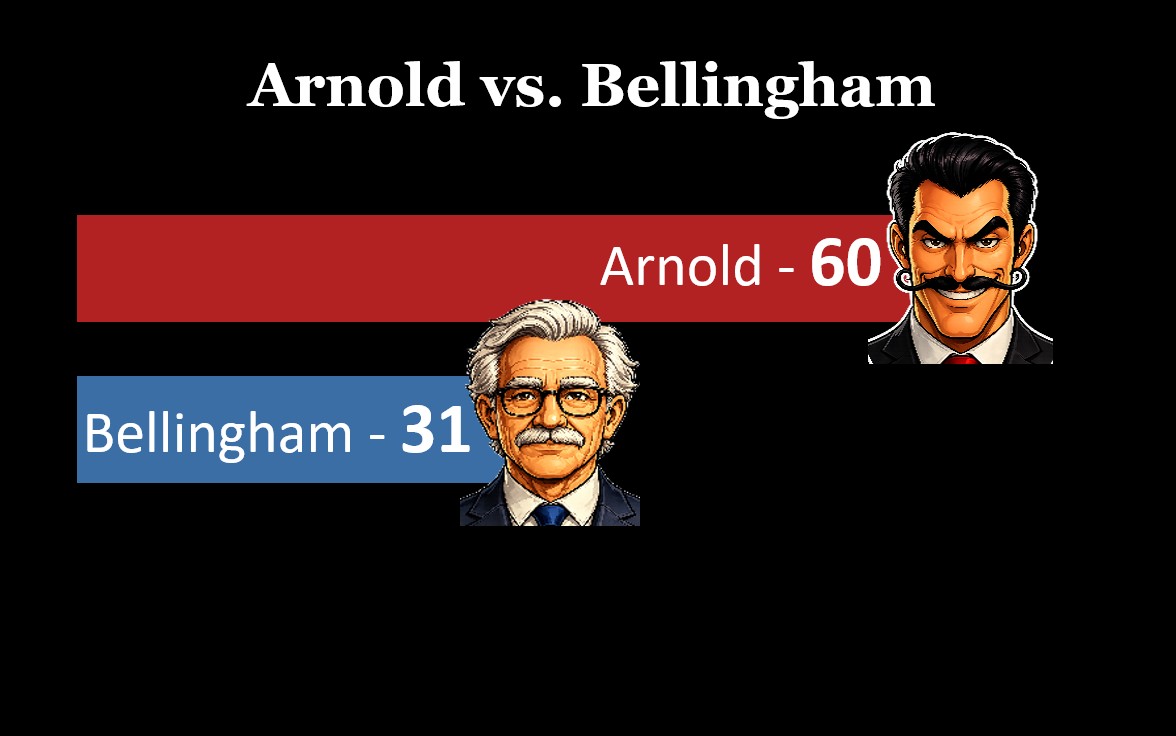
And Arnold wins. The paradox is that if the two additional Transit voters had not shown up, their 2nd choice Cole would have won. But by showing up, their last choice Arnold ended up winning.
This outcome is not caused by an error in counting, but by how runoff systems process ranked ballots in multiple rounds. This is known as the participation paradox, where adding voters can lead to a worse outcome for their preferred candidates. When candidates are close in support, small changes can affect the order of elimination and lead to different results.
These situations are rare, but they illustrate how the structure of the counting process can create this paradox. Critics of Ranked Choice Voting regularly bring up this possibility.
Comments
This site does not manage comment accounts. Comment data is handled by a third-party discussion service.