Proxy Voting for Proportional Representation
Proxy voting is one possible approach to proportional representation. Proxy voting is currently used in shareholder voting systems, corporate governance, and some delegated voting arrangements. However, proxy voting is rarely used for governmental representative bodies.
Instead of all representatives holding equal voting power within an assembly, proxy systems allow individual representatives to hold voting strength proportional to the number of voters supporting them. We will describe this using the same Wilderlands example introduced earlier.
The Wilderlands
Returning to the Wilderlands, there are 2,000 voting members divided among 4 major factions:




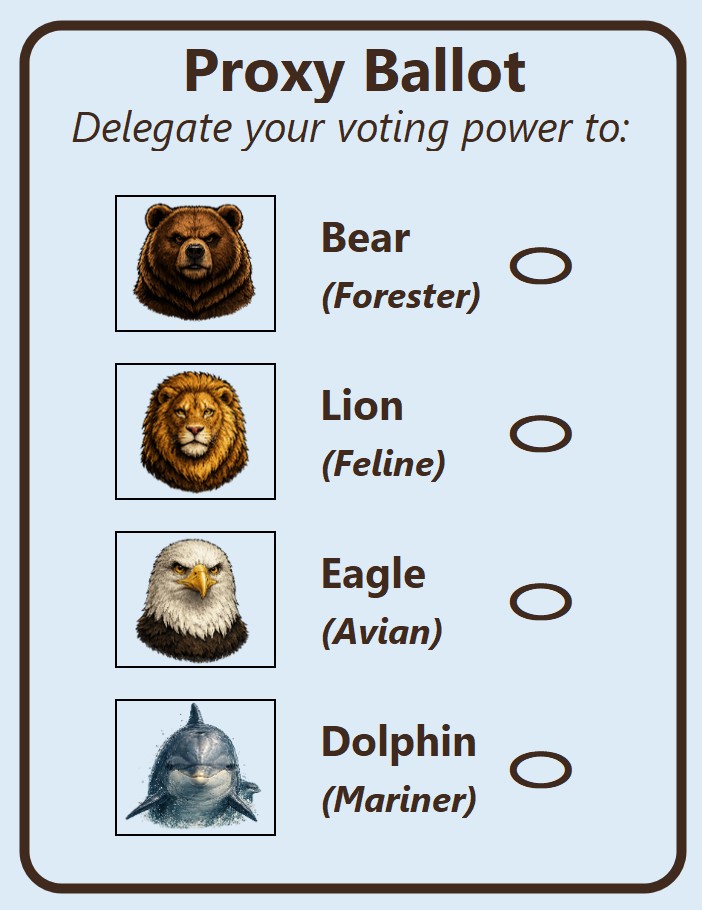 Suppose the Wilderlands uses proxy voting to elect representatives to a governing assembly. Instead of separate at-large elections or territorial elections for a fixed number of candidates, voters fill out proxy ballots by delegating their voting power to a representative they support.
After all proxy ballots are counted, individual representatives receive voting strength proportional to the number of voters supporting them. This allows voting influence within the assembly to more directly reflect the number of voters supporting each representative.
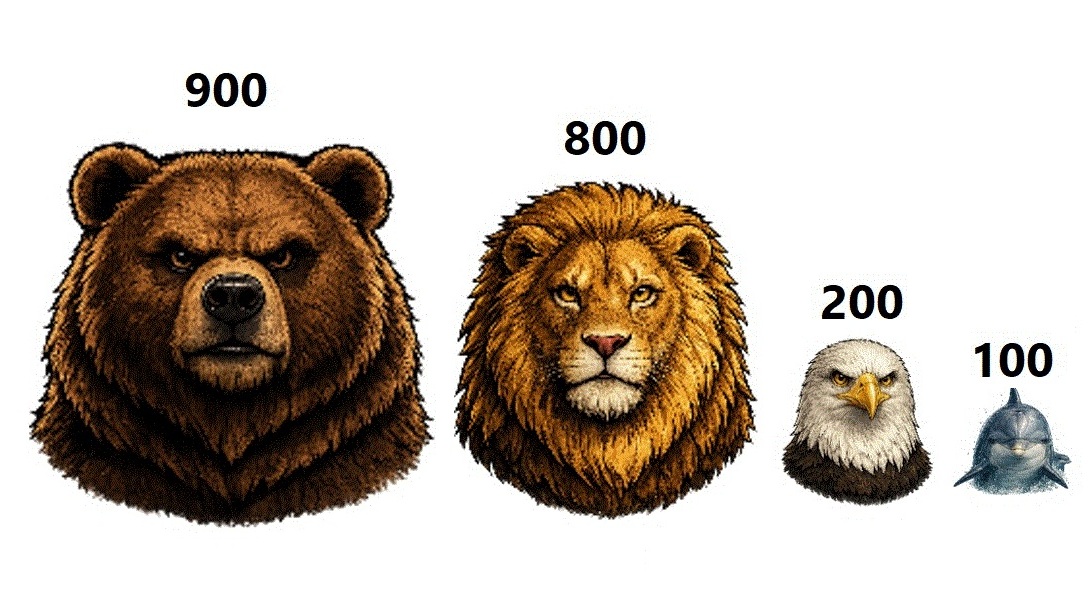
In the Wilderlands example, the Bear representative receives 900 voting strength, the Lion representative receives 800, the Eagle representative receives 200, and the Dolphin representative receives 100. Unlike traditional representative bodies where each elected member usually holds equal voting power, proxy systems may create assemblies where a small number of individuals hold very different amounts of influence. Because voting power is tied directly to voter support, territorial boundaries become less important than in traditional territorial election systems.
Supporters of proxy voting contend that these systems may more closely reflect the overall population and make it easier for smaller groups to gain representation. Critics of proxy voting argue that proxy systems can create concentration of power around charismatic individuals, accountability concerns, and practical challenges involving the operation of representative bodies.
Comments
This site does not manage comment accounts. Comment data is handled by a third-party discussion service.