Bucklin Voting
Bucklin voting was an early form of Ranked Choice Voting, first introduced in Grand Junction, Colorado, in 1909, and eventually used in at least nine states and more than 60 municipalities. By the mid-1930s, it had been abandoned, repealed, or struck down by courts everywhere.
Unfortunately, Bucklin was highly vulnerable to strategic voting, undermining the very purpose of ranked ballots. Its original intent was to elect candidates with majority support. If no candidate received a majority of first-choice votes, second-choice votes were added to each candidate's total, followed by lower choices if necessary, until at least one candidate exceeded 50% of the original number of voters. If no candidate reached a majority, the candidate with the highest total won. This process incentivized bullet voting (ranking only a single candidate), as demonstrated in the following example:
The Feline Community
We return to the friendly feline community, where the Tiger and Cheetah are now joined by a new candidate:



Three voting groups have the following preferences:
- The Jungle Group supports the Tiger first, the Cheetah second, and the Leopard last.
- The Plains Group supports the Cheetah first, the Tiger second, and the Leopard last.
- The Mountain Group supports the Leopard first, the Tiger second, and the Cheetah last.
With 45 voters in the Jungle Group, 40 in the Plains Group, and 15 in the Mountain Group, their ballots would look like this:
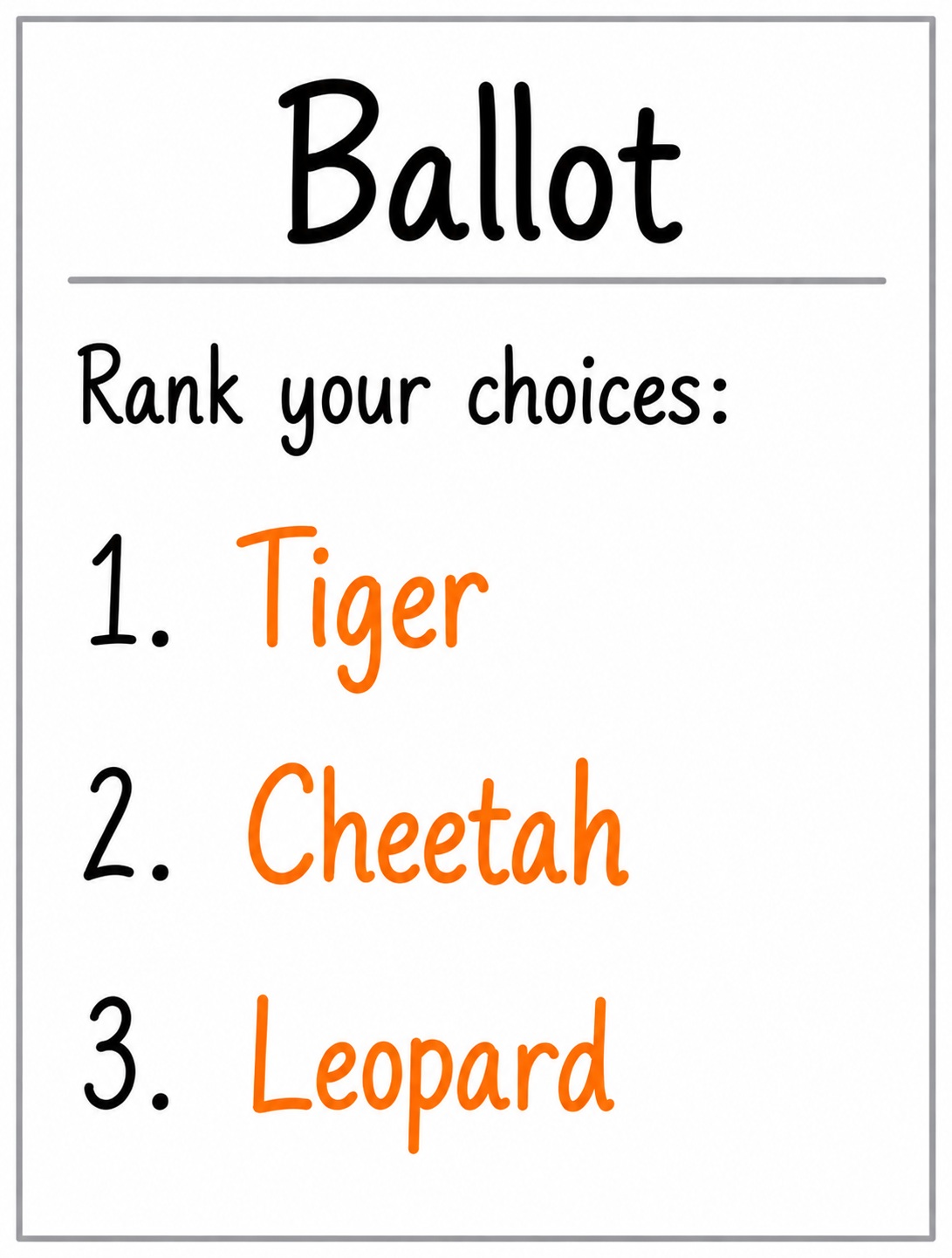
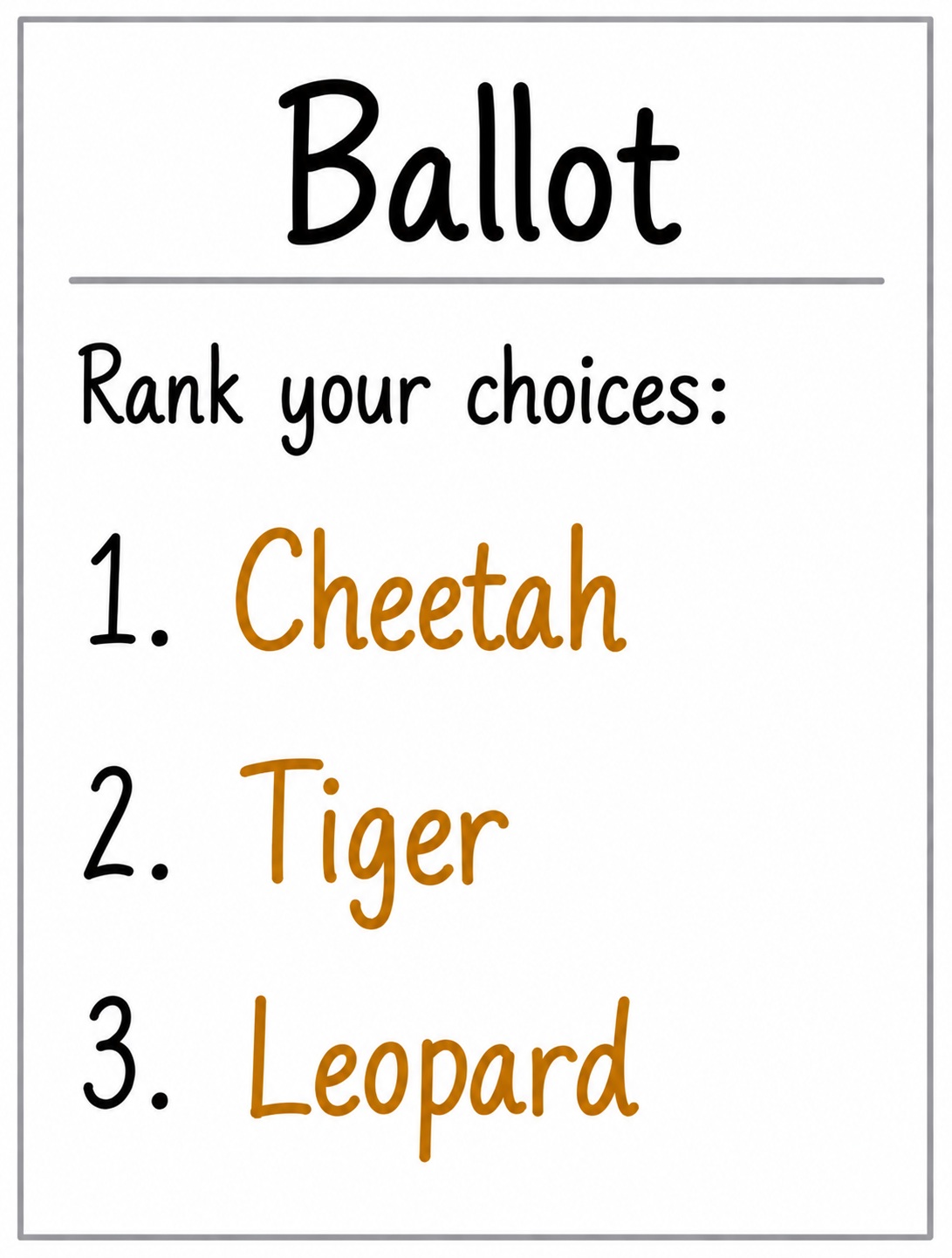
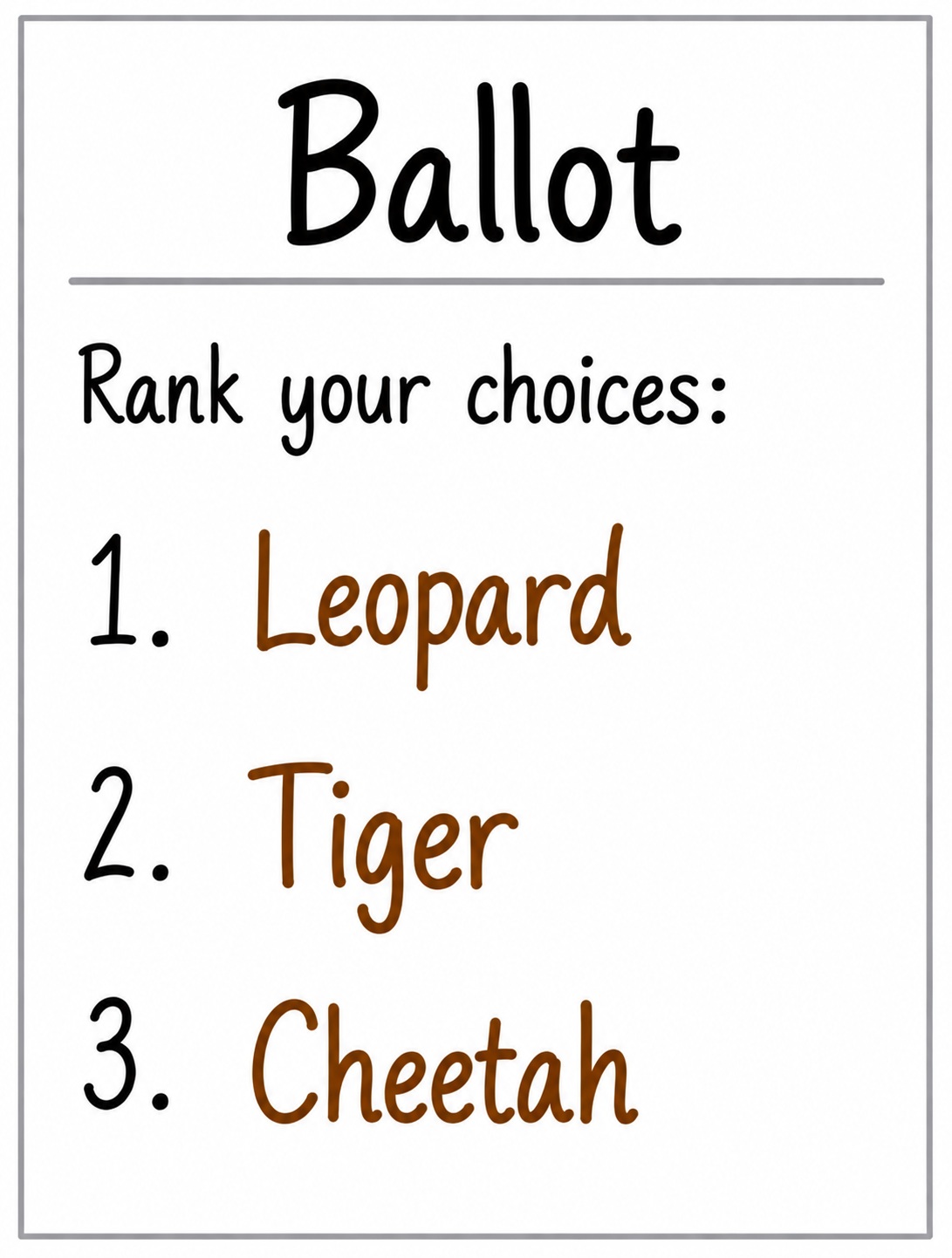
Counting only first choices, the results are:
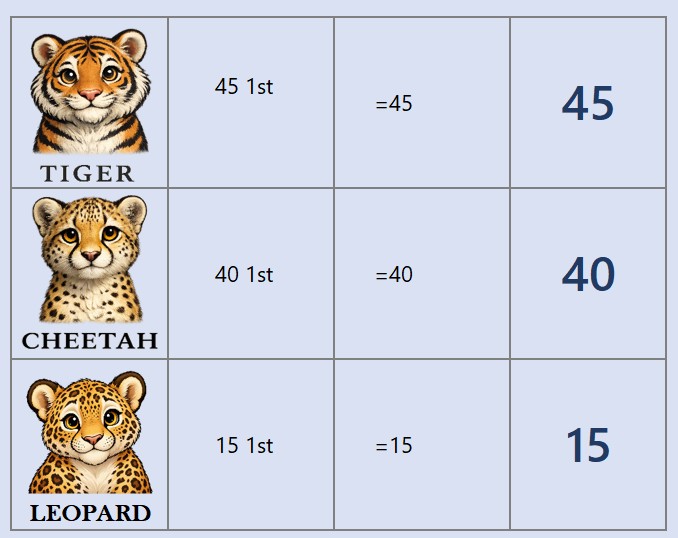
Nobody has a majority, so Bucklin adds second choices.
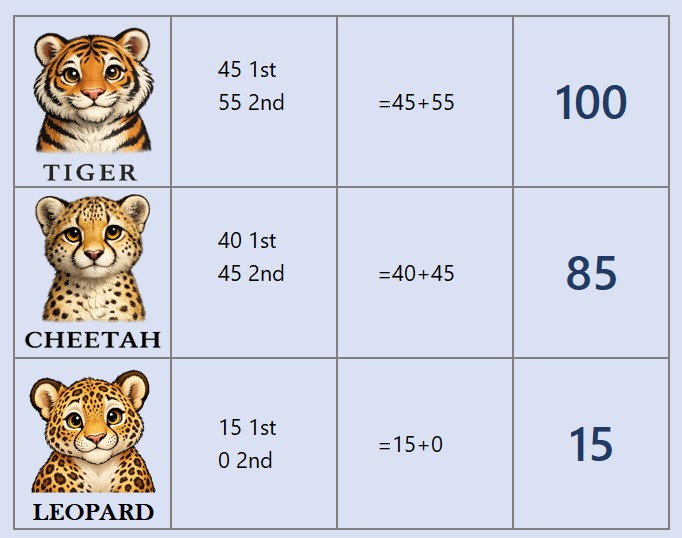
And the Tiger wins. But now suppose the Plains Group decides to bullet vote, ranking only the Cheetah. The ballots would now look like:
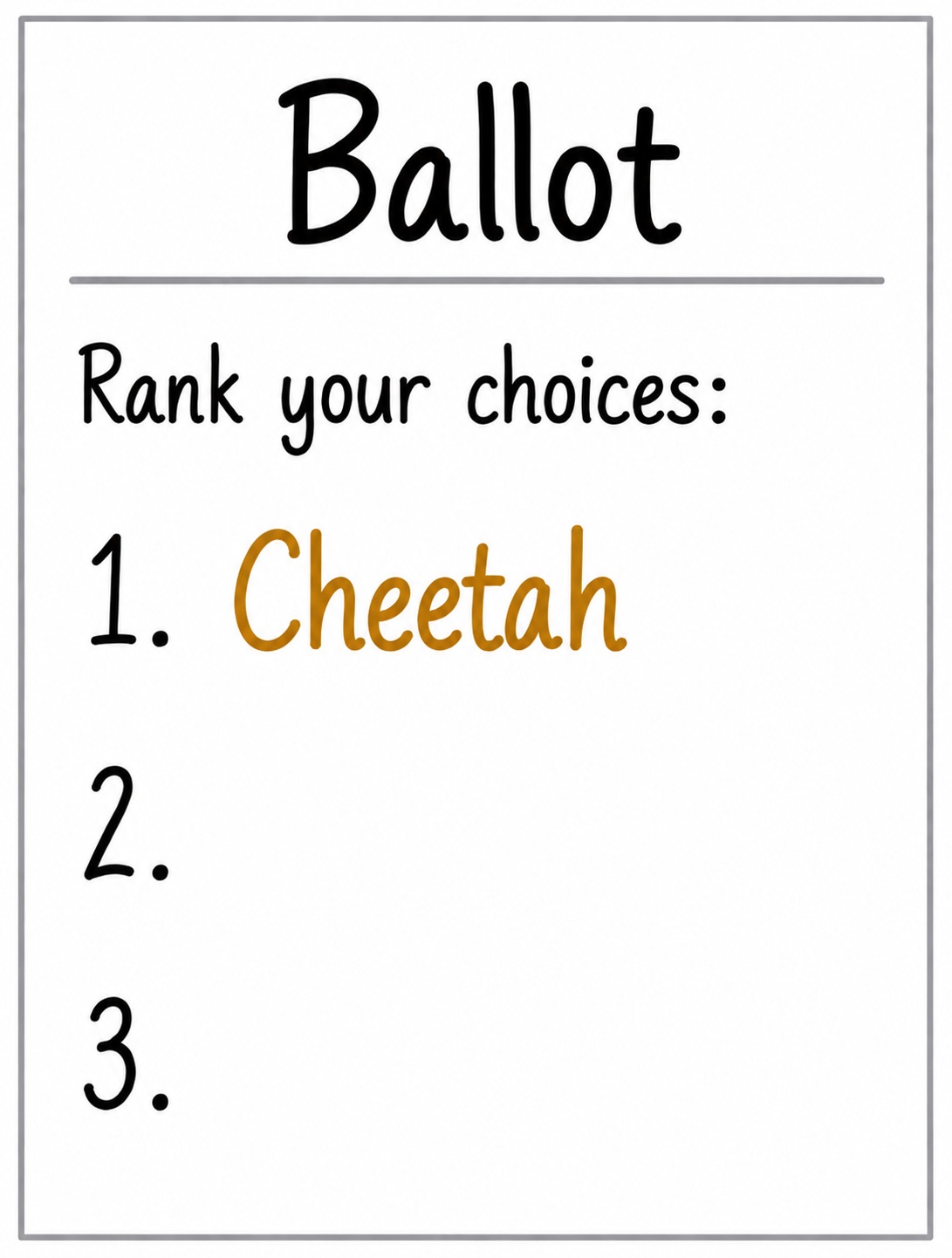
Again, counting only first choices, nothing changes:
But when Bucklin adds second choices:
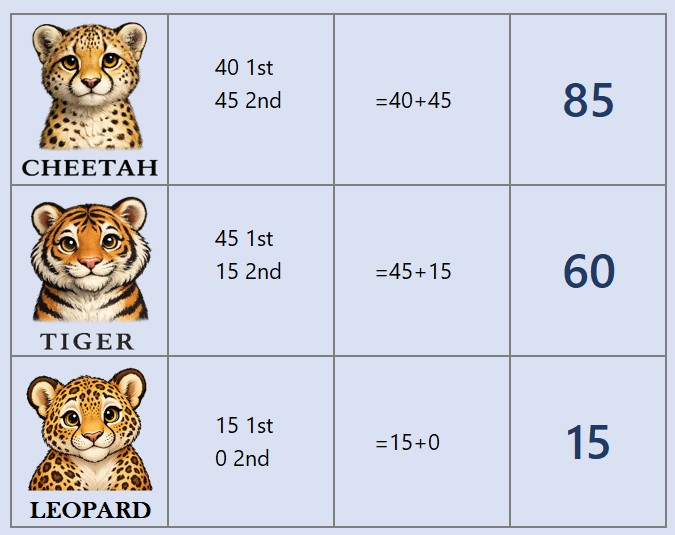
The Cheetah wins! By withholding support for their second choice, the Plains voters are able to elect their favorite.
When Bucklin was used in practice, candidates understood this strategy and urged their supporters not to rank additional candidates. Even with better-designed ranked voting systems, the belief that voters should always bullet vote persisted and was reinforced by political misconceptions about ranked ballots, despite the fact that newer systems were designed so that ranking additional choices would not harm the voter's first choice.
Comments
This site does not manage comment accounts. Comment data is handled by a third-party discussion service.